
Epoxy Flooring for Airplane Hangars in Arizona
Commercial-grade epoxy & polyaspartic coatings for Arizona aircraft hangars — seamless, chemical-resistant and built for fuel, oil and heavy traffic. Licensed ROC #168150, family-owned since 1995.
★★★★★ 4.7/5 from 89 Google reviews|Licensed ROC #168150|Typically a 2-Day Install · Family-Owned Since 1995
 ★ 4.7 · 89 reviews
- Airplane hangar epoxy flooring protects concrete from jet fuel, hydraulic fluid, and heavy loads while creating a safer workspace for aircraft maintenance and storage.
- AZ Garage Floors applies commercial-grade epoxy systems designed specifically for Arizona hangars, addressing extreme heat, chemical exposure, and abrasion from wheeled aircraft.
- Contact AZ Garage Floors today for a free hangar floor consultation and discover why epoxy is the preferred flooring choice for hangar owners across Arizona.
A single drop of hydraulic fluid can eat through bare concrete in hours. Multiply that by years of fuel spills, tire scuffs, and the crushing weight of a Cessna 172 — or a Gulfstream — and your hangar floor becomes a crumbling liability instead of a solid foundation. Airplane hangar owners across Arizona face this reality every day, yet most never address the problem until cracks spread and FOD risks climb.
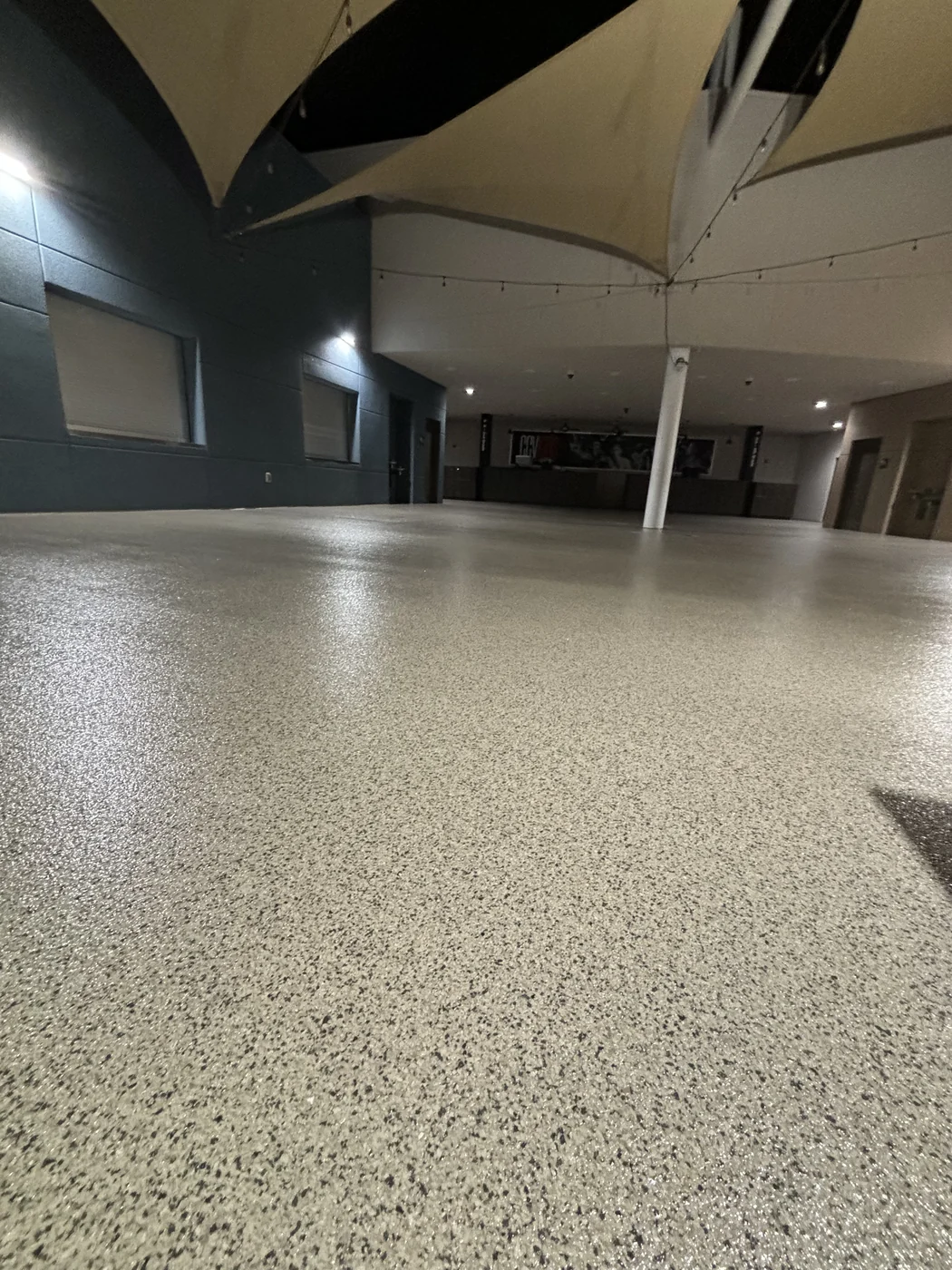
Epoxy flooring for airplane hangars solves this problem at the root. A professionally applied epoxy system seals concrete, resists aviation chemicals, handles extreme Arizona temperatures, and transforms a deteriorating slab into a surface that performs for years. AZ Garage Floors specializes in these high-performance coatings, and the sections below explain exactly how the process works, what to expect, and why hangar owners throughout the state trust epoxy above every other option.
What Is Epoxy Flooring for Airplane Hangars?
For aviation environments, this matters enormously. Airplane hangar flooring options range from bare concrete and interlocking tiles to urethane coatings and polished concrete. However, epoxy consistently outperforms these alternatives in hangars because of three critical properties:
- Chemical resistance: Aviation gasoline (avgas), Jet-A fuel, Skydrol hydraulic fluid, and various lubricants sit on the surface without penetrating or staining.
- Compressive strength: Epoxy systems withstand the concentrated wheel loads from nose gear, main gear, and tow equipment without cracking or delaminating.
- Seamless coverage: No joints or seams means no place for fluids to seep underneath, which prevents the freeze-thaw damage and subgrade erosion common in Arizona’s high-desert airports.
Additionally, a light-colored epoxy finish dramatically improves hangar visibility. Brighter floors reduce the need for overhead lighting, make FOD (foreign object debris) easier to spot, and create a professional appearance that impresses clients, partners, and inspectors alike.
Our Approach to Hangar Epoxy Flooring
The process starts with understanding how you use the space. Do you store a single aircraft, or do you run a maintenance operation with rolling tool carts and jack stands? Are there fuel drain areas or wash bays? Is the slab old and cracked, or relatively new? These answers shape the system specification — from primer selection to topcoat chemistry and aggregate choices.
Moreover, Arizona’s climate plays a significant role. Concrete slabs in Phoenix-area hangars can reach surface temperatures above 140°F in summer, while high-altitude fields near Prescott or Flagstaff experience freeze-thaw cycling. The epoxy formulation, application timing, and curing schedule all adapt to these conditions.
Step-by-Step Process for Hangar Epoxy Installation
Step 1 — Concrete Assessment and Moisture Testing
Before anything else, the team inspects the existing slab. This includes checking for cracks, spalling, prior coatings, and surface contamination from oil or fuel. Moisture testing follows, because excessive moisture vapor transmission can cause epoxy to delaminate. If moisture levels exceed acceptable thresholds, mitigation steps are recommended before coating begins.
Step 2 — Surface Preparation
Surface preparation is the single most important factor in coating longevity. For hangar floors, AZ Garage Floors uses diamond grinding or shot blasting to create the proper surface profile. This process removes contaminants, opens the pore structure of the concrete, and produces the mechanical “tooth” that epoxy needs to bond permanently.
Consequently, cracks and expansion joints receive attention at this stage. Cracks are routed and filled with flexible or rigid fillers depending on whether the crack is active or dormant. Expansion joints are honored and typically left functional.
Step 3 — Primer Application
A penetrating epoxy primer is applied to the prepared surface. This layer soaks into the concrete and establishes the chemical bond between the substrate and the build coats above. In hangars with older or more porous concrete, a second primer coat may be applied to ensure complete saturation.
Step 4 — Body Coat and Build Layers
The body coat is the structural heart of the system. High-solids epoxy resin is mixed and applied at a controlled thickness, building the chemical resistance and compressive strength the hangar demands. Depending on the system specification, decorative flake or quartz aggregate may be broadcast into this layer for added texture and slip resistance — particularly important around wash areas or near hangar doors exposed to rain.
Step 5 — Topcoat Application
A UV-stable polyaspartic or urethane topcoat seals the system. This final layer provides abrasion resistance, gloss retention, and protection against the intense Arizona sun that streams through open hangar doors. Without a quality topcoat, epoxy can amber and chalk over time. The topcoat prevents that degradation.
Step 6 — Curing and Return to Service
Cure times vary based on product chemistry and ambient conditions. In most cases, foot traffic is possible within 24 hours and aircraft can be moved back onto the floor within 48 to 72 hours. The team provides specific reoccupancy guidance for each project.
What to Look For in a Hangar Flooring Provider
- Do they have experience with hangar-specific chemical exposures? Standard garage epoxy formulations may not resist Skydrol or Jet-A adequately.
- Do they perform proper moisture testing and surface preparation? Skipping these steps is the leading cause of coating failure.
- Do they offer UV-stable topcoats? Arizona sun exposure demands this protection.
- Can they work around your aircraft schedule? Hangar downtime costs money, and experienced providers plan installations to minimize disruption.
- Do they carry appropriate insurance for work in aviation facilities? Airport authorities often require specific liability coverage.
Furthermore, ask for references from other hangar or aviation facility projects. A provider who has coated residential garages exclusively may not anticipate the demands of a 10,000-square-foot hangar with aircraft traffic.
Why Arizona Hangar Owners Choose AZ Garage Floors
- Aviation-grade systems: The coatings used are formulated for chemical exposure levels that go far beyond standard residential or commercial applications.
- Arizona climate knowledge: Working in extreme desert heat and variable-altitude conditions requires specific product selection and application techniques that the team has refined through hands-on experience in this region.
- Minimal downtime: Project scheduling prioritizes getting your aircraft back on the floor as quickly as the coating system allows.
- Transparent communication: You receive a clear scope of work, a defined timeline, and straightforward pricing before work begins. No surprises.
In 2026, more hangar owners are investing in protective coatings as aircraft values continue to climb and insurance carriers increasingly scrutinize maintenance facility conditions. A professionally coated floor signals that you take aircraft care seriously — from wheels to wings.
Ready to protect your hangar floor with a coating built for aviation? Contact AZ Garage Floors today for a free on-site consultation and detailed estimate. Call now or fill out the online form — your aircraft deserves a floor that performs as hard as it does.
About AZ Garage Floors
AZ Garage Floors Location
Arizona Aircraft Hangar Flooring FAQs
Ready to Transform Your Arizona Space?
Book a free, on-site estimate — we’ll help you pick the finish and show you itemized pricing.
or call (602) 254-3363
