
Gym & Fitness Center Epoxy Flooring in Phoenix & Arizona
Durable, slip-resistant, easy-to-sanitize epoxy floors for Arizona gyms, studios and CrossFit boxes — with rubber where you drop weights and UV-stable polyaspartic for the heat. ROC #168150, since 1995.
★★★★★ 4.7/5 from 89 Google reviews|Licensed ROC #168150|Typically a 2-Day Install · Family-Owned Since 1995
 ★ 4.7 · 89 reviews
A gym floor takes more punishment than almost any commercial surface in Arizona. Members sweat onto it for fourteen hours a day, dumbbells and kettlebells land on it, loaded sleds and rolling racks grind across it, and your staff sanitizes every inch of it again and again. Bare or tile floors soak up that moisture, trap odor and bacteria in grout lines, and chip where equipment lands — turning your biggest visual selling point into a liability members notice the second they walk in.
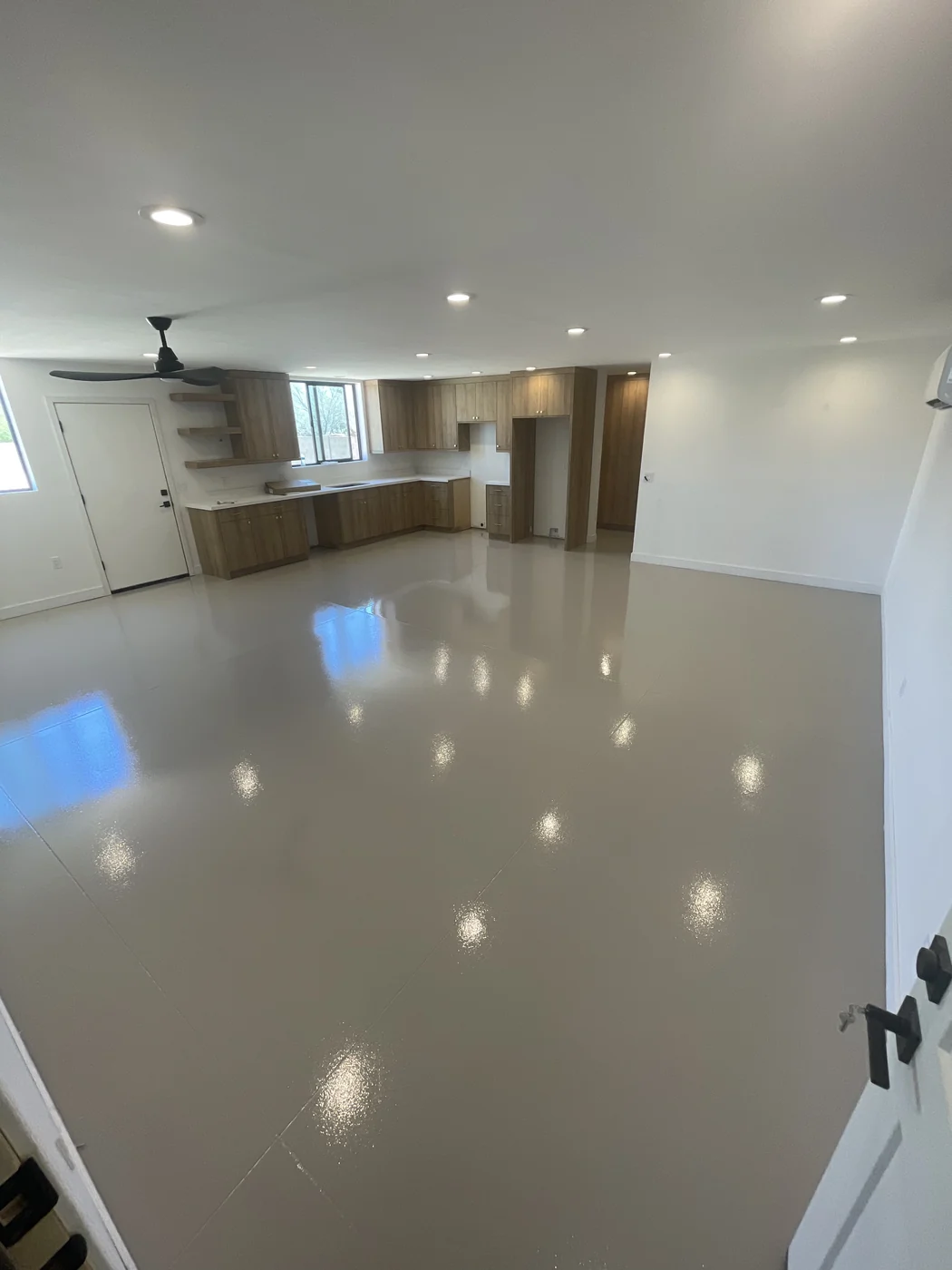
AZ Garage Floors installs seamless, non-porous epoxy and polyaspartic floor systems built for real fitness traffic. Family-owned since 1995 and licensed under Arizona ROC #168150, we coat commercial gyms, boutique studios, CrossFit boxes, PT and rec centers, HOA and apartment fitness rooms, and home gyms across the Phoenix metro and statewide. And we’ll give you the honest zone-by-zone advice most flooring crews won’t — including where rubber beats epoxy.
Why Arizona Gyms Choose Epoxy Coatings
Fitness floors live or die by two things: hygiene and durability. A seamless epoxy or polyaspartic coating wins on both, which is why it has become the default base floor for serious Arizona facilities.
- Seamless & non-porous: no grout lines and no seams means sweat, spilled shakes, and bacteria have nowhere to hide — the floor sanitizes in a single wipe.
- Disinfectant-proof: the surface withstands the strong, repeated disinfecting your members expect, without breaking down or hazing the way sealed concrete and vinyl do.
- Slip-resistant: anti-slip aggregate broadcast into the topcoat keeps traction high in sweaty, high-moisture zones and at entries.
- Sweat & moisture resistant: a non-absorbent surface won’t soak up perspiration or grow the mold and mildew that plague porous floors.
- Low maintenance: daily upkeep drops to a dust mop and a damp mop — no stripping, waxing, or re-grouting.
- Branded look: custom color, flake blends, metallics, and inlaid logos turn the floor itself into part of your brand.
- Built for desert heat: our UV-stable polyaspartic topcoats resist the yellowing and softening that wreck ordinary epoxy in sun-flooded, west-facing Arizona studios.
Where Epoxy Works Best vs. Where We Recommend Rubber
Here’s the honest answer most national flooring pages dodge: epoxy is not the right surface for every square foot of a gym, and anyone who tells you otherwise is selling you a problem. Epoxy is hard and rigid — that’s exactly why it’s tough and easy to clean, but it’s also why it offers little shock absorption. Drop a loaded Olympic barbell on bare epoxy repeatedly and you’ll eventually chip it and rattle the bar.
So we design a hybrid, zoned layout — epoxy where cleanliness and looks matter, rubber where impact and shock absorption matter.
Where epoxy wins
- Cardio decks, reception and retail, hallways and lobbies
- Group-fitness, yoga, and spin studios
- Locker rooms, restrooms, and wet areas (with anti-slip aggregate)
Where rubber wins — over an epoxy base
- Free-weight and dumbbell areas
- Olympic-lifting platforms and repeated heavy-drop zones
The smart move is to coat the entire slab in epoxy first — sealing it, protecting it from moisture, and making it spotless — then lay rubber mats or platforms over the epoxy only in the heavy-drop zones. You get a sanitary, sealed base under everything and shock absorption exactly where the iron lands. That’s the layout we design for nearly every serious gym.
Epoxy Flooring by Gym Zone
Every zone has different demands — we spec the floor to match how each part of your facility actually gets used.
Our Gym Floor Coating Systems
We match the system to your zones, traffic, and brand — never a one-size coating.
Our Installation Process & Minimal Downtime
We phase the work zone by zone so most of your facility stays open and earning while we coat.
Cost, Longevity & Warranty for Arizona Fitness Facilities
Gym owners almost always weigh epoxy against rolled rubber, and the honest comparison is about value over time, not just the upfront number. Quality epoxy lands in roughly the same price range as quality commercial rubber — but in low-impact zones like cardio, studios, lobbies, and locker rooms it lasts longer, cleans faster, and never needs the re-flooring rubber eventually does.
- Cost: pricing varies by square footage, slab condition, system, and how much anti-slip or branding you want. Larger floors lower the per-foot cost, and every quote is free and on-site.
- Longevity: commercial gym epoxy typically lasts 5–10 years under heavy traffic, while lower-impact studio and home-gym floors with a polyaspartic topcoat run 8–15 years.
- Desert-proof: the UV-stable polyaspartic resists the yellowing and softening that ruin ordinary epoxy in Arizona’s sun and heat.
- Backed in writing: Arizona ROC #168150, fully insured, 4.7★ from 89 Google reviews, with a 2-year commercial warranty and a limited lifetime warranty on residential and home-gym work.
Family-owned since 1995, we’ve coated Arizona concrete for three decades — from single-bay home gyms to full multi-zone fitness centers across the Phoenix metro and statewide. The Valley’s boutique-studio and HOA fitness boom means more facilities than ever need a floor that looks branded, sanitizes fast, and survives the heat. We build exactly that.
Gym Flooring FAQs
Get a Free Gym Flooring Quote
Free on-site evaluation, moisture test, and an honest zoned plan — phased to keep your facility open and earning.
or call (602) 254-3363
