
Polyurea Floor Coatings in Arizona
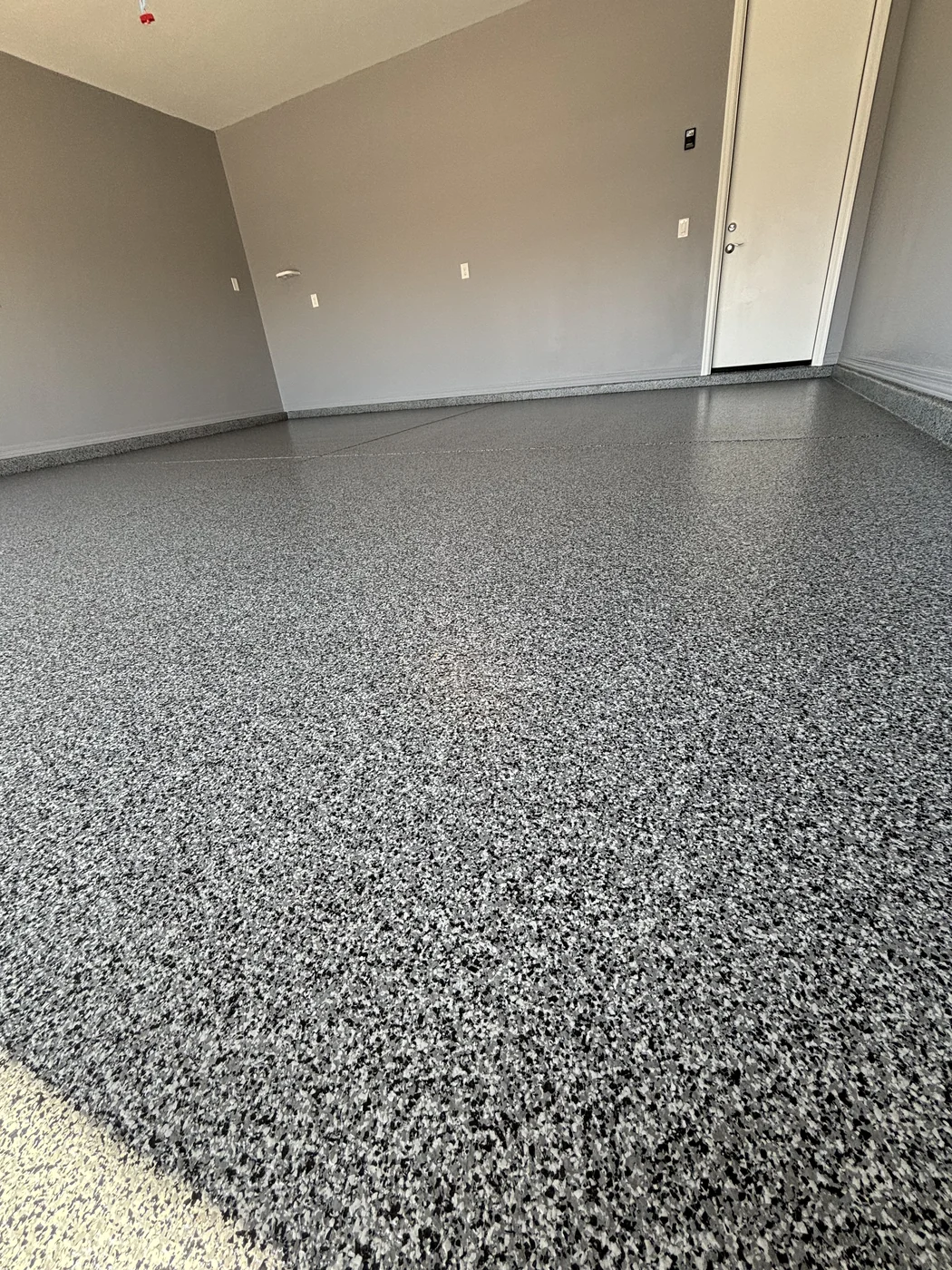
Up to 4–5× stronger than epoxy and built to flex with your slab. As the base of a polyurea-plus-polyaspartic system, it delivers a floor that resists cracks, hot tires, and Arizona heat for 15–25 years.
★★★★★ 4.7/5 from 89 Google reviews|Licensed ROC #168150|Typically a 2-Day Install · Family-Owned Since 1995
 ★ 4.7 · 89 reviews
Polyurea is an elastomeric, fast-setting coating chemistry prized for one thing above all: toughness with flexibility. It’s up to 4–5 times more impact- and abrasion-resistant than standard epoxy, and instead of curing into a rigid, brittle shell, it stays elastic — expanding and contracting with your concrete instead of cracking off it.
Here’s the part most homeowners don’t know: the best garage floors don’t choose between polyurea and polyaspartic — they use both. We install polyurea as the high-bond, flexible basecoat, then seal it with a UV-stable polyaspartic topcoat. The base brings the strength and flex; the top brings the color-hold and sun resistance. Together they’re the system Arizona’s best installers reach for.
AZ Garage Floors has coated Arizona concrete since 1995. We’re family-owned, licensed under Arizona ROC #168150, and every floor starts with a free on-site evaluation and a written quote.
Why Polyurea Makes the Toughest Base for an Arizona Floor
Arizona concrete lives a hard life — 115° summers, slabs that expand and contract every day, and hot tires that peel lesser coatings right off. Polyurea was engineered for abuse, which is exactly why it belongs at the base of a desert floor system.
- Up to 4–5× tougher than epoxy. Superior impact and abrasion resistance shrugs off dropped tools, jack stands, and constant tire traffic.
- Elastomeric flexibility. It stretches and moves with the slab through desert temperature swings, so it resists the cracking and peeling that plagues rigid epoxy.
- Beats hot-tire pickup. High bond strength and flexibility mean hot tires can’t lift it the way they lift brittle coatings.
- Fast cure. Polyurea sets in a fraction of the time of epoxy, keeping your install to about a day.
- 15–25 year lifespan. A professionally installed polyurea system routinely outlasts epoxy (typically 5–10 years) two to three times over.
- Chemical- and stain-resistant. Seamless and non-porous — oil, gas, and chemicals wipe right off.
The one thing raw polyurea doesn’t do well on its own is hold color in direct sun — which is exactly why we never leave it bare. That’s the topcoat’s job.
The Polyurea + Polyaspartic System
We don’t pick one chemistry — we layer the best of both for a floor that’s tough AND sun-proof.
Polyurea vs. Epoxy — Why Polyurea Wins in the Desert
Epoxy is the older, cheaper chemistry, and it still has its place indoors and on a budget. But for an Arizona garage that sees sun and hot tires, polyurea outperforms it on the metrics that matter:
- Strength: polyurea is roughly 4–5× more impact- and abrasion-resistant.
- Flexibility: polyurea flexes with the slab; epoxy is rigid and can turn brittle, chip, and peel.
- Hot tires: polyurea resists hot-tire pickup; softening epoxy is prone to it.
- Lifespan: 15–25 years for polyurea vs. roughly 5–10 for epoxy.
- Cure: polyurea installs in about a day; epoxy can need 3–5 days to fully cure.
Polyurea vs. Polyaspartic — It’s Not Either/Or
People often ask us to pick a winner between polyurea and polyaspartic. The honest answer: they do different jobs, and the best floors use both. Polyurea is the tough, flexible base. Polyaspartic is the UV-stable, color-holding topcoat. On its own, raw polyurea can yellow in direct sun — so we cap it with polyaspartic, which won’t. You get the strength and flex of polyurea underneath and the sun-proof clarity of polyaspartic on top.
If you’re comparing systems, that’s the takeaway: don’t choose between them — get the system that layers both. Learn more about our polyaspartic topcoat →
Our Installation Process
Polyurea’s fast cure leaves no room for error — which is why prep and an experienced crew are everything.
Avoiding Common Polyurea Mistakes
Polyurea is a professional-grade material with a cure time measured in minutes, not hours. That’s a strength in trained hands and a liability in the wrong ones. Here’s what separates a floor that lasts decades from one that fails early:
- Leaving polyurea bare. Uncapped polyurea can yellow in the sun — it needs a UV-stable polyaspartic topcoat. We never skip it.
- Skipping moisture testing. Polyurea is moisture-sensitive during install; an untested desert slab is the #1 cause of bubbling and delamination.
- No anti-slip additive. Smooth polyurea is slick when wet — we broadcast anti-slip into the topcoat wherever you want traction.
- Rushed application. The material sets fast; precise mixing and timing matter, which is why this isn’t a DIY kit.
Family-owned since 1995, licensed under Arizona ROC #168150, and rated 4.7★ across 89 Google reviews — we install these systems every week and put the scope and price in writing before we start.
Polyurea Floor Coating FAQs
Explore More on Polyaspartic Coatings
Ready for a Floor That’s Tough AND Sun-Proof?
Get a free, no-pressure quote on a polyurea-plus-polyaspartic system built for the Arizona sun. Family-owned since 1995 · Licensed ROC #168150.
or call (602) 254-3363
