
Polyaspartic Garage Floor Coatings in Arizona
The next-generation upgrade from old epoxy — UV-stable so it never yellows, tough enough to shrug off hot Arizona tires, and installed in about a day. Engineered for the desert.
★★★★★ 4.7/5 from 89 Google reviews|Licensed ROC #168150|Typically a 2-Day Install · Family-Owned Since 1995
 ★ 4.7 · 89 reviews
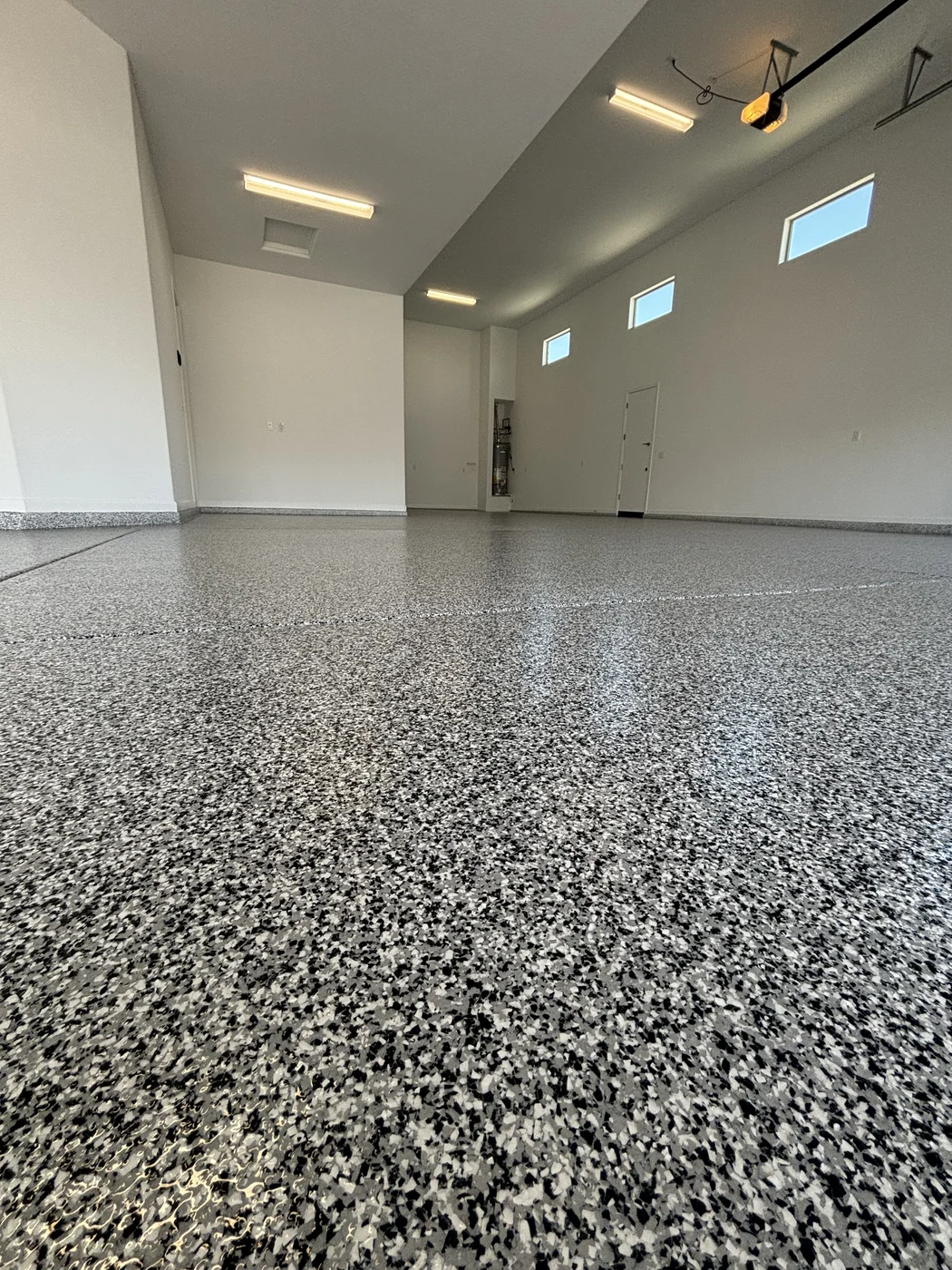
Polyaspartic is a fast-curing, flexible coating chemistry — a derivative of polyurea — that has become the go-to system for high-performance garage and concrete floors. Unlike traditional epoxy, which is rigid and can yellow, peel, or lift under hot tires, a polyaspartic system stays flexible, holds its color under intense UV, and bonds for the long haul.
At AZ Garage Floors we install full-flake polyaspartic and polyurea systems built specifically for Arizona’s heat, monsoon humidity, and relentless sun exposure. We’ve coated Arizona concrete since 1995, and we engineer every floor around the three things desert slabs punish: UV, thermal cycling, and moisture.
We still install premium epoxy systems too — and for some budgets and interior spaces they’re a great fit. But for most Arizona garages, polyaspartic is the upgrade worth making. Family-owned and licensed under Arizona ROC #168150, with a free on-site quote anywhere in the Phoenix metro and statewide.
Why Arizona Homeowners Are Choosing Polyaspartic
Arizona is uniquely hard on garage floors. Between 115° summers, garage doors that open onto blazing driveways, and tires that come home baked to 150°-plus, an ordinary epoxy floor is fighting a losing battle. Polyaspartic was built for exactly these conditions — and it’s why the desert’s top installers have moved to it.
- Never yellows — 100% UV-stable. Arizona sun turns ordinary epoxy amber and chalky within a couple of seasons. Polyaspartic holds its color and clarity for years, indoors or out.
- Beats hot-tire pickup. Rigid epoxy can soften and let a hot tire peel it right off the slab. Polyaspartic’s flexibility and bond strength resist hot-tire lift.
- Installed in one day. Most polyaspartic garage floors are a true one-day install — fast cure means you walk on it in hours and park on it the next day, not the week a full epoxy cure can demand.
- Flexes with your slab. Desert temperature swings expand and contract concrete daily; polyaspartic moves with it instead of cracking.
- Up to 4× the abrasion resistance of standard epoxy — dropped tools, jack stands, and dog nails don’t stand a chance.
- Chemical- and stain-resistant. Oil, gas, brake fluid, and pool chemicals wipe right off the seamless, non-porous surface.
The result is a floor that still looks showroom-new after the summers that would have turned a cheaper coating yellow, cracked, and peeling.
Our Polyaspartic & Polyurea Coating Systems
We match the system to your space, style, and budget — every one engineered for Arizona concrete.
Beyond the Garage — Where Polyaspartic Works
The same UV-stable, fast-curing system that transforms garages works across your whole Arizona property.
Polyaspartic vs. Epoxy — Which Is Right for Your Arizona Garage?
Here’s the honest breakdown. Epoxy is the older, budget-friendly chemistry; polyaspartic is the modern, high-performance upgrade. Both are far better than garage paint or a bare slab — but they behave very differently under an Arizona summer.
- Color under UV: epoxy yellows and chalks in direct sun; polyaspartic is 100% UV-stable and stays clear.
- Cure time: epoxy can take 72+ hours before you park; polyaspartic is typically car-ready in about 24 hours.
- Hot tires: rigid epoxy can lift under hot-tire contact; flexible polyaspartic resists it.
- Flexibility: epoxy is hard but brittle; polyaspartic flexes with the slab, resisting cracks.
- Cost: epoxy is cheaper up front; polyaspartic costs more but lasts noticeably longer in the desert.
For most Phoenix-area garages that see sun and hot tires, polyaspartic is the floor that still looks great a decade in. We’ll give you a straight recommendation for your slab and budget — no pressure. See the full polyaspartic vs. epoxy comparison →
Engineered for Arizona Heat, Sun & Monsoon Humidity
A coating that performs in a mild climate can fail fast in the desert. We build every polyaspartic floor around the conditions that actually break floors here: intense UV, daily thermal cycling, and moisture pushing up through the slab.
The finished floor is seamless and non-porous, so upkeep is almost nothing — sweep it, or hose and wet-mop it. No waxing, no annual re-sealing, no special products. It shrugs off UV, heat cycling, and monsoon humidity year after year while ordinary coatings yellow, crack, and dust.
Done right, a polyaspartic floor is a decades-long finish — which is exactly why we don’t cut corners on the prep that makes it last.
Our Installation Process
A precise, mechanically-prepped install is the difference between a floor that lasts and one that peels. Here’s how we do it.
What Does a Polyaspartic Floor Cost in Arizona?
Every floor is quoted individually, but here’s honest guidance on what a professional polyaspartic garage floor runs in the Phoenix metro. Most residential installs land around $4–$8 per square foot, with the final number driven by a few things:
- Garage size: larger floors cost less per square foot as the fixed setup costs spread out.
- Slab condition: extensive crack repair, spalling, or removing an old failing epoxy coating adds prep time.
- Moisture mitigation: if the slab tests high for moisture, a vapor primer is added — the step that makes the floor actually last.
- Finish: full-flake, metallic, and custom designs vary in material and labor.
Polyaspartic costs more up front than a basic epoxy, but with a 15–25 year lifespan versus 5–10 for epoxy, it’s typically the better value over the life of the floor — you’re not repainting a yellowed, peeling garage a few years later. Every quote is free, on-site, and in writing, with no surprises.
Avoiding Common Polyaspartic Mistakes
Polyaspartic is a superior material, but it’s only as good as the crew installing it. Its fast cure leaves no room for error, which is exactly why it isn’t a DIY kit. Here’s what separates a floor that lasts from one that fails early:
- Skipping moisture testing. Desert slabs move water vapor upward; coat over it untested and the floor bubbles and delaminates. We test every slab.
- No anti-slip additive. A glossy polyaspartic can be slick when wet — we broadcast an anti-slip additive into the topcoat wherever you want the grip.
- Rushed or inexperienced application. The material sets in minutes; precise mixing and spray-grade timing matter. Our crews install these systems every week.
Family-owned since 1995, licensed under Arizona ROC #168150, and rated 4.7★ across 89 Google reviews — we treat your garage like it’s our own, and we put the scope and price in writing before we start.
Polyaspartic Floor Coating FAQs
Polyaspartic Garage Floor Coating Across Metro Phoenix
Ready to Upgrade Beyond Epoxy?
Get a free, no-pressure quote on a polyaspartic system built for the Arizona sun. Family-owned since 1995 · Licensed ROC #168150.
or call (602) 254-3363
