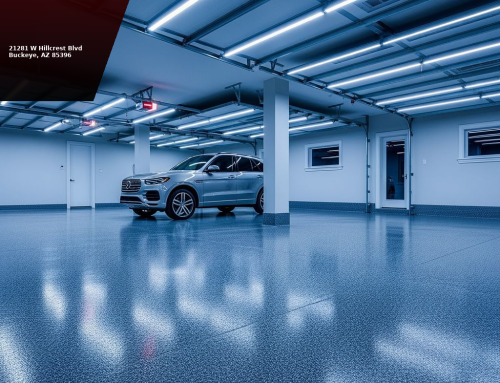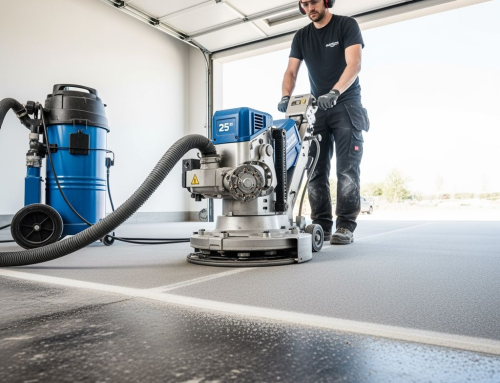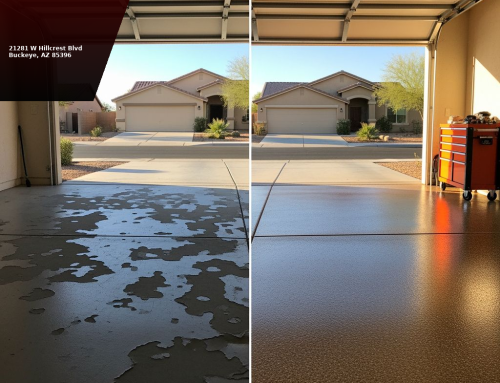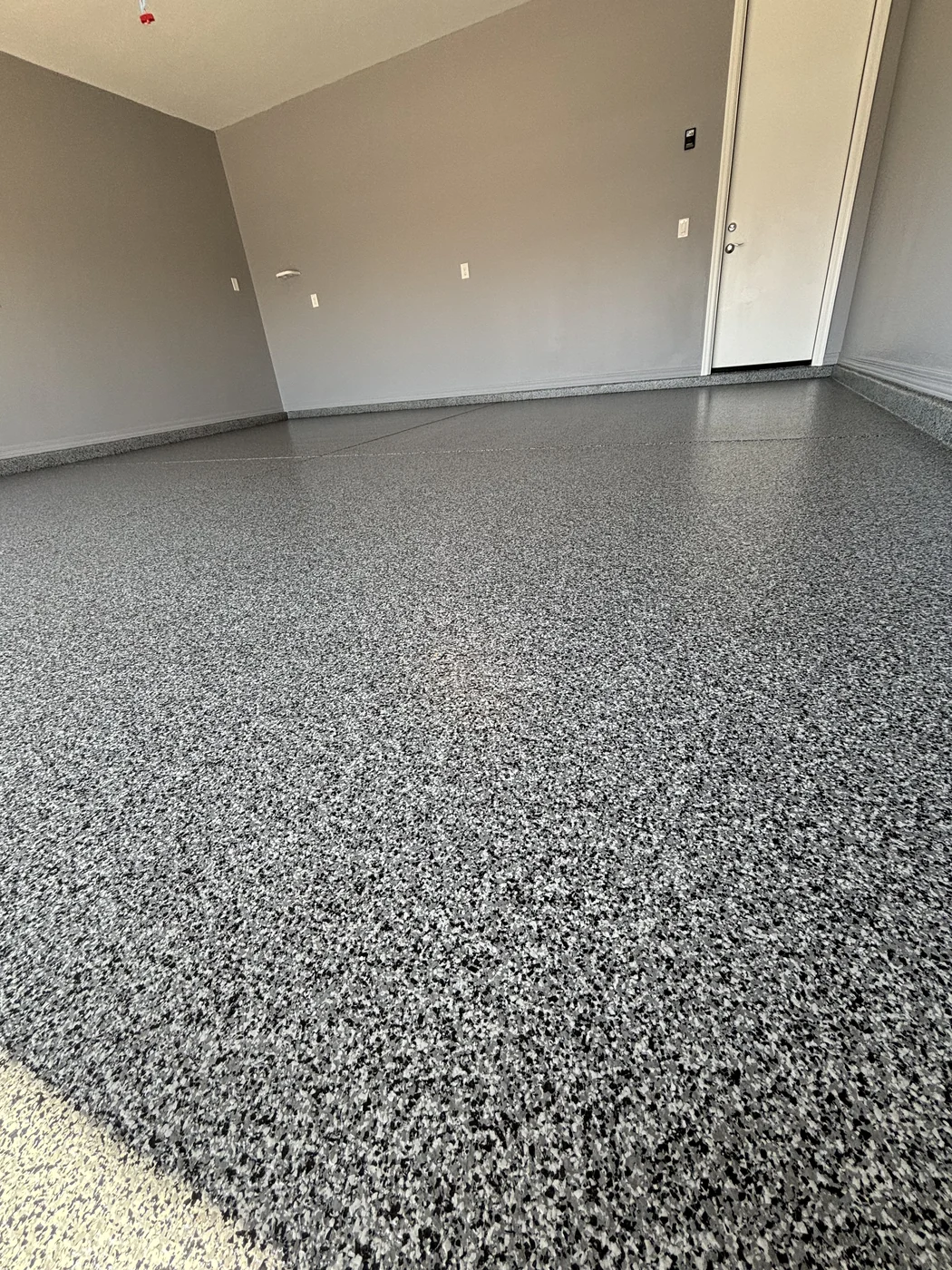
If you’ve seen an old garage floor turn amber and chalky, you’ve seen epoxy yellowing — and in sun-soaked Arizona it happens fast. So does polyaspartic do the same thing? Here’s the honest answer. (More in our polyaspartic garage floor coating guide.)
No — Polyaspartic Is 100% UV-Stable
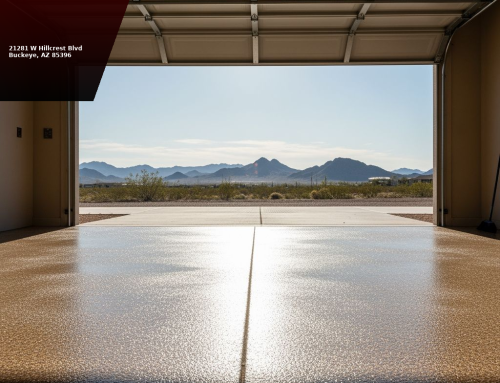
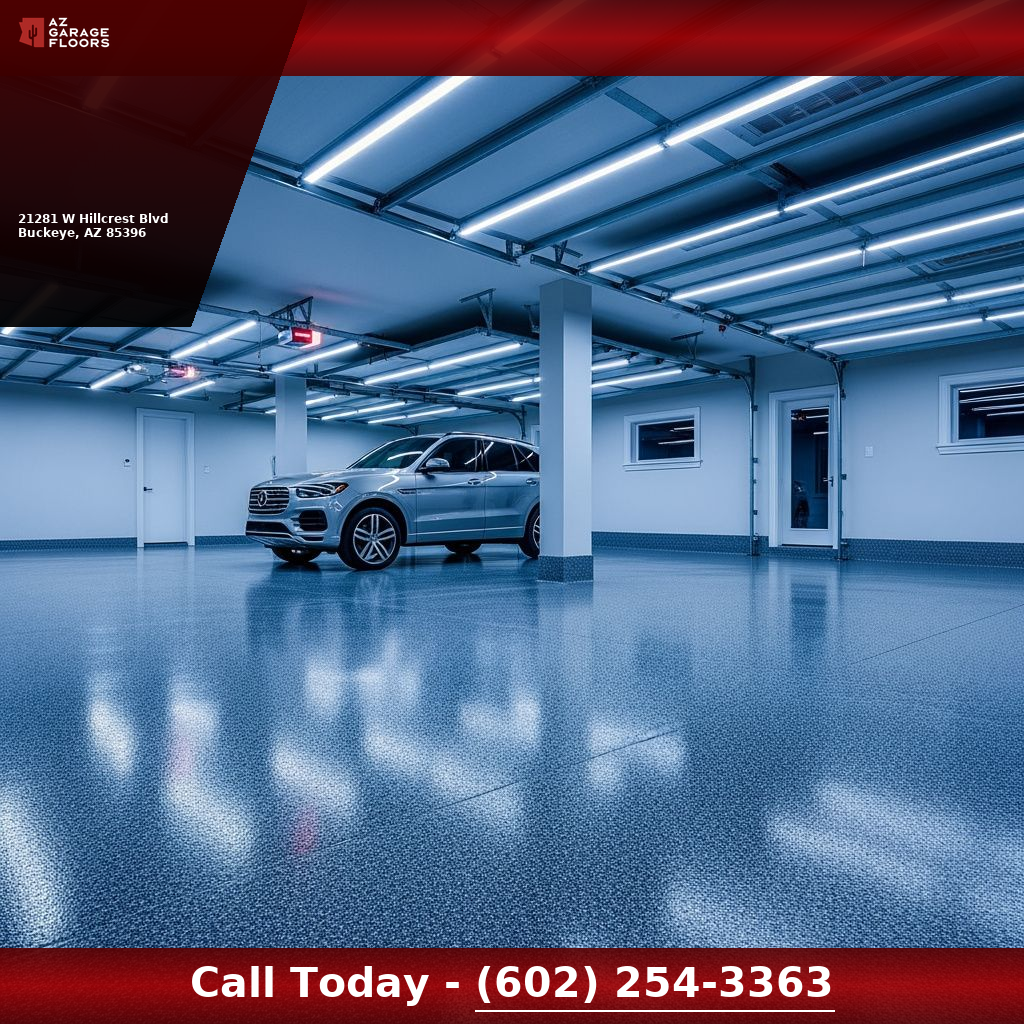
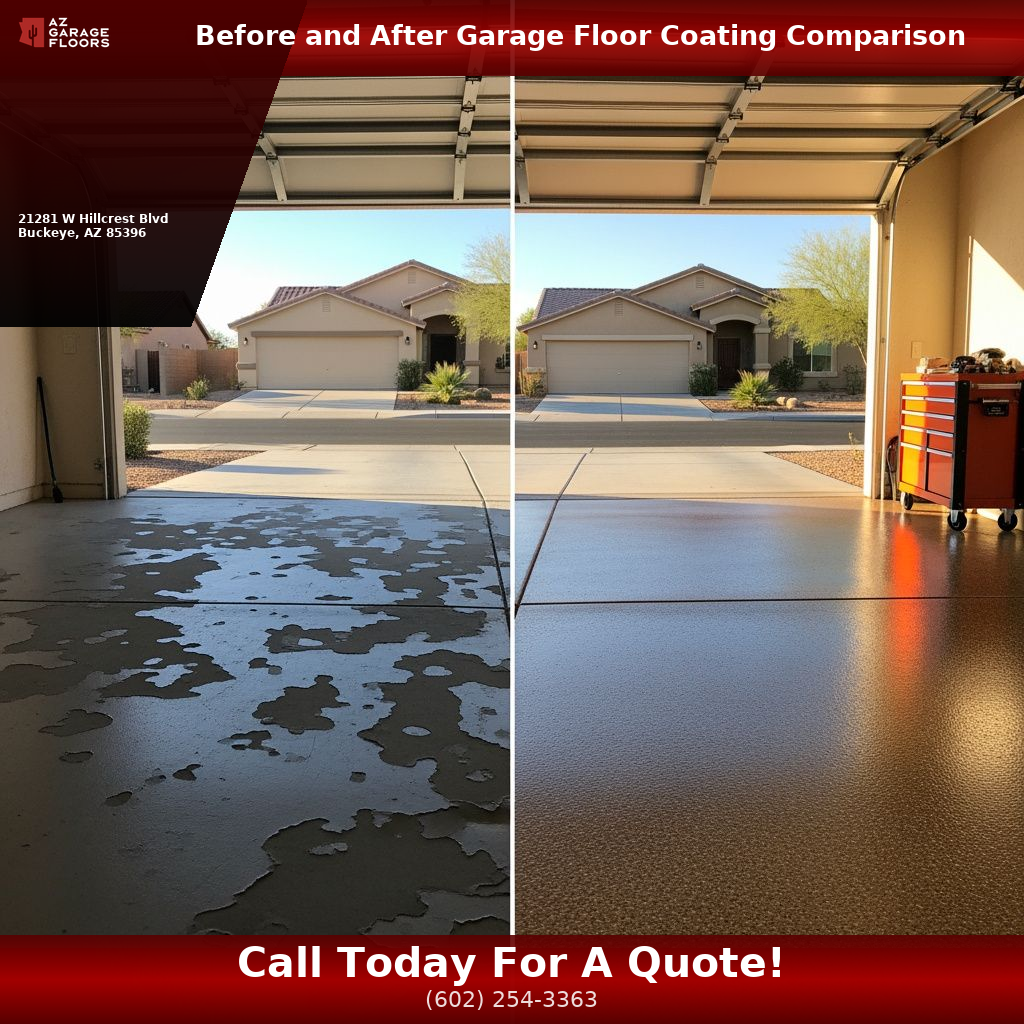
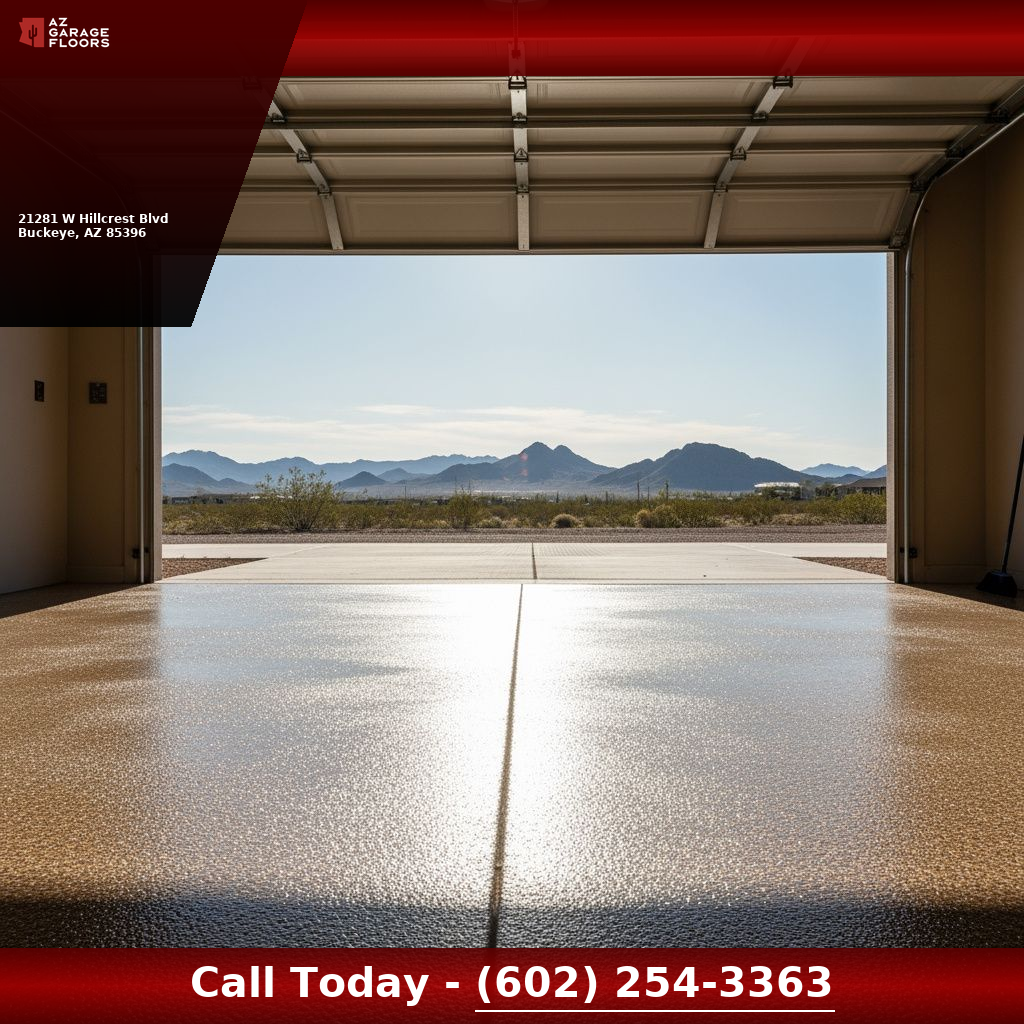
Unlike epoxy, polyaspartic is fully UV-stable. It holds its color and clarity in direct sunlight instead of yellowing, ambering, or chalking. That’s a big reason it’s the coating of choice for sun-exposed Arizona garages, covered patios, and pool decks where epoxy would discolor within a couple of seasons.
Why Epoxy Yellows and Polyaspartic Doesn’t
Standard epoxy’s chemistry breaks down under UV, which shifts its color and dulls its gloss. Polyaspartic (an aliphatic chemistry) is engineered to resist exactly that. One important note: raw polyurea basecoats can yellow on their own, which is why the best systems seal a flexible polyurea base with a UV-stable polyaspartic topcoat — you get the strength of one and the sun-resistance of the other.
Polyaspartic & UV FAQs
Explore More on Polyaspartic Coatings
Thinking About a Polyaspartic Floor?
Get a free, no-pressure quote and honest advice. Or read the full polyaspartic garage floor guide. Family-owned since 1995 · ROC #168150.
or call (602) 254-3363