Why Do Epoxy Garage Floors Fail in Arizona?
Why Epoxy Garage Floors Fail in Arizona — And How to Avoid It
Key Takeaways:
- The primary reasons for epoxy garage floor peeling in Phoenix AZ often stem from inadequate surface preparation, unsuitable product choices for the intense Arizona heat, and hidden moisture issues.
- Proper professional installation requires diamond grinding the concrete to achieve the correct profile, selecting high-performance polyaspartic coatings, and addressing potential moisture vapor transmission.
- Choosing a reputable local contractor who understands Arizona’s unique climate and offers a comprehensive, transparent warranty is essential for a long-lasting garage floor coating.
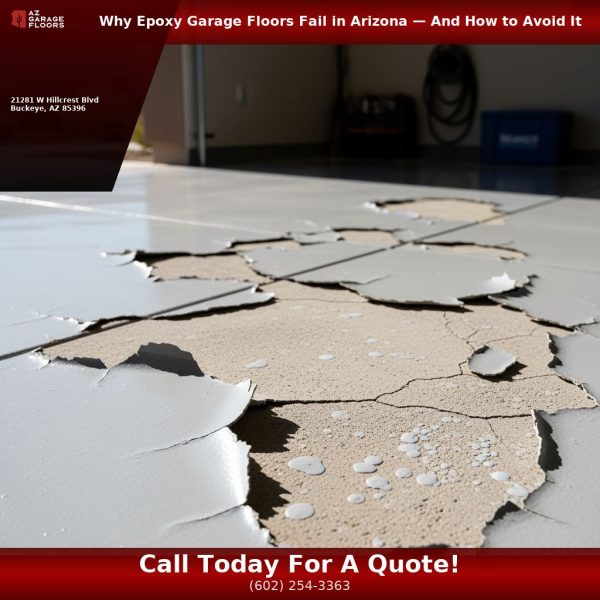
If you’ve ever looked at your garage floor and seen unsightly bubbles, cracks, or peeling patches, you’re not alone. Many homeowners in Phoenix and across Arizona experience this frustrating issue. Your epoxy garage floor peeling in Phoenix, AZ, is often a direct result of shortcuts taken during installation, product limitations, or a misunderstanding of our unique desert climate. Specifically, it typically comes down to insufficient concrete preparation, the use of a coating not designed for extreme temperatures, or unchecked moisture beneath the slab.
Understanding these underlying causes is the first step toward getting a garage floor coating that truly lasts. You deserve a durable, attractive surface that withstands the daily demands of a busy household and the harsh Arizona environment.
Understanding Why Your Epoxy Garage Floor is Peeling in Phoenix, AZ
Arizona’s climate presents distinct challenges for garage floor coatings. The extreme heat, intense UV exposure, and significant temperature fluctuations between day and night and between summer and winter place immense stress on any surface finish. Several factors commonly contribute to coating failure in our region.
The Critical Role of Concrete Profile and Substrate Preparation
The single most common reason coatings fail, especially when you see your epoxy garage floor peeling in Phoenix, AZ, is inadequate preparation of the concrete slab. Think of it like painting a wall without cleaning or sanding it first; the paint won’t stick. For garage floor coatings, the “stick” is called adhesion, and it’s paramount.
Concrete is naturally porous, and its surface often contains laitance (a weak, powdery layer), sealers, oil stains, or contaminants. These barriers prevent a new coating from forming a strong mechanical bond with the concrete. Simply etching with acid or power washing is rarely enough. Proper preparation, or “profiling,” means creating a rough, open surface that the coating can physically grip onto.
Professional installers achieve this through mechanical methods:
- Diamond Grinding: This uses specialized machines with diamond-tipped abrasives to abrade the concrete surface, removing contaminants and creating the necessary profile. It’s often compared to sanding wood, but for concrete.
- Shot Blasting: This method propels small steel beads at the concrete surface at high velocity, effectively blasting away the top layer and creating a textured, open profile.
When this crucial step is skipped or done incorrectly, the coating sits on the concrete rather than bonding with it. Over time, as you drive on it, spill fluids, or experience temperature changes, that weak bond breaks, leading to adhesion failure and peeling. Furthermore, contaminants left on the surface can prevent proper adhesion in patches, creating weak points where the failure begins.
Product Selection: Why All Coatings Are Not Equal in Arizona’s Heat
Many DIY epoxy kits or lower-quality professional systems are simply not engineered to withstand Arizona’s climate. Traditional epoxies can become brittle when exposed to extreme heat and UV radiation.
Consider our summers, where garage temperatures can easily exceed 120°F. This intense heat, combined with the concrete expanding and contracting due to thermal cycling (the swing from 45°F winter nights to 115°F summer days), puts immense strain on the coating. A brittle coating cannot flex with the concrete, leading to cracking, delamination, and peeling. Moreover, direct sunlight, even through a garage door left ajar, can cause traditional epoxy to yellow and degrade over time due to UV exposure.
Choosing the right type of coating for the application and environment is paramount. A high-performance system, such as a polyaspartic coating, offers superior flexibility, UV stability, and chemical resistance, making it much better suited to the harsh conditions here in 2026.
Battling Moisture Vapor Transmission Under Your Slab
Another silent killer of garage floor coatings is moisture vapor transmission (MVT). Concrete slabs are porous, and moisture from the soil beneath your home can migrate upwards through the concrete as vapor. Even if your garage floor feels dry to the touch, significant amounts of moisture vapor can be passing through it.
When this moisture vapor hits an impermeable coating, such as epoxy, it gets trapped. The pressure builds up, creating blisters, bubbles, and ultimately, delamination and peeling. This problem is particularly prevalent in areas with high water tables or where proper vapor barriers were not installed during the home’s original construction.
A professional installer will always test your concrete for MVT before applying any coating. This involves placing hygrometers or calcium chloride tests on the slab to measure the rate of moisture vapor emission. If MVT levels are too high, specialized moisture-mitigation primers must be used to create a barrier that prevents vapor from affecting the coating. Skipping this vital step is a recipe for an epoxy garage floor peeling Phoenix AZ.
The Challenge of Hot Tire Pickup
Have you ever noticed black marks or actual chunks of your coating coming up where your tires rest? This is known as hot tire pickup. When you drive your car, your tires heat up, especially on hot Arizona roads. When you pull into your garage and park, those hot tires transfer heat to the floor coating.
Low-quality epoxy coatings can soften under this localized heat, allowing the tire’s tread to literally “pick up” pieces of the coating as the tire cools and contracts. This causes unsightly divots and peeling, ruining the aesthetic and integrity of your floor. This issue is exacerbated in our climate, where both ambient and road temperatures are consistently high.
The AZ Garage Floors Difference: A Professional Installation Process
You might be wondering, “How do I ensure my next garage floor coating doesn’t peel?” The answer lies in a meticulous, professional installation process that addresses all the common failure points. AZ Garage Floors has been installing and repairing coatings in the Phoenix West Valley for over 30 years, with an understanding of the unique demands of this environment.
Here’s what a proper installation should involve:
1. Comprehensive Concrete Preparation: Every project starts with a thorough assessment of your concrete. We don’t just “clean” the floor; we mechanically prepare it. This means diamond grinding the entire surface to achieve the ideal concrete profile for optimal adhesion. This step removes old coatings, sealers, and efflorescence, and opens the concrete’s pores.
2. Moisture Vapor Testing and Mitigation: Before any primer is applied, we conduct moisture vapor transmission tests. If elevated moisture levels are detected, a specialized moisture-blocking primer is used to prevent hydrostatic pressure from damaging the coating system. This ensures the long-term stability of the finish.
3. Primer Coat Application: A high-quality primer coat is applied next. This layer penetrates the prepared concrete, sealing it and providing an excellent foundation for subsequent layers. It maximizes adhesion and helps prevent issues like outgassing.
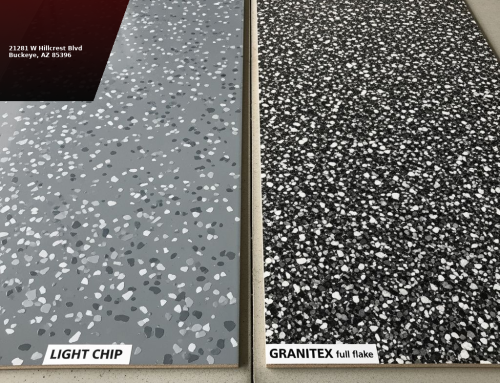
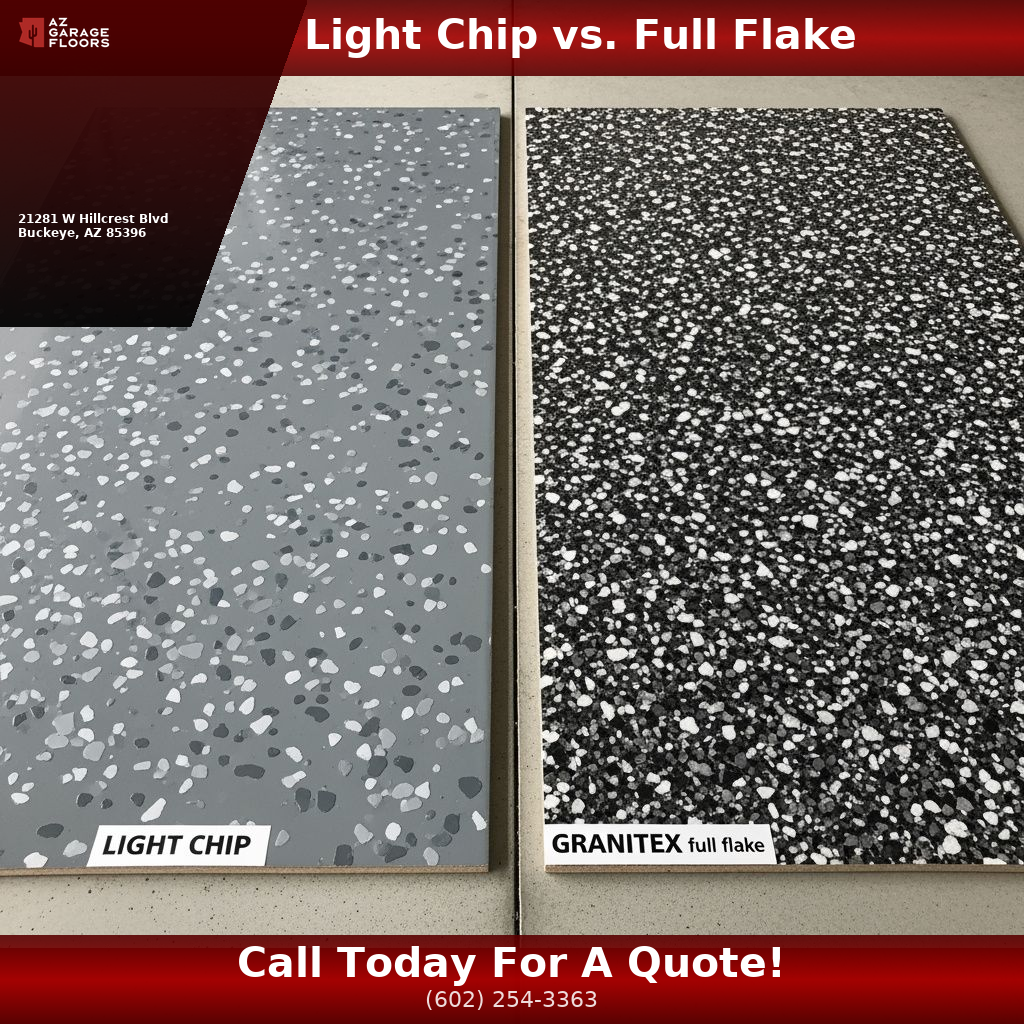
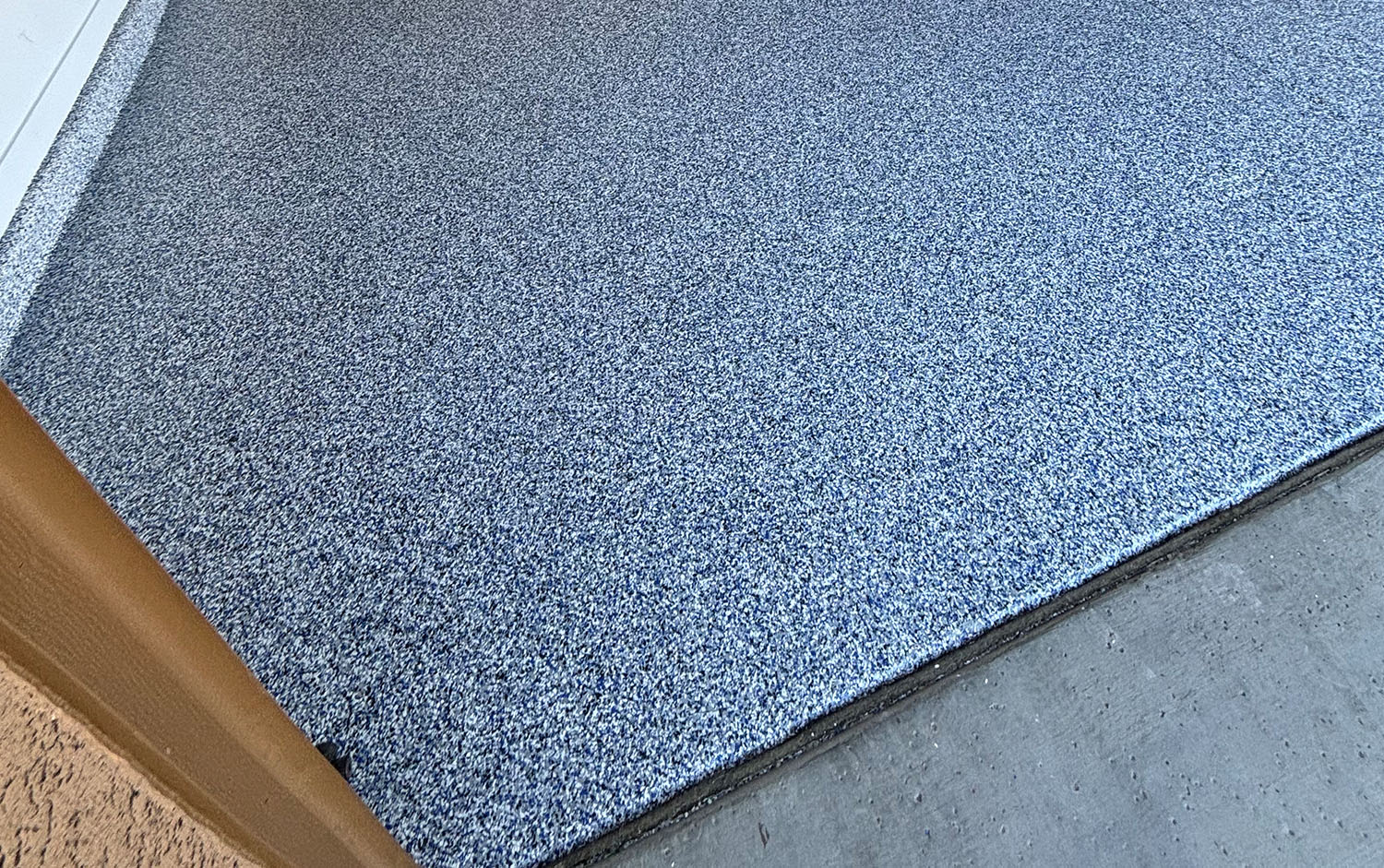
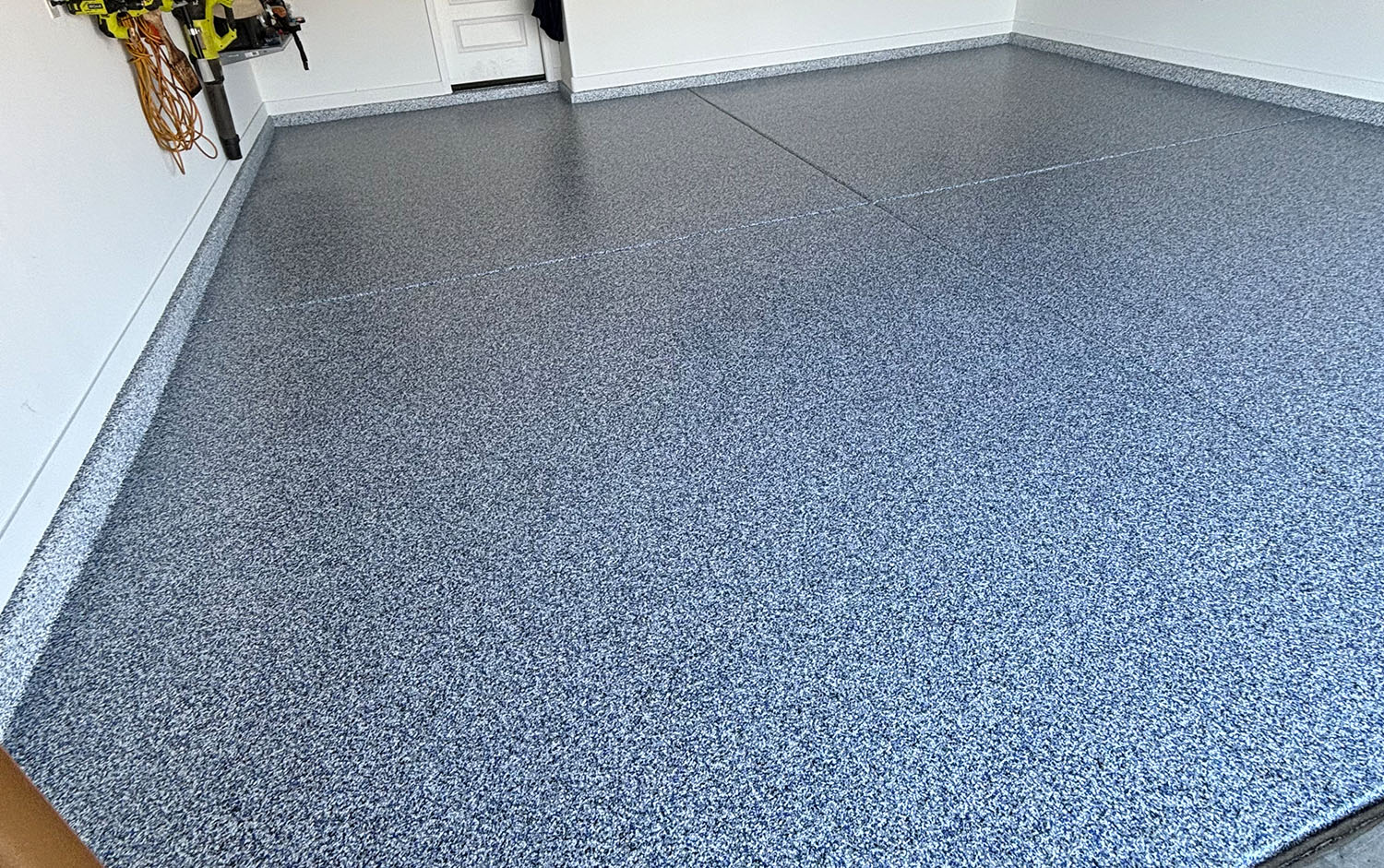
4. Base Coat with Flakes (if desired): Following the primer, a pigmented base coat is applied. If you choose a flake system, decorative vinyl flakes are broadcast into this wet base coat to refusal, creating a full-chip, durable, and slip-resistant surface. This also adds aesthetic appeal and hides minor imperfections.
5. Clear Topcoat Application: The final and perhaps most critical layer is a clear, high-performance topcoat. For Arizona’s climate, AZ Garage Floors primarily uses polyaspartic topcoats. This material offers superior UV stability (no yellowing), exceptional abrasion and chemical resistance, and the flexibility to withstand thermal cycling without cracking or delaminating. It cures quickly, allowing you to return to full use of your garage sooner.
By adhering to these steps, you ensure a professional installation that keeps your garage floor coating system designed to withstand the brutal Arizona heat, heavy vehicle traffic, and daily wear and tear for years to come. This approach minimizes the risk of your epoxy garage floor peeling in Phoenix, AZ.
Beyond Epoxy: Superior Solutions for Lasting Results
While “epoxy” is a common term, many modern, high-performance garage floor coatings actually utilize polyurea and polyaspartic technologies. These materials offer significant advantages over traditional epoxy, particularly in hot climates. They are more flexible, making them less prone to cracking from concrete movement. They offer far superior UV resistance, preventing yellowing and degradation under direct sunlight. Furthermore, their rapid cure times minimize downtime, and their resistance to hot tire pickup is excellent. Ultimately, investing in these advanced materials for your garage floor provides peace of mind and long-term value.
What a Garage Floor Coating Warranty Really Means
When selecting a contractor, understanding their warranty is just as important as evaluating their products and processes. A warranty should offer genuine protection and peace of mind.
What to look for in a quality warranty:
Clear Coverage: The warranty should explicitly state what is covered (e.g., peeling, delamination, excessive wear) and for how long. Beware of warranties that only cover “material defects,” as this often shifts responsibility to the manufacturer and excludes installation errors, which are the most common cause of failure.
Transferability: A transferable warranty can be a valuable asset if you decide to sell your home.
Exclusions: Understand what voids the warranty. Common exclusions might include damage from acts of nature, abuse, or alterations made to the floor by the homeowner.
Installer Responsibility: The best warranties come directly from the installer and cover both material and labor. This demonstrates confidence in their workmanship and products.
AZ Garage Floors stands behind its work with a robust warranty that reflects its decades of experience and commitment to quality. A strong warranty gives you confidence that your investment is protected, and that your beautiful, functional garage floor will last.
Frequently Asked Questions About Garage Floor Coatings
About AZ Garage Floors
AZ Garage Floors is a family-owned concrete coating company serving Buckeye, Surprise, Peoria, Avondale, and Phoenix. With decades of combined experience and hundreds of residential and commercial installations, AZ Garage Floors offers a full spectrum of garage floor coatings — from decorative residential systems (solid color epoxy, Granitex chip systems, metallic epoxy) to industrial commercial solutions (epoxy mortar, heavy-duty polyaspartic, chemical-resistant and anti-slip systems). The company utilizes commercial-grade 2-part resin products, thorough substrate preparation, and performance-based specifications to ensure longevity and safety. AZ Garage Floors offers residential warranty options and commercial warranty terms tailored to the project’s scale and usage.