Should You Choose Light Chip or Full Flake Epoxy?
Light Chip vs. Full Flake Epoxy — How to Choose the Right Garage Floor System in Arizona
Key Takeaways:
- Light chip epoxy delivers a subtle, speckled finish over a visible solid base color; full flake (Granitex) covers the concrete completely with chips broadcast wall-to-wall for a bolder, more dramatic look.
- Your choice hinges on five concrete factors: appearance preference, whether your base color matters, your concrete’s condition, how much slip resistance you need, and which color palette speaks to you.
- AZ Garage Floors offers a free estimate that includes side-by-side sample comparison — see both systems in your garage before you commit.
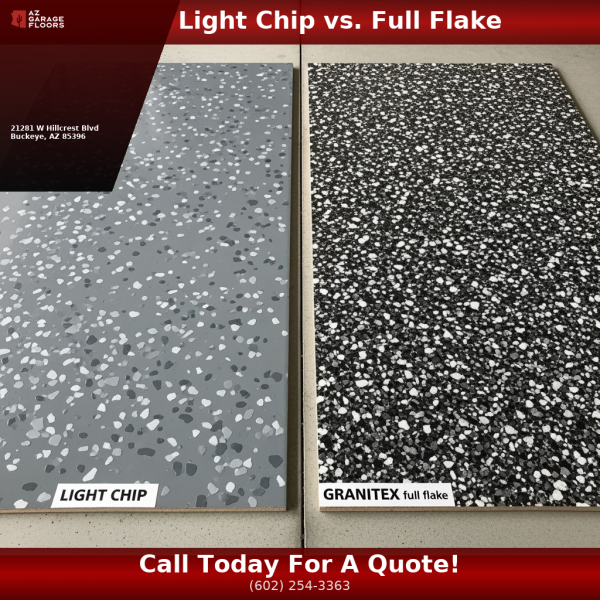
The short answer: light chip epoxy lays speckled color over a solid base coat, so the base color remains part of the design. Full flake (Granitex) broadcasts chips wall-to-wall until no base color is visible, producing a thicker, more immersive surface. Both are professional-grade, multi-coat systems — the difference lies in how much of the concrete’s story is told and how bold you want the floor to look.
If you’ve seen one neighbor’s garage with a sleek gray floor dotted with subtle flakes and another neighbor’s garage with a stone-like surface that looks like polished granite, you’ve already seen both systems in the wild. Neither one is objectively better. What matters is which one fits your garage, your eye, and the way you actually use the space.
What Separates the Two Systems Technically
Start with the build, because the construction difference explains almost every performance and appearance distinction you’ll encounter.
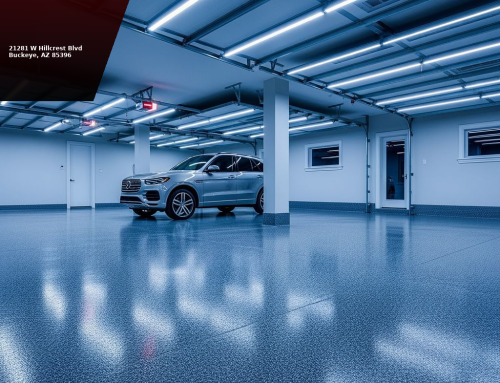
The light chip system is a three-coat process. A pigmented epoxy primer goes down first and establishes the solid base color — charcoal, tan, gray, white, and other tones are common. A pigmented polyurethane midcoat follows, and then acrylic chips are broadcast across the wet surface at a controlled, partial density. A clear polyurethane topcoat seals everything. The result is a clean, colored floor with a speckled texture floating on top. The base color remains highly visible. The chips add character and grip without overwhelming the look.
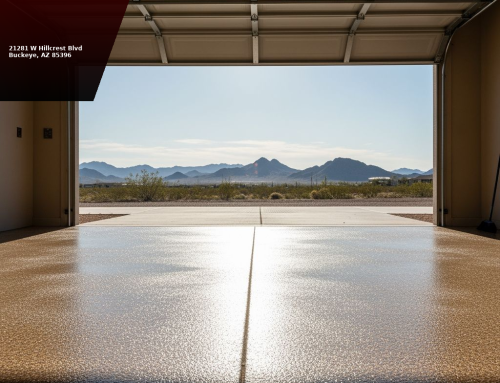
The Granitex full flake system works differently. An epoxy primer goes down, and then chips are broadcast to rejection — meaning installers keep applying chips until the surface literally cannot accept any more. Every square inch of the floor is covered. A urethane sealer embeds the chip layer, and then a polyurethane or polyaspartic topcoat finishes the surface. Because the chips cover the primer entirely, there is no visible base color. The floor looks like the chip blend itself, producing a thicker, denser surface profile with more texture underfoot.
Both systems are multi-coat, both use professional-grade chemistry, and both outperform big-box DIY kits by a wide margin. The technical gap between them is a matter of chip density and build thickness, not quality.
Five Factors to Weigh Before You Decide
1. What Look Do You Actually Want?
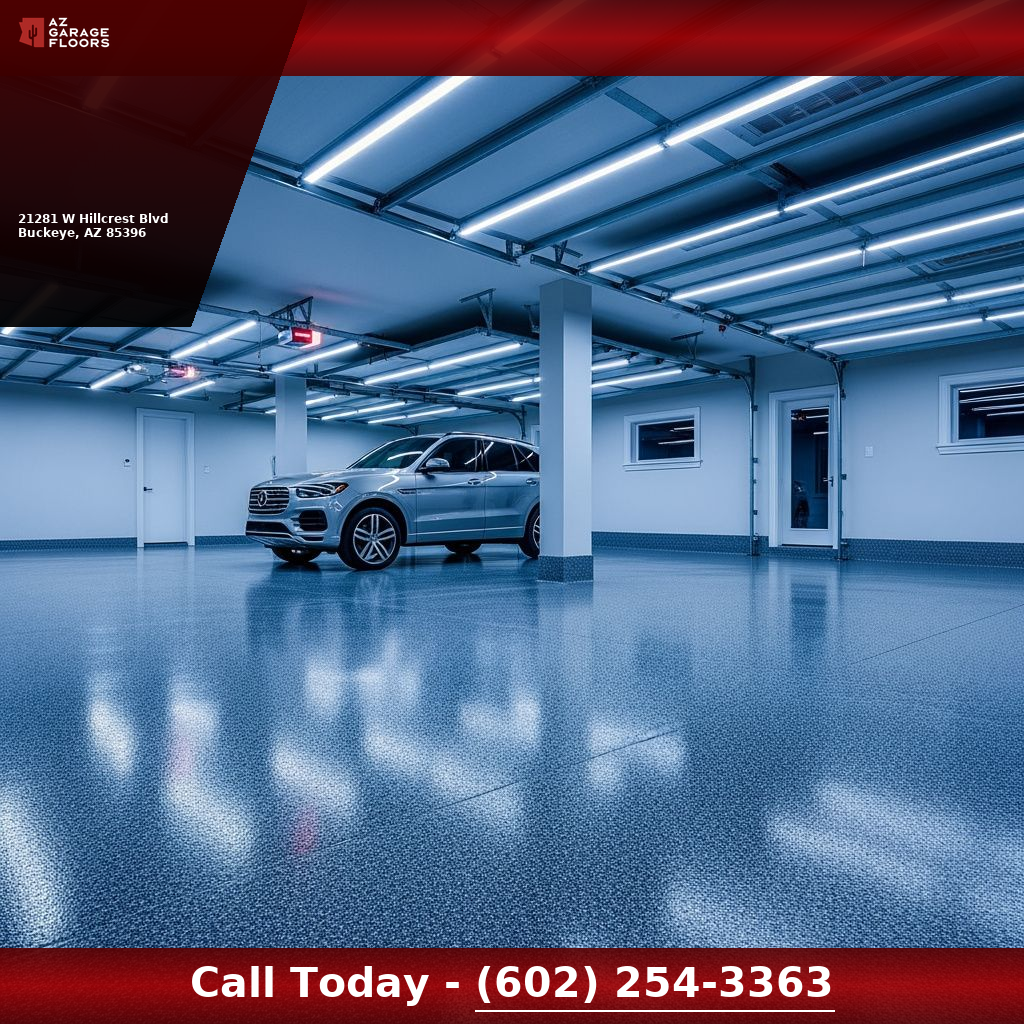
This is the most honest place to start. Light chip creates a refined, contemporary finish. The solid base color anchors the floor, and the scattered chips read as an accent. It pairs well with a clean, organized garage — think white cabinets, organized tool storage, a daily driver parked on top.
Full flake is visual drama. The stone-like, wall-to-wall chip coverage commands attention. Show garages, collector vehicle spaces, and garages that double as weekend hangout areas tend to land on this system. If you want guests to notice the floor the moment the door goes up, Granitex delivers that.
2. Does Your Base Color Matter to You?
With a light chip system, the base coat is a genuine design element. Choosing a warm tan base with a complementary chip blend gives you a floor that feels warm and has depth. Choosing a cool slate gray base with subtle gray chips creates a clean, almost industrial look. The base and chip colors work together.
With Granitex, that decision becomes moot. The base primer is covered completely, so the chip blend alone defines the color story. If you love a particular chip blend — say, a slate-and-bone mix or a warm caramel blend — and want that color to be everything, full flake is the right call.
3. What Condition Is Your Concrete In?
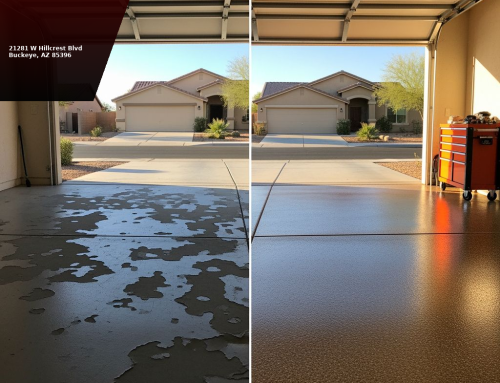
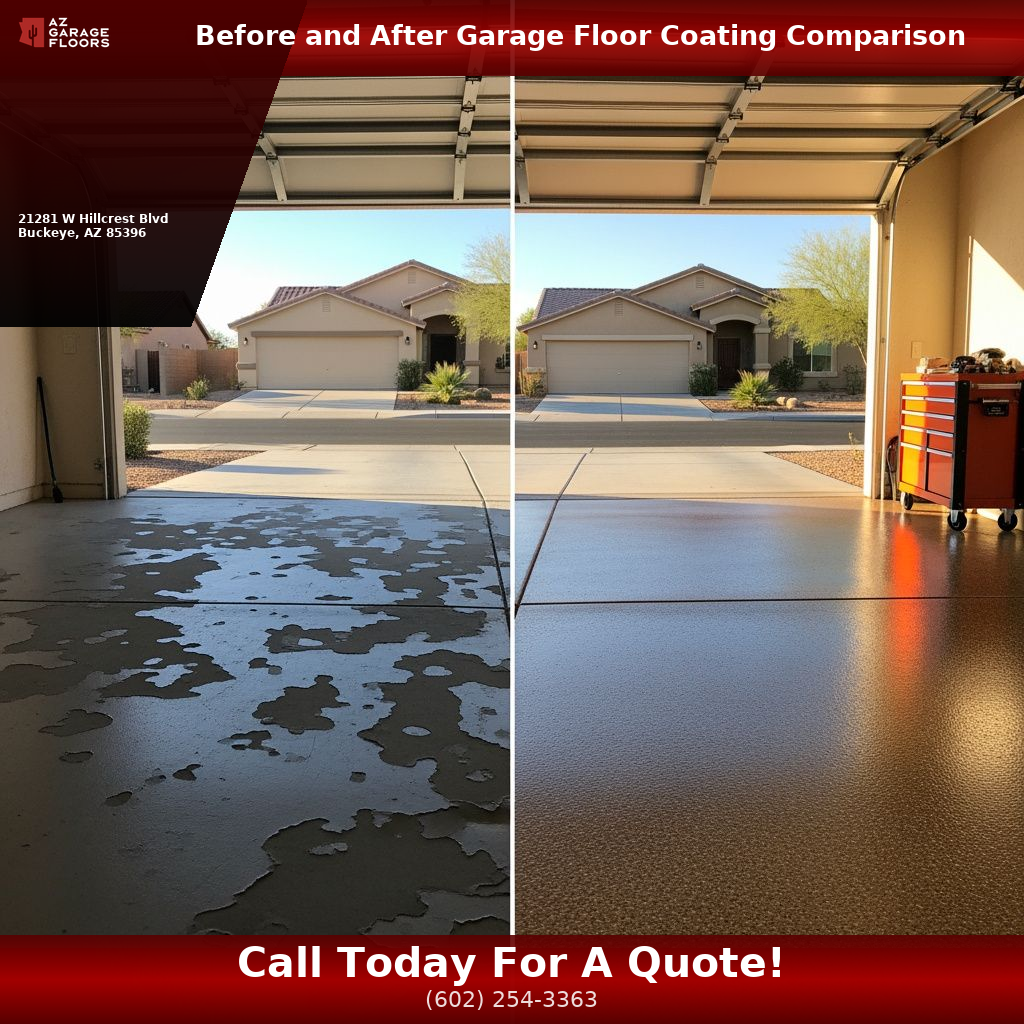
Full flake is more forgiving. Because the chips cover every inch of the surface at high density, minor cracks, surface patches, and old stains disappear beneath the chip layer. The finished floor looks consistent from edge to edge regardless of what the raw concrete looked like beforehand.
Light chip shows more of the underlying surface. That is not always a problem — most residential garage slabs in Arizona are in reasonable shape. However, if your slab has significant patching, visible crack repairs, or old stains that survived prep work, a full flake system will produce a cleaner-looking result. A light chip system over a heavily patched slab can let some of that history show through.
4. Slip Resistance
Both systems add meaningful texture compared to a bare concrete floor or a thin-coat-painted floor. Neither is slippery when wet.
However, Granitex’s thicker chip layer produces a more pronounced surface profile. There is simply more texture underfoot. For homeowners who park vehicles that drip oil or coolant, who live with older family members, or who want an extra margin of grip, the full flake system’s surface depth is a practical advantage. The light chip provides solid traction, too — it just doesn’t have the same raised profile.
5. Color Selection
AZ Garage Floors offers 41 light chip blends and 57 Granitex blends. Practically speaking, both ranges are wide enough that most homeowners find several combinations they like. The Granitex palette is broader, which matters if you have a very specific color vision. The light chip range still covers the most popular tones for Arizona homes — warm neutrals, cool grays, and earth tones that complement desert architecture.
Three Arizona Scenarios with Honest Recommendations
The homeowner with a show garage or collector vehicle space: Choose Granitex full flake. The wall-to-wall chip coverage and stone-like surface elevation match the visual intention. Visitors will notice it. It photographs well. The thicker texture also handles foot traffic around vehicles without showing wear patterns the way a lighter floor might.
The homeowner who wants a clean, low-drama floor that hides everyday dirt between sweeps: Choose the light chip system. The solid base color gives the floor a put-together look, and the partial chip broadcast adds just enough variation to make dried water spots and light dust practically invisible. It reads as clean even when it isn’t spotless.
The light-use commercial or retail client — think a small office with an attached service bay, or a showroom floor: Light chip or a solid color system is usually the right answer. The refined, controlled appearance reads as professional without the visual weight of full flake. For spaces where the floor is background rather than feature, less is more.
Care and Maintenance — Is There a Difference?
Practically speaking, no. Both systems are maintained the same way: a dust mop or leaf blower for dry debris, and a damp mop with a pH-neutral cleaner for anything wet. Neither system requires wax, sealers, or specialty treatments in normal residential use.
The one practical edge Granitex has in maintenance is camouflage. The full-chip surface texture hides grit, light oil spots, and general garage dirt between cleaning sessions better than a lighter, more open light chip floor. If you clean your garage floor weekly, this difference is invisible. If you clean it monthly, you will notice the full flake floor looks cleaner longer.
Seeing Samples Before You Commit
Reading descriptions of these systems only gets you so far. Chip colors and base color combinations look different under Arizona’s intense natural light than they do on a computer screen or a color card. AZ Garage Floors recommends seeing physical samples in your actual space before you finalize a system. The light that bounces off a southwest-facing driveway at 2 p.m. in July changes how a chip blend reads considerably.
AZ Garage Floors offers a free estimate that includes a side-by-side comparison of systems. An experienced installer walks through your garage, assesses your slab’s condition, shows you sample boards for both systems, and helps you land on a chip blend and base color that looks right in your space — not just on a website. In 2026, that kind of in-person guidance is still the fastest way to avoid a decision you’ll second-guess for the next decade.
Frequently Asked Questions About Light Chip vs. Full Flake Epoxy
Sources
- Chip broadcast and multi-coat epoxy system construction — https://en.wikipedia.org/wiki/Epoxy
- Slip resistance and surface profile standards for floor coatings — U.S. Occupational Safety and Health Administration: Walking-Working Surfaces https://www.osha.gov/walking-working-surfaces
- UV degradation and coating performance in high-heat climates — U.S. Department of Energy: Building Science Resources https://www.energy.gov/energysaver/weatherize/insulation
About AZ Garage Floors
AZ Garage Floors is a family-owned concrete coating company serving Buckeye, Surprise, Peoria, Avondale, and Phoenix. With decades of combined experience and hundreds of residential and commercial installations, AZ Garage Floors offers a full spectrum of garage floor coatings — from decorative residential systems (solid color epoxy, Granitex chip systems, metallic epoxy) to industrial commercial solutions (epoxy mortar, heavy-duty polyaspartic, chemical-resistant and anti-slip systems). The company utilizes commercial-grade 2-part resin products, thorough substrate preparation, and performance-based specifications to ensure longevity and safety. AZ Garage Floors offers residential warranty options and commercial warranty terms tailored to the project’s scale and usage.