5 Questions to Ask a Garage Floor Coating Contractor
5 Questions Every Homeowner Should Ask Before Hiring a Garage Floor Coating Contractor
Key Takeaways:
- Professional surface preparation through diamond grinding is the only way to ensure a permanent bond between the concrete and the coating.
- Homeowners must verify that contractors use commercial-grade 2-part resin systems rather than lower-quality consumer products.
- A lifetime residential warranty serves as the ultimate indicator of a contractor’s confidence in their materials and preparation process.
Investing in a high-quality garage floor transformation is a significant decision for any Buckeye homeowner in 2026. While many companies offer similar-looking results in their marketing photos, the actual longevity of the floor depends on factors you cannot see once the resin cures. Because the industry varies widely in quality, you need a reliable way to distinguish between a basic applicator and a seasoned professional. Asking specific questions about garage floor coating contractors during your interview process helps you uncover the technical details that determine whether your floor will last for decades or peel within the first year. Austin Byrum and the team at AZ Garage Floors recommend focusing on the mechanics of the installation rather than just the aesthetic options.
What surface preparation method do they use?
Surface preparation is the single most important factor in the success of a floor coating. Without the correct profile, even the most expensive resins will eventually delaminate from the concrete. Specifically, you should ask if the contractor uses acid washing or mechanical grinding. Acid washing is a common shortcut that often fails to open the pores of the concrete deeply enough. Conversely, mechanical preparation ensures the coating has a “tooth” to grab onto.
The mechanics of diamond grinding
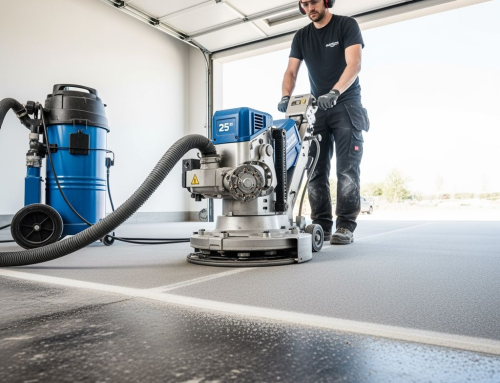
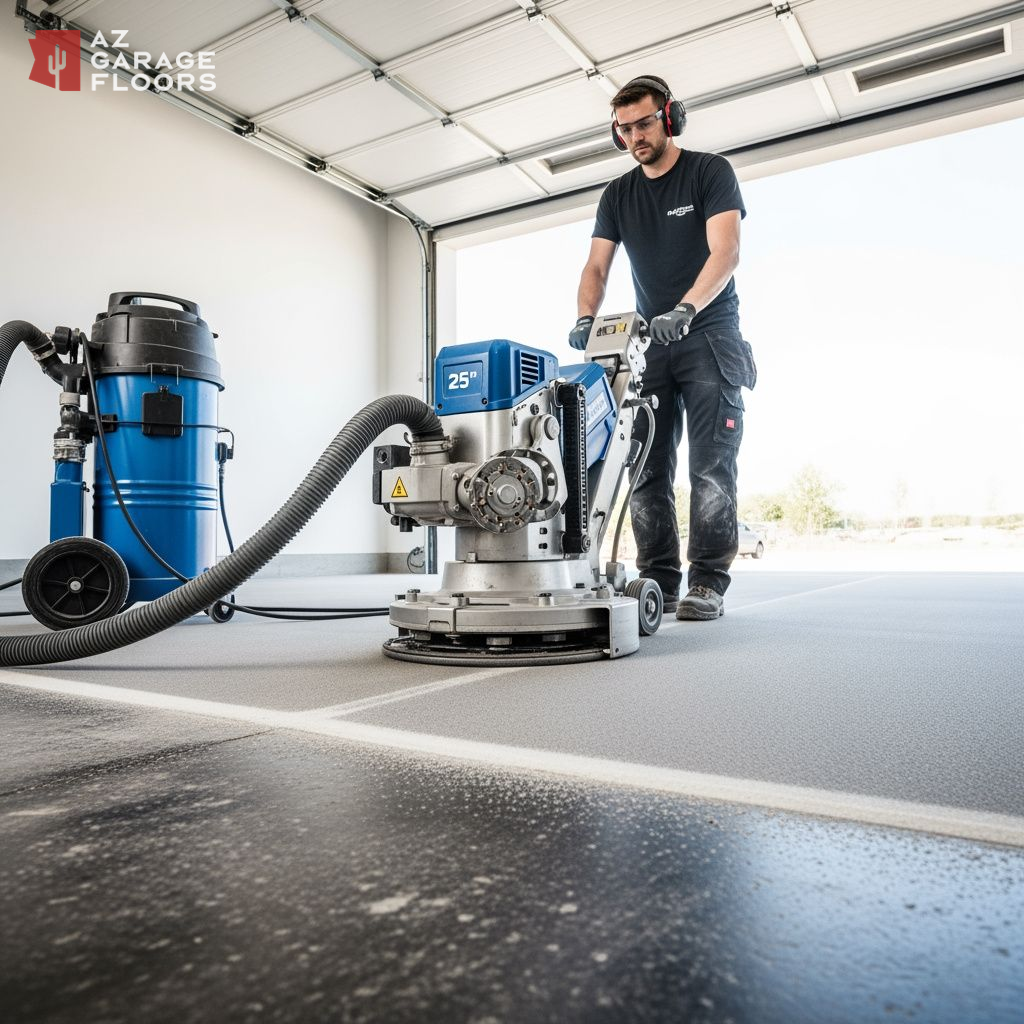
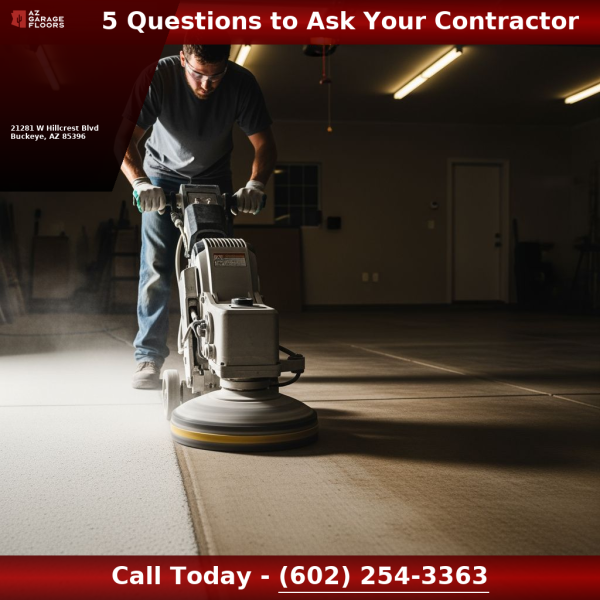
A professional installation requires heavy-duty equipment to remove the “laitance,” which is the weak top layer of concrete. At AZ Garage Floors, we utilize a 25-inch diamond grinding machine designed to profile the surface effectively. This machine uses industrial diamond segments to shave away the surface, exposing the aggregate and creating a porous texture similar to medium-grit sandpaper. This mechanical process is the only way to ensure the resin penetrates the slab rather than simply sitting on top of it. Consequently, this deep bond prevents hot-tire pickup and peeling under heavy use.
Why industrial vacuum systems are non-negotiable
Diamond grinding produces a massive amount of concrete dust that can permeate your entire home if not properly managed. Therefore, you must ask about the dust collection system the contractor employs. A high-quality professional will always use an industrial vacuum system directly attached to the grinder. This setup creates a nearly dust-free environment, protecting your belongings and your health. Furthermore, removing every speck of dust is critical for the resin’s adhesion. If dust remains in the pores of the concrete, the coating will bond to the dust instead of the slab, leading to premature failure.
What grade of materials do they specify?
The chemical composition of the coating determines its resistance to chemicals, UV rays, and physical impacts. Many homeowners are surprised to learn that there is a massive difference between the products found at local hardware stores and those used by industrial professionals. Asking about material grades is one of the most important questions you can pose to a garage floor coating contractor.
Identifying commercial 2-part resins
You should look for contractors who exclusively use commercial-grade 2-part resin systems. These products consist of a resin and a hardener that, when mixed, create a chemical reaction resulting in an incredibly durable surface. These systems offer far superior solids content compared to water-based DIY alternatives. For example, a high-solids epoxy or polyaspartic coating provides a much thicker dry film. This thickness is necessary to bridge small imperfections in the concrete and provide a long-lasting wear layer that can withstand the weight of heavy vehicles.
The failure rate of DIY box kits
Many homeowners consider using off-the-shelf kits to save money, but these products are often designed for ease of application rather than long-term durability. These kits are typically thin and lack the chemical cross-linking power of professional resins. Additionally, they are highly susceptible to “hot-tire pickup,” where the heat from your tires softens the coating and pulls it off the floor. Professional-grade materials are engineered to remain stable under these thermal stresses. By choosing a contractor who uses commercial-grade products, you ensure your investment remains intact despite the daily rigors of a working garage.
What warranty do they provide and why?
A warranty is more than just a piece of paper; it reflects the contractor’s confidence in their workmanship. However, not all warranties are created equal. You must dig into the specifics of what is covered and what might void the agreement.
What a lifetime residential warranty actually covers
When a company like AZ Garage Floors offers a lifetime residential warranty, it signals that the installation is intended to be permanent. This type of coverage should protect you against peeling, flaking, and delamination. It is important to ask if the warranty covers both labor and materials. A lifetime warranty is only possible when the contractor knows their preparation method is flawless. With over 30 years of experience, we understand exactly how to prepare a floor so it never fails, allowing us to offer this level of protection with total confidence.
Why preparation dictates warranty length
Contractors who offer short warranties, such as one or two years, often do so because they use inferior preparation methods or lower-grade materials. If a contractor is only acid washing the floor, they cannot guarantee the bond will last five or ten years. Similarly, if they are using a thin, hardware-store epoxy, the wear layer will likely diminish before a decade passes. Therefore, the length of the warranty is a direct indicator of the quality of the prep work. A long-term commitment from the contractor means they are not cutting corners during the grinding phase.
How do they handle Arizona’s extreme climate?
The climate in Buckeye and the surrounding Arizona desert presents unique challenges for concrete coatings. Extreme heat, high UV exposure, and rapid temperature shifts can all wreak havoc on a floor if the contractor does not account for these variables.
Managing concrete expansion in Buckeye heat
Concrete is a dynamic material that expands and contracts as temperatures change. In Arizona, the temperature of a garage floor can fluctuate significantly between the cool morning and the heat of a summer afternoon. Professional contractors must use materials that have enough flexibility to move with the slab without cracking. Specifically, the base coat must remain flexible while the top coat provides the necessary hardness. This balance is critical for preventing the coating from becoming brittle and snapping under the stress of thermal expansion.
UV stability and moisture vapor transmission
Another local concern is the impact of the sun. If your garage door is left open, UV rays can cause many standard epoxies to yellow or “chalk” over time. To combat this, you should ask if the contractor uses a UV-stable topcoat, such as a high-quality polyaspartic. Furthermore, Arizona soils can occasionally lead to moisture vapor transmission through the concrete slab. If moisture is trapped under the coating, it creates hydrostatic pressure that can blow the coating off the floor. Experienced local contractors check moisture levels and use moisture-mitigating primers when necessary to ensure the floor stays dry and bonded.
What happens if the coating fails?
Even with the best intentions, things can occasionally go wrong. The mark of a truly professional contractor is how they handle problems after the final payment has been made. You should feel comfortable with their protocol for addressing potential issues.
Common signs of delamination and peeling
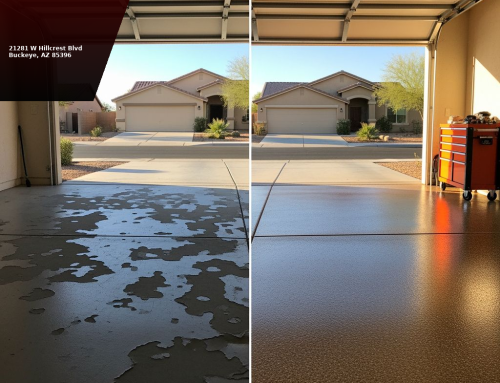
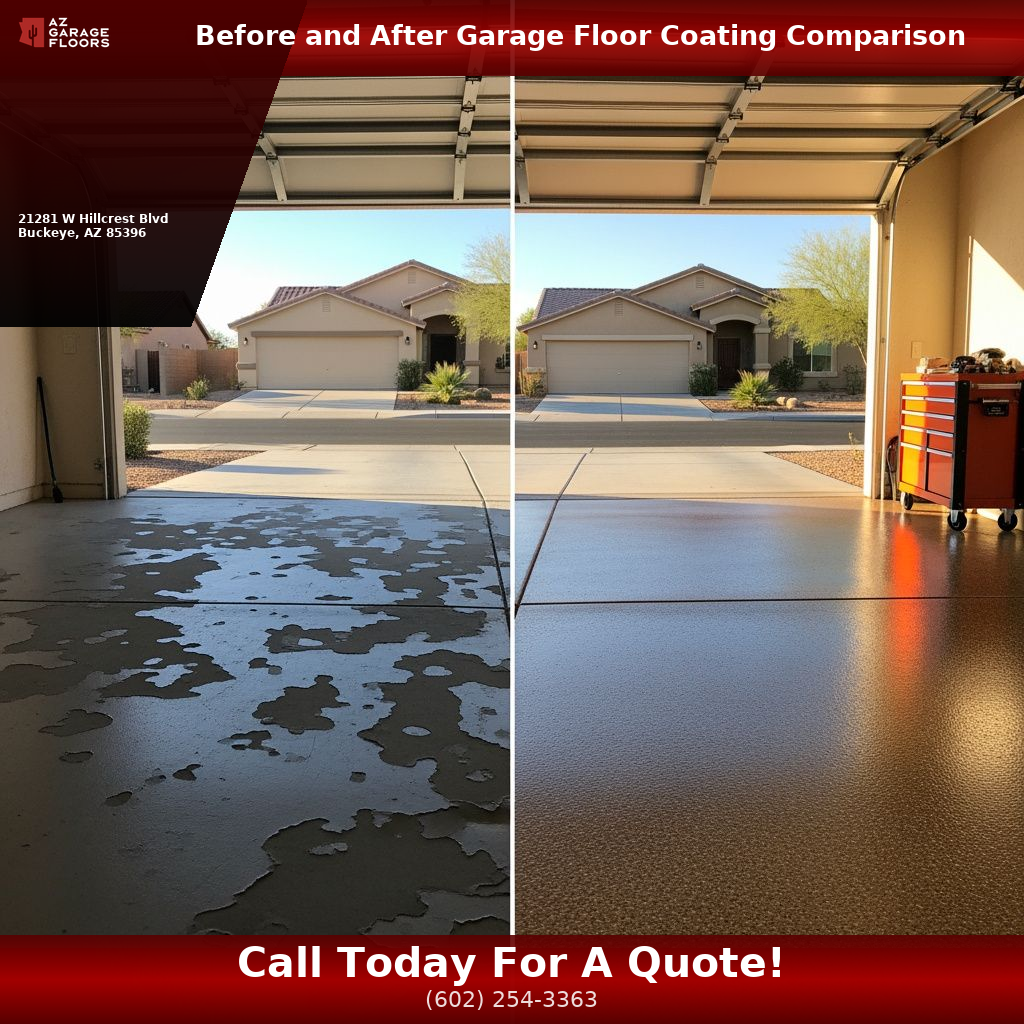
It is helpful to know what failure looks like so you can address it early. The most common sign of a poor installation is peeling under the tires or small bubbles forming in the surface. These issues usually appear within the first few months if the preparation was inadequate. If you notice these signs, a reputable contractor should be ready to inspect the floor and determine the cause. Often, these failures are localized, but a quality professional will be willing to redo the affected area—or the entire floor—if the bond was not achieved correctly.
The cost of fixing a botched installation
Fixing a failed floor coating is significantly more expensive than doing it right the first time. The old, failing material must be completely ground off, which takes more time and wears down diamond segments faster than bare concrete. This is why it is vital to choose a contractor with a proven track record. Hiring someone based solely on the lowest price often leads to a “double cost” later when the floor needs to be professionally stripped and reapplied. By asking these critical questions upfront, you protect yourself from the frustration and expense of a failed home improvement project.
Frequently Asked Questions About Garage Floor Coating Contractor
Sources
- International Concrete Repair Institute (ICRI) standards for surface preparation: [ICRI](https://www.icri.org)
- American Concrete Institute (ACI) guidelines for floor and slab construction: [American Concrete Institute](https://www.concrete.org)
- Occupational Safety and Health Administration (OSHA) crystalline silica rules for construction: [OSHA](https://www.osha.gov)
About AZ Garage Floors
AZ Garage Floors is a family-owned concrete coating company serving Buckeye, Surprise, Peoria, Avondale, and Phoenix. With decades of combined experience and hundreds of residential and commercial installations, AZ Garage Floors offers a full spectrum of garage floor coatings — from decorative residential systems (solid color epoxy, Granitex chip systems, metallic epoxy) to industrial commercial solutions (epoxy mortar, heavy-duty polyaspartic, chemical-resistant and anti-slip systems). The company utilizes commercial-grade 2-part resin products, thorough substrate preparation, and performance-based specifications to ensure longevity and safety. AZ Garage Floors offers residential warranty options and commercial warranty terms tailored to the project’s scale and usage.