Commercial-Grade vs Consumer-Grade Garage Floor Coatings: What’s the Real Difference?

Commercial-Grade vs Consumer-Grade Garage Floor Coatings: What's the Real Difference? Key Takeaways: Commercial systems use 2-part resin chemistry with 100% solids, providing a thick, durable wear layer that 1-part consumer paints cannot match. High-grade coatings withstand hot tire pickup and chemical spills, offering a 20+ year lifespan compared to the 3-5 year cycle of hardware store kits. Verify your contractor's materials by requesting specific technical data sheets to ensure they are installing a genuine industrial-strength product. Walking into a big-box home improvement store often leads homeowners toward the flooring aisle. There, rows of colorful boxes promise a professional garage finish for a few hundred dollars. These DIY kits appear attractive because they are affordable and easy to apply with a standard roller. However, a significant gap exists between these consumer products and the systems used in industrial environments. This gap involves chemistry, thickness, and how the material [...]

The Hidden Cost of Garage Floor Coating Failures: Why Surface Preparation Determines Everything

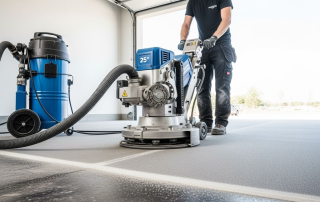
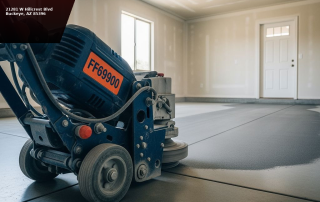
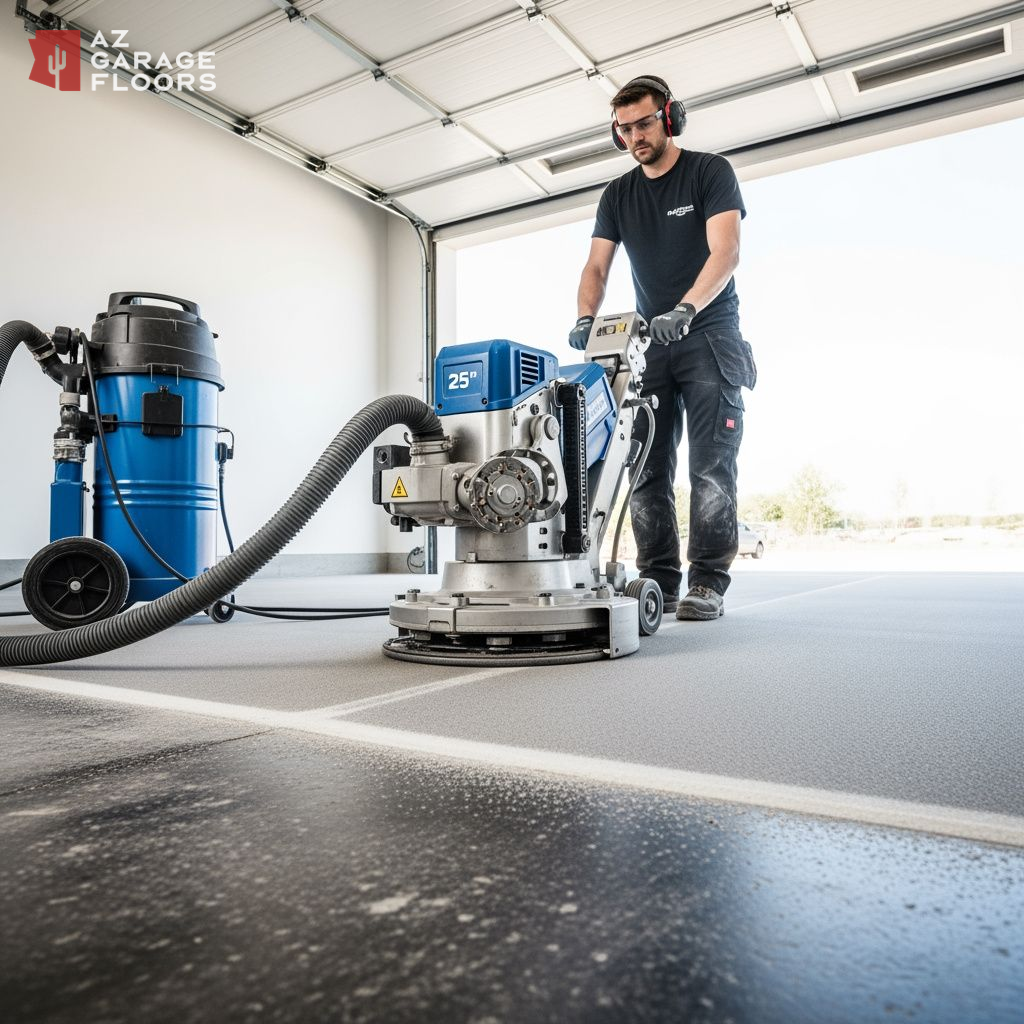
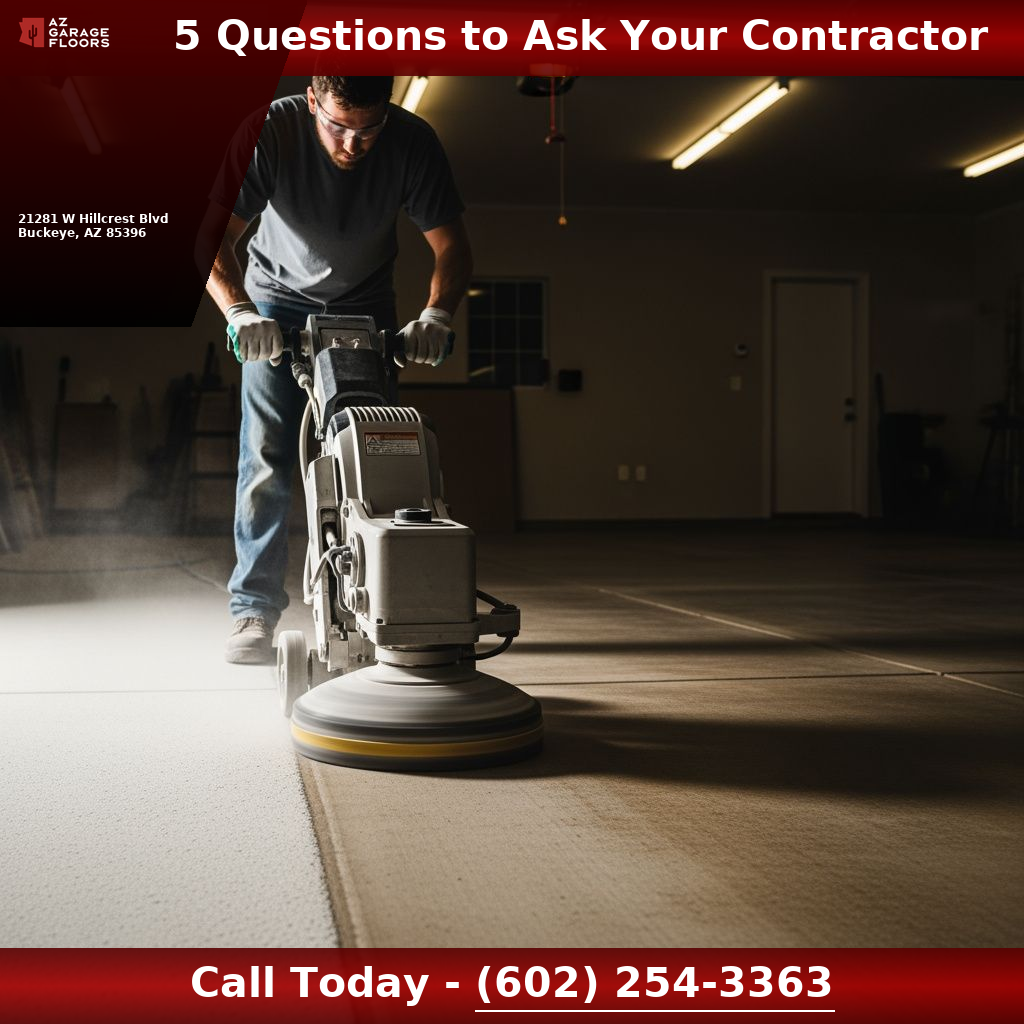
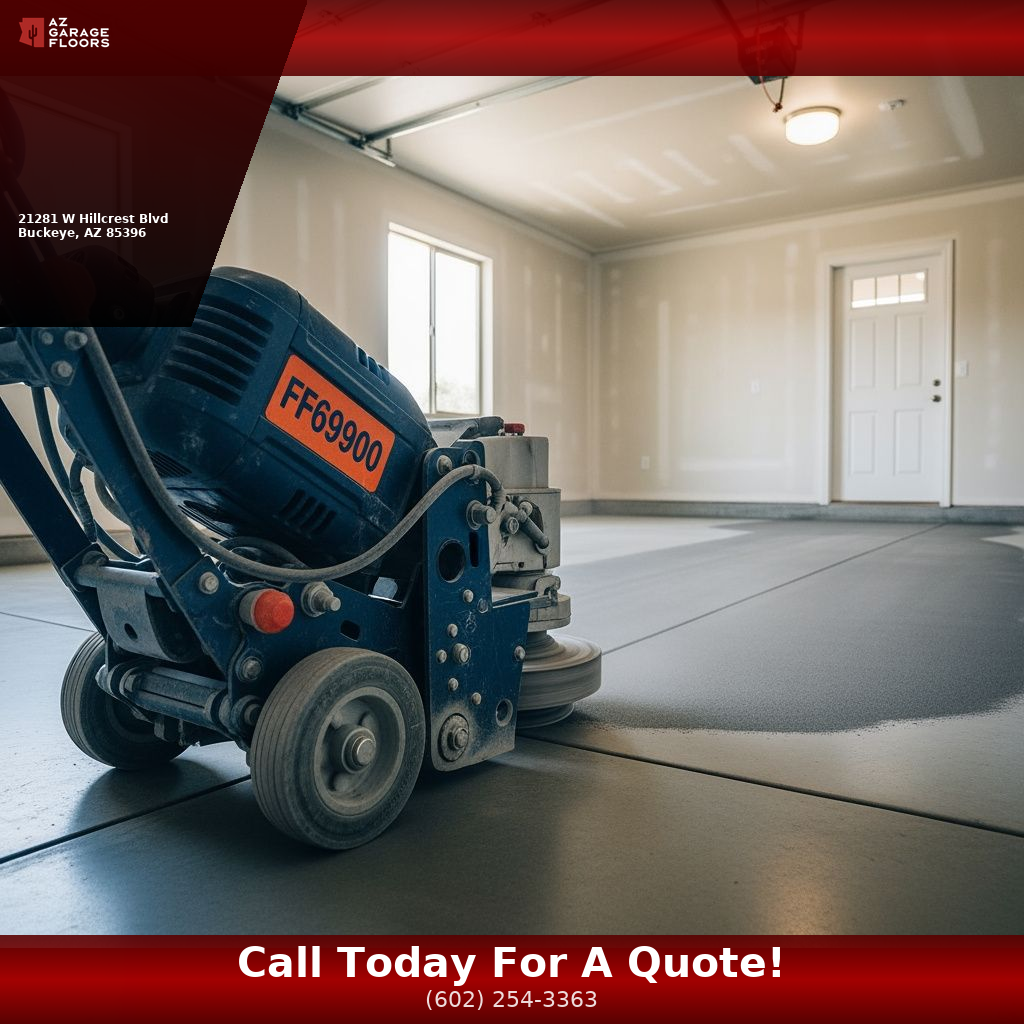
The Hidden Cost of Garage Floor Coating Failures: Why Surface Preparation Determines Everything Key Takeaways: Surface preparation is the primary determinant of coating longevity, as 90% of failures result from poor mechanical bonding rather than product quality. Diamond grinding outperforms acid etching by creating a consistent concrete surface profile (CSP) that allows the coating to fuse with the slab. Homeowners should insist on professional-grade 25-inch diamond grinding equipment and integrated vacuum systems to ensure a dust-free, durable installation. A shimmering garage floor often looks perfect on the day of installation. However, the reality of many DIY projects and budget professional jobs becomes apparent six months later when the coating begins to lift in large, unsightly flakes. This phenomenon, known as delamination, usually happens right where your tires rest. Many homeowners blame the epoxy or polyaspartic product itself, yet the chemical composition of the coating is rarely the [...]

Why Your Garage Floor Coating Failed (And How to Prevent It Next Time)

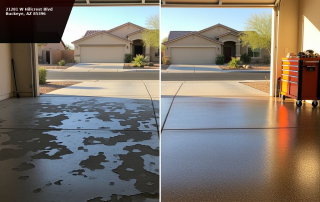
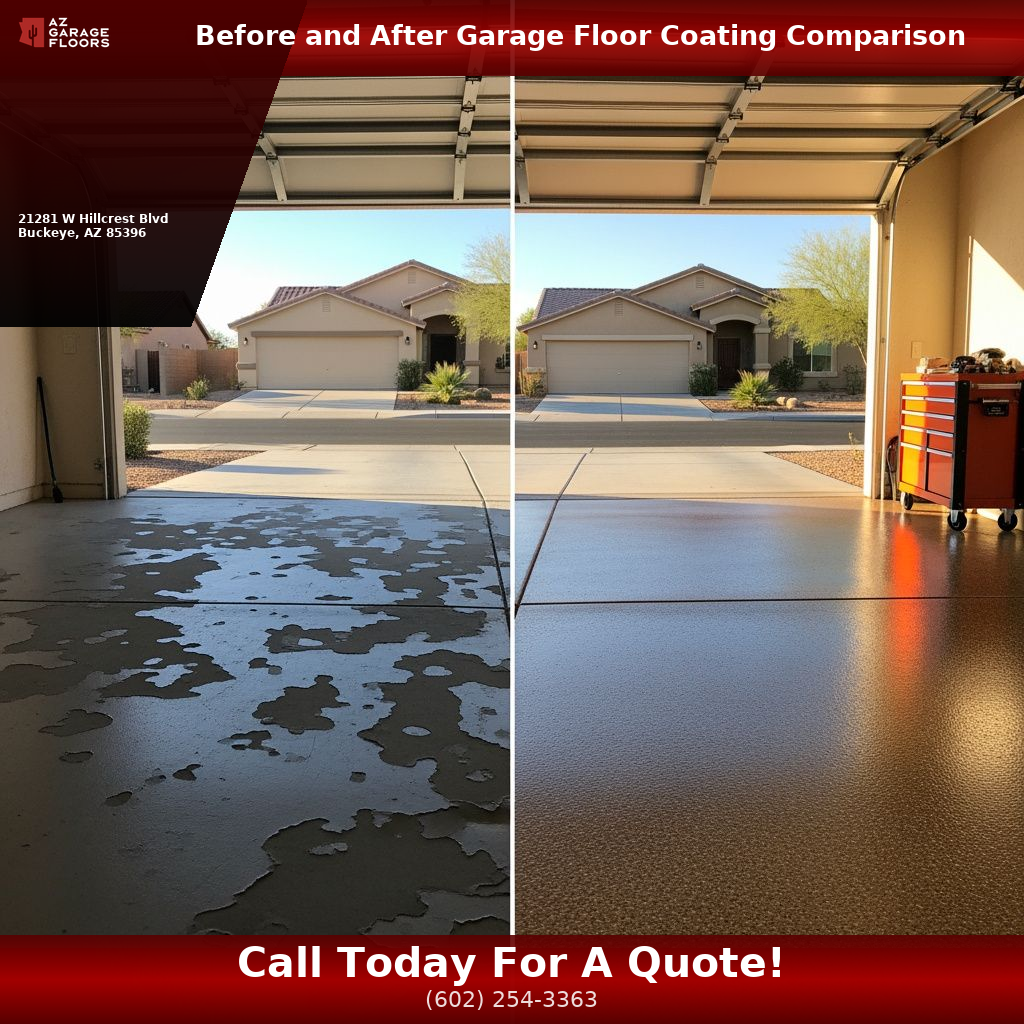
Why Your Garage Floor Coating Failed (And How to Prevent It Next Time) Key Takeaways: Most coating failures stem from inadequate surface preparation, specifically the use of acid etching rather than professional diamond grinding. Commercial-grade 2-part resins are essential for resisting hot tire pick-up and the extreme temperature fluctuations common in Arizona. A permanent solution requires complete removal of the failed material and the application of a high-solids system backed by a lifetime warranty. Pulling into your garage should feel like arriving at a clean, organized sanctuary. Instead, for many homeowners, it becomes a source of daily frustration when they notice the gray film on their concrete beginning to lift. You might see the material clinging to your tires or notice unsightly blisters forming near the center of the bay. Dealing with a garage floor coating peeling or bubbling is more than a cosmetic issue; it represents [...]

Arizona Heat and Garage Floor Coatings: What You Need to Know Before You Buy

Arizona Heat and Garage Floor Coatings: What You Need to Know Before You Buy Key Takeaways: Extreme Arizona temperatures can reach 140°F inside garages, causing low-quality coatings to soften, peel, or suffer from hot tire pickup. UV stability is mandatory for desert environments to prevent yellowing and chemical breakdown of the floor system. Professional polyaspartic systems offer superior thermal cycling resistance compared to standard DIY epoxy kits. Living in the desert requires a different approach to home maintenance than almost anywhere else in the country. If you have spent a summer here, you know that the sun is not just bright; it is a physical force. This environment creates a unique set of challenges for homeowners looking to protect their concrete. Specifically, heat damage from Arizona garage floor coatings is a common issue when the wrong materials or application methods are used. While a standard coating might [...]

5 Questions Every Homeowner Should Ask Before Hiring a Garage Floor Coating Contractor

5 Questions Every Homeowner Should Ask Before Hiring a Garage Floor Coating Contractor Key Takeaways: Professional surface preparation through diamond grinding is the only way to ensure a permanent bond between the concrete and the coating. Homeowners must verify that contractors use commercial-grade 2-part resin systems rather than lower-quality consumer products. A lifetime residential warranty serves as the ultimate indicator of a contractor's confidence in their materials and preparation process. Investing in a high-quality garage floor transformation is a significant decision for any Buckeye homeowner in 2026. While many companies offer similar-looking results in their marketing photos, the actual longevity of the floor depends on factors you cannot see once the resin cures. Because the industry varies widely in quality, you need a reliable way to distinguish between a basic applicator and a seasoned professional. Asking specific questions about garage floor coating contractors during your interview process [...]

Does Epoxy Garage Floor Coating Add Value to Your Arizona Home?

Does Epoxy Garage Floor Coating Add Value to Your Arizona Home? Key Takeaways: Epoxy garage floor coating in Arizona doesn't guarantee a fixed dollar increase in sale price, but it measurably reduces buyer objections and signals recent professional maintenance — two factors that directly affect how quickly a home sells and at what price. Phoenix-area and West Valley homes face heightened scrutiny on garage condition because buyers often evaluate the garage before stepping inside the main living space. For homeowners preparing to list, a professionally installed coating is one of the lowest-cost, highest-visual-impact upgrades available in the $2,000–$5,000 range. Here's the direct answer: yes, a professionally coated garage floor adds real perceived value to an Arizona home and reduces buyer friction during showings — but it won't show up as a fixed percentage on an appraisal report the way a kitchen remodel might. What it does do [...]

Epoxy Garage Floor Coatings in Surprise, AZ — What Homeowners in Sun City West and New West Valley Developments Need to Know

Epoxy Garage Floor Coatings in Surprise, AZ — What Homeowners in Sun City West and New West Valley Developments Need to Know Key Takeaways: AZ Garage Floors serves Surprise, AZ, and Sun City West with over 30 years of West Valley experience, offering systems tailored to both aging retirement-community slabs and newer subdivision concrete. Expansive clay soils in Surprise affect how concrete moves and cracks over time — local knowledge of these substrate conditions matters more than generic installation procedures. Whether your garage floor is a 1990s Sun City West slab with failed paint or a 2022 new-build that needs a moisture assessment, a proper prep process is what separates a lasting finish from a peeling one. AZ Garage Floors serves Surprise, Arizona, and the adjacent Sun City West community — and has done so for over 30 years. If you're searching for who actually does epoxy [...]

Light Chip vs. Full Flake Epoxy — How to Choose the Right Garage Floor System in Arizona

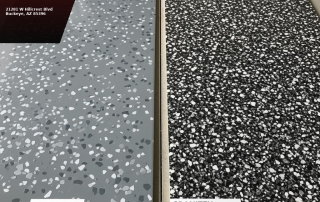
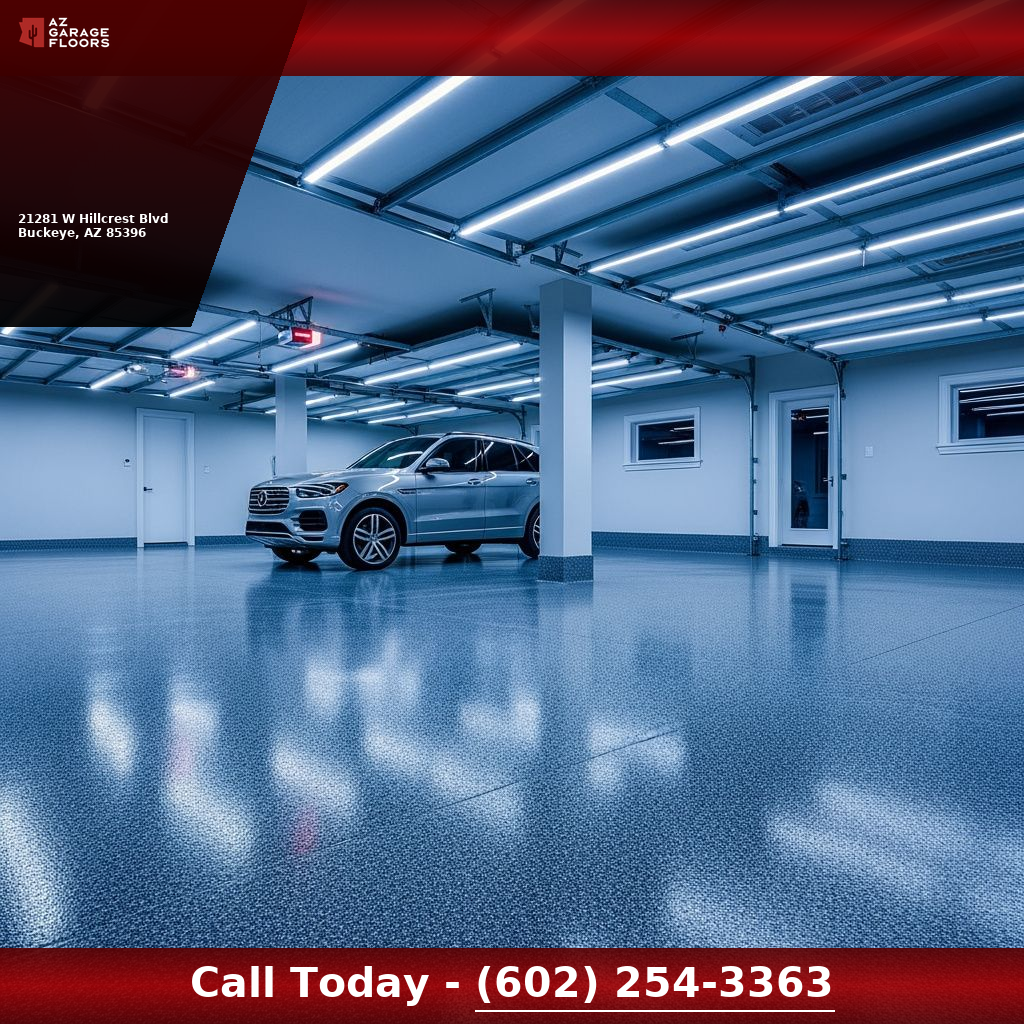
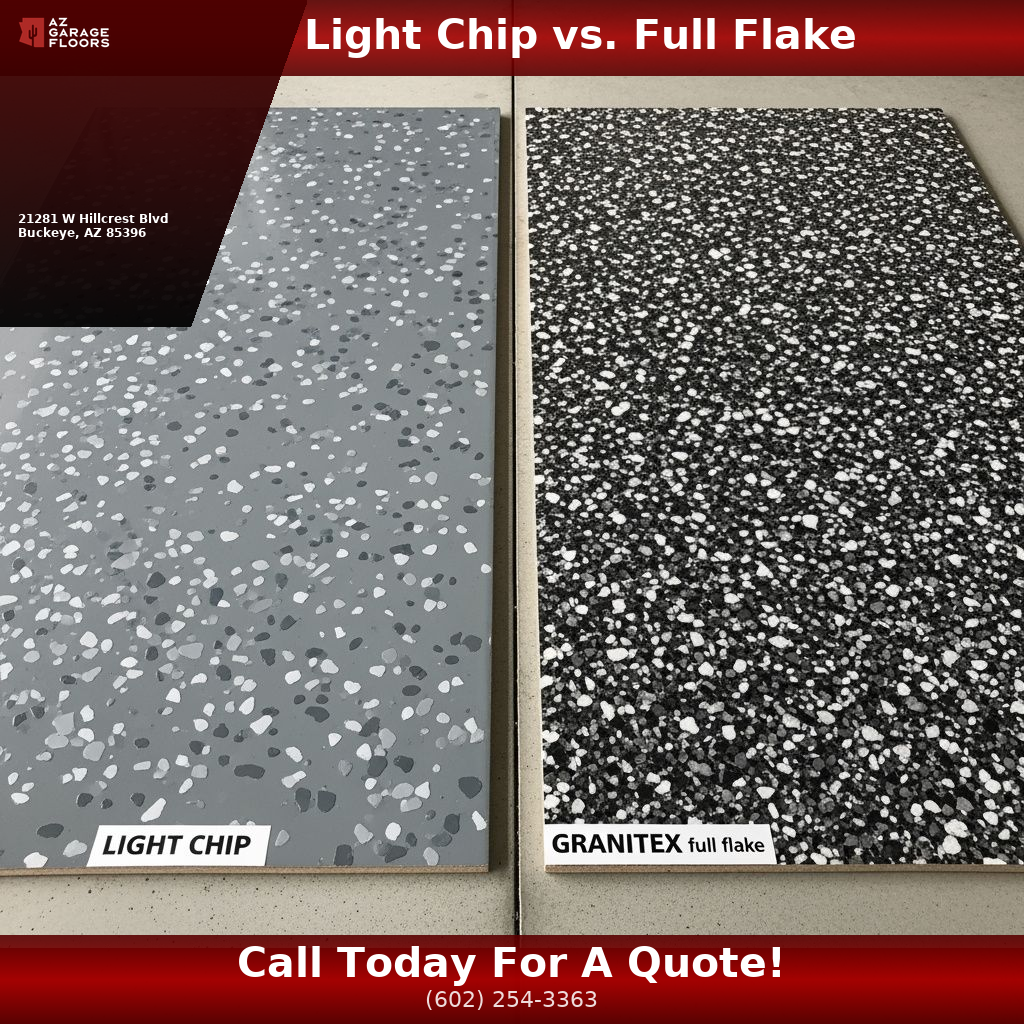
Light Chip vs. Full Flake Epoxy — How to Choose the Right Garage Floor System in Arizona Key Takeaways: Light chip epoxy delivers a subtle, speckled finish over a visible solid base color; full flake (Granitex) covers the concrete completely with chips broadcast wall-to-wall for a bolder, more dramatic look. Your choice hinges on five concrete factors: appearance preference, whether your base color matters, your concrete's condition, how much slip resistance you need, and which color palette speaks to you. AZ Garage Floors offers a free estimate that includes side-by-side sample comparison — see both systems in your garage before you commit. The short answer: light chip epoxy lays speckled color over a solid base coat, so the base color remains part of the design. Full flake (Granitex) broadcasts chips wall-to-wall until no base color is visible, producing a thicker, more immersive surface. Both are professional-grade, multi-coat [...]

Paver Sealing in Arizona — Protecting Patios, Driveways, and Pool Decks from the Phoenix Sun

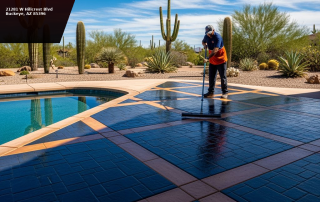
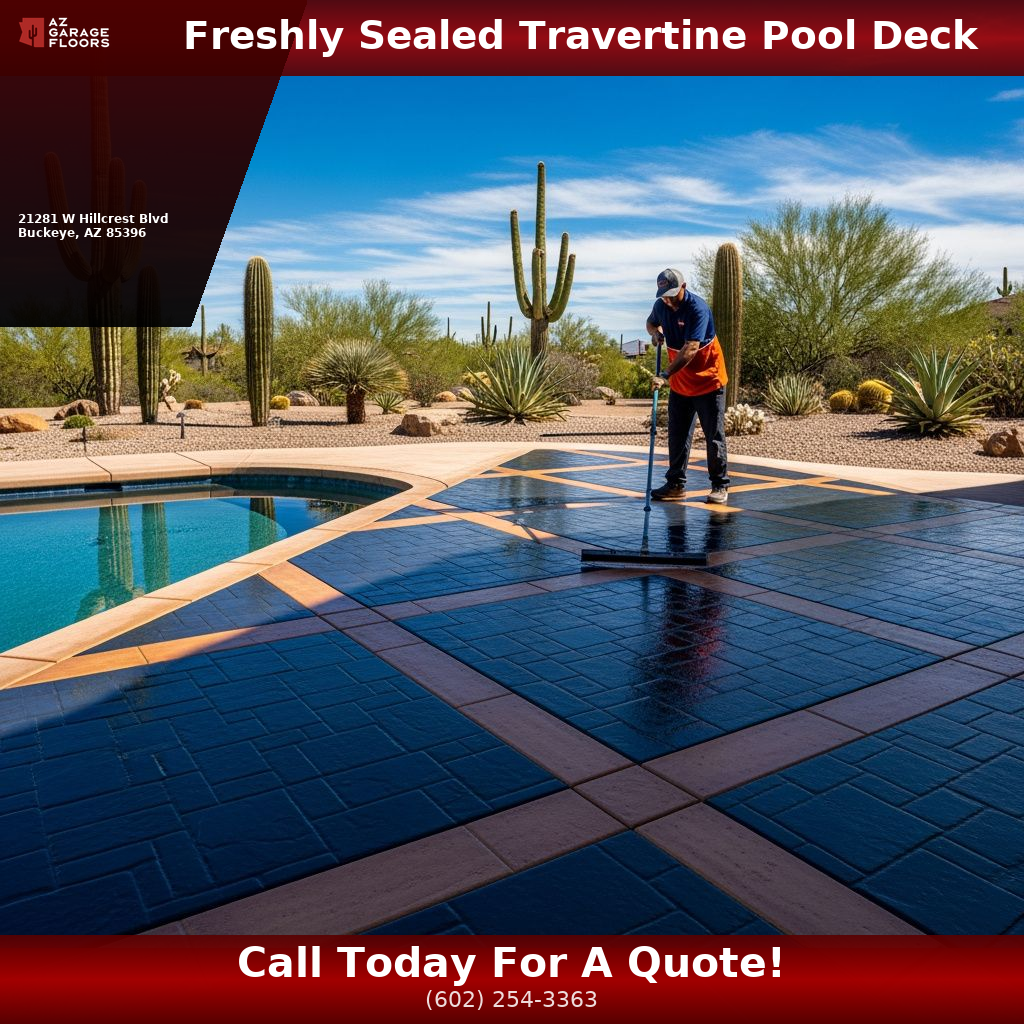
Paver Sealing in Arizona — Protecting Patios, Driveways, and Pool Decks from the Phoenix Sun Key Takeaways: In Arizona's extreme climate, pavers should be sealed every 2–3 years — significantly more often than the 4–5-year intervals common in cooler, less UV-intense states. AZ Garage Floors uses a professional cleaning and high-performance urethane sealant process that protects against UV fading, tire stains, chlorine, monsoon moisture, and weed intrusion. Homeowners in Phoenix, Buckeye, Peoria, Surprise, and Litchfield Park can extend the life and appearance of their pavers with a scheduled sealing program tailored to Arizona conditions. Most Arizona homeowners should have their pavers sealed every two to three years. That interval is shorter than what you'll read on national home improvement sites, and for good reason: the Phoenix climate puts pavers under stress that moderate climates simply don't. UV exposure alone works faster here than nearly anywhere else in [...]

Why Diamond Grinding Is the Foundation of Every Lasting Garage Floor Coating

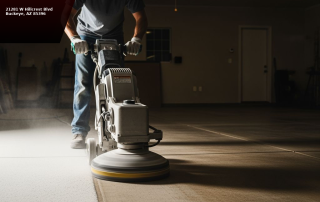
Why Diamond Grinding Is the Foundation of Every Lasting Garage Floor Coating Key Takeaways: Diamond grinding opens the concrete surface profile at a microscopic level, creating the mechanical bond that allows epoxy to last for years rather than months. Skipping this step — or substituting acid washing or pressure washing — is the leading cause of premature epoxy delamination in Phoenix-area garages. Before signing any garage floor coating contract, ask your contractor exactly how they prepare the surface, what CSP they target, and how they manage dust and moisture vapor. Epoxy doesn't fail because the product is bad. It fails because the surface beneath it wasn't properly prepared. Diamond grinding concrete before an epoxy application creates the microscopic profile that lets the coating bond mechanically to the slab — and without that bond, no amount of high-quality epoxy, decorative flake, or polyurethane topcoat will save you. If [...]

Go to Top