Garage Floor Coatings: Commercial vs. Consumer
Commercial-Grade vs Consumer-Grade Garage Floor Coatings: What’s the Real Difference?
Key Takeaways:
- Commercial systems use 2-part resin chemistry with 100% solids, providing a thick, durable wear layer that 1-part consumer paints cannot match.
- High-grade coatings withstand hot tire pickup and chemical spills, offering a 20+ year lifespan compared to the 3-5 year cycle of hardware store kits.
- Verify your contractor’s materials by requesting specific technical data sheets to ensure they are installing a genuine industrial-strength product.
Walking into a big-box home improvement store often leads homeowners toward the flooring aisle. There, rows of colorful boxes promise a professional garage finish for a few hundred dollars. These DIY kits appear attractive because they are affordable and easy to apply with a standard roller. However, a significant gap exists between these consumer products and the systems used in industrial environments. This gap involves chemistry, thickness, and how the material bonds to concrete. Choosing a commercial-grade epoxy garage floor ensures the surface survives heavy vehicles and Arizona’s extreme temperatures for decades rather than months.
Understanding Resin Chemistry: 1-Part vs 2-Part Systems
The most critical distinction between these two product tiers lies in the chemical makeup. Most consumer-grade products are actually modified acrylic or “1-part” epoxy paints. These products dry through evaporation, much like standard house paint. When the water or solvent evaporates, a thin film remains on the surface. Consequently, this film lacks the structural integrity required to handle the weight of a modern SUV or the heat generated by tires.
The Chemical Bond of 2-Part Resins
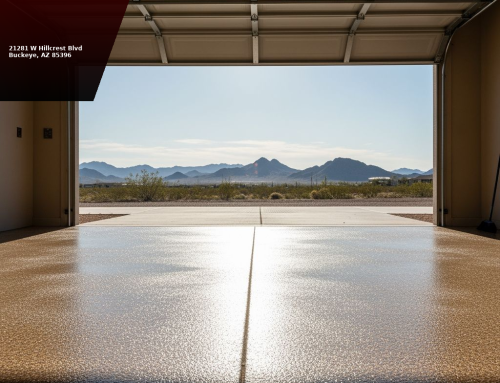
Commercial systems almost exclusively use 2-part resin chemistry. This involves a resin and a hardener that, when mixed, trigger a cross-linking chemical reaction. This process is known as curing, not drying. The resulting polymer chain is significantly stronger than any air-dried paint. Because the material cures through a chemical bond, it creates a dense, non-porous surface. This surface becomes an integral part of the concrete slab when the floor is prepared correctly. Additionally, these resins are often 100% solids, meaning nothing evaporates during the application. Every drop of liquid applied to the floor stays on the floor as a hardened protective layer.
Why 1-Part Epoxy Paint Fails Prematurely
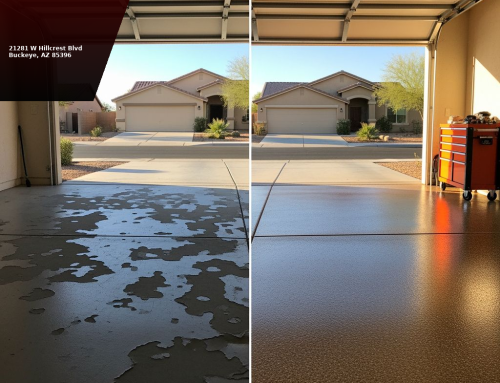
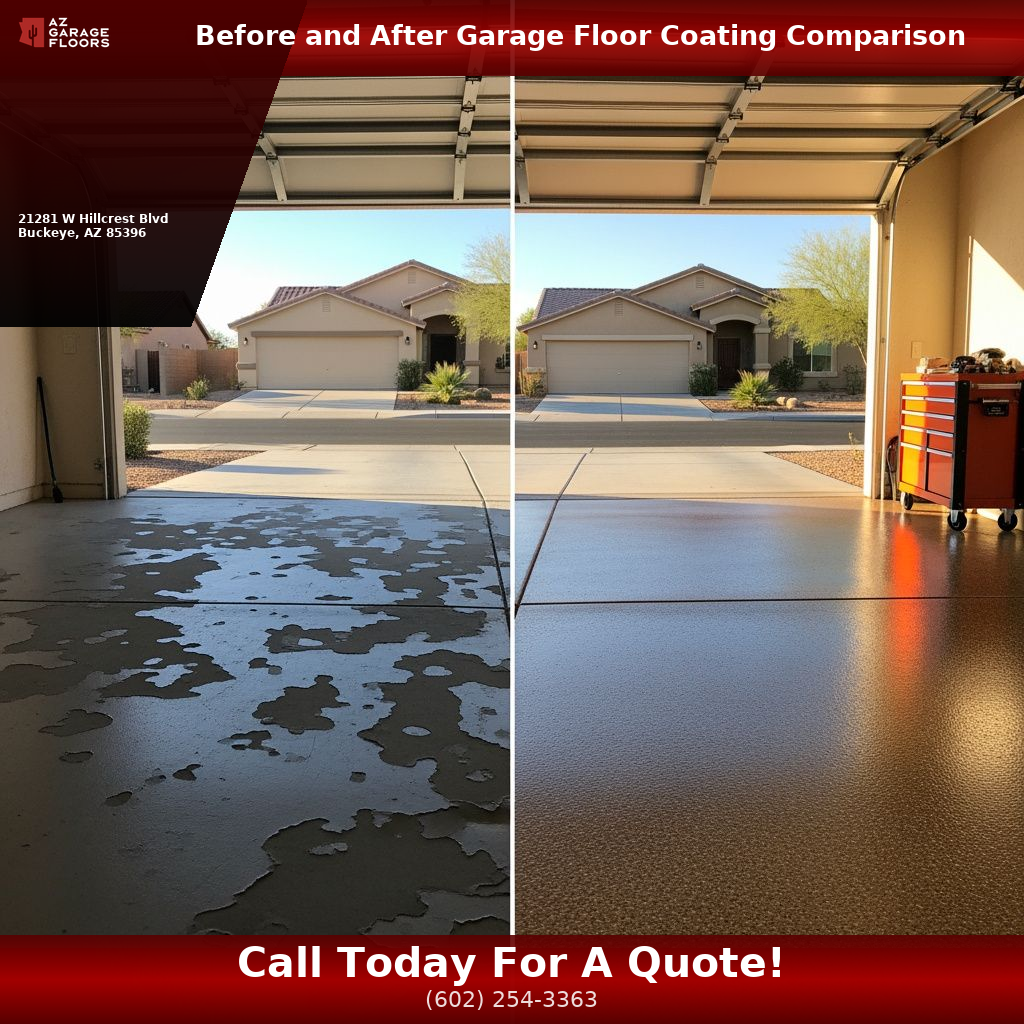
Consumer kits often fail because they are too thin and brittle. Since they rely on evaporation, the final dry film thickness is usually only 1 to 3 mils. For context, a standard piece of paper is about 4 mils thick. Such a thin layer cannot hide imperfections in the concrete or withstand the mechanical stress of a vehicle turning its wheels. Furthermore, these products have low heat resistance. In a state like Arizona, where summer pavement temperatures are extreme, these thin coatings often soften. Once the coating softens, it sticks to the tires and pulls away from the concrete. This phenomenon is commonly known as hot tire pickup.
Performance Standards: Residential vs Industrial Applications
Performance is measured by how well a coating handles daily abuse. A garage floor is more than just a walkway; it is a workspace and a parking lot. Therefore, the coating must meet higher standards than a typical indoor floor. Industrial-grade materials are designed for warehouses and airplane hangars. When these materials are used in a residential setting, they provide an over-engineered solution that handles everything from oil leaks to dropped tools.
Hot Tire Pickup and Arizona Heat
The climate in 2026 continues to present challenges for home maintenance. In our region, garage temperatures can easily exceed 100 degrees Fahrenheit. When you drive a vehicle home, the tires carry significant thermal energy. A consumer-grade coating will often delaminate under this heat. On the other hand, commercial systems are formulated to maintain their bond at high temperatures. The cross-linked polymers do not soften or become tacky. This stability is essential for maintaining the aesthetic and functional integrity of the floor over long periods.
Chemical Resistance Against Automotive Fluids
Garages are frequently exposed to harsh chemicals. Gasoline, brake fluid, antifreeze, and motor oil can sit on the surface for hours or days. Consumer-grade paints are often porous and will stain or bubble when exposed to these fluids. Notably, industrial resins are engineered to be chemically inert. This means they do not react with or absorb spills. Wiping up a chemical spill on a professional coating is simple and leaves no permanent mark. This resistance protects the underlying concrete from degradation and keeps the garage looking clean.
Longevity Expectations: 5 Years vs 20+ Years
When evaluating flooring, the initial price tag is only one part of the equation. Total cost of ownership includes the frequency of repairs and replacement. A commercial-grade epoxy garage floor typically represents a one-time investment for most homeowners. While the upfront cost is higher, the extended lifespan provides a much better return on investment.
The Cycle of Constant Re-application
Homeowners who choose DIY kits often find themselves in a cycle of constant maintenance. After two or three years, the high-traffic areas begin to thin or peel. Since these products do not bond deeply, you cannot simply paint over the peeling areas. Usually, the entire floor must be stripped and recoated. This requires significant labor and additional material costs every few years. Over a decade, the cost of multiple DIY applications often exceeds the price of a single professional installation.
Life-Cycle Cost Analysis of a Professional System
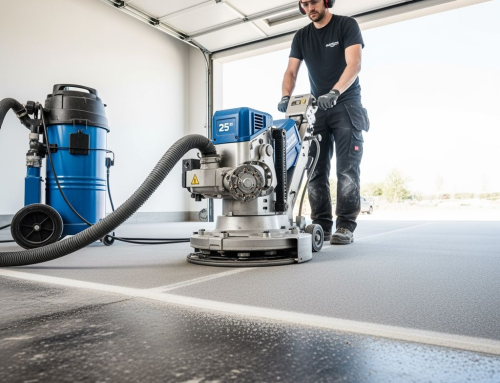
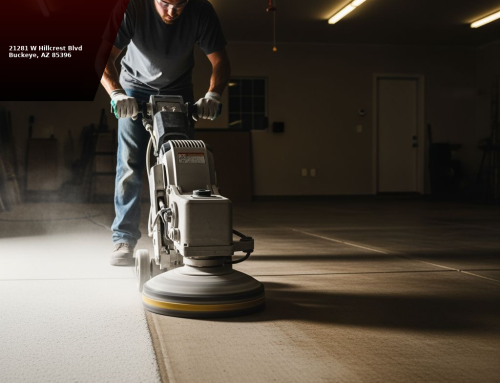
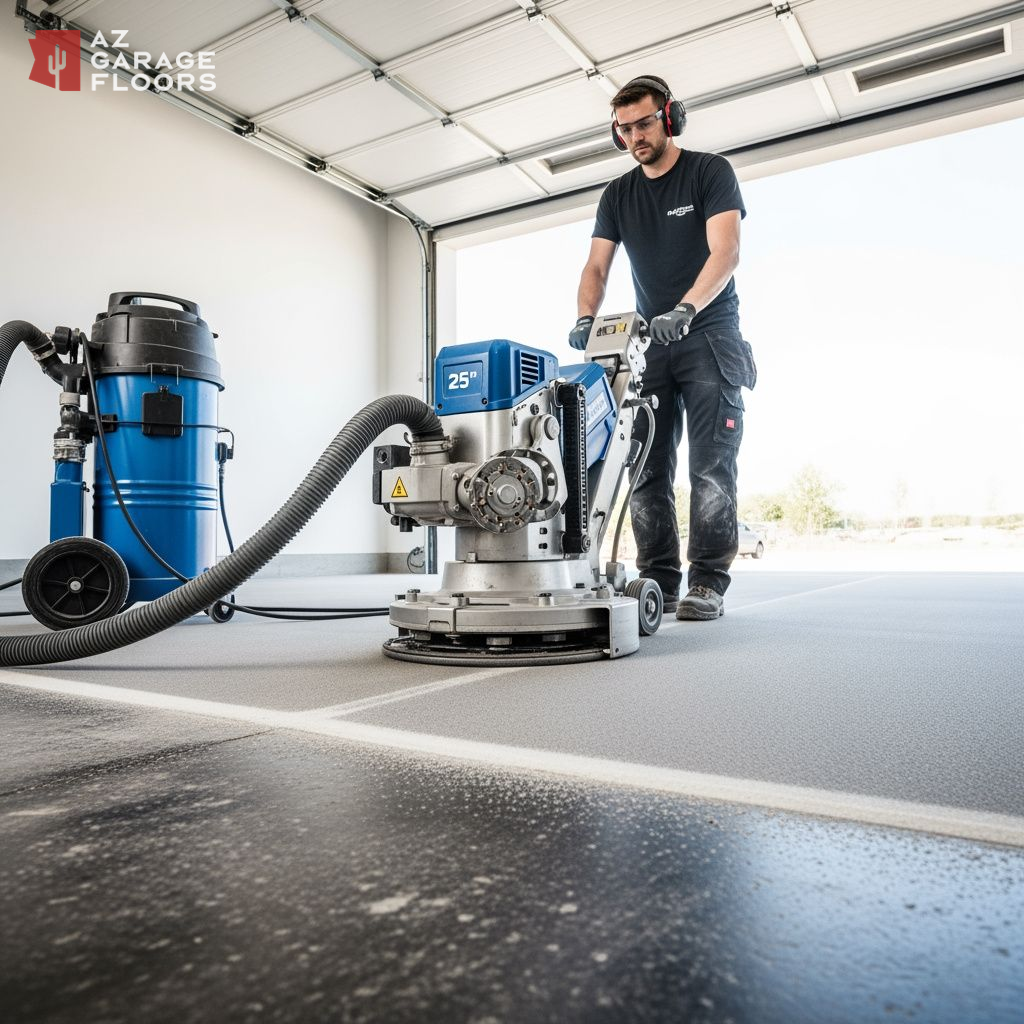
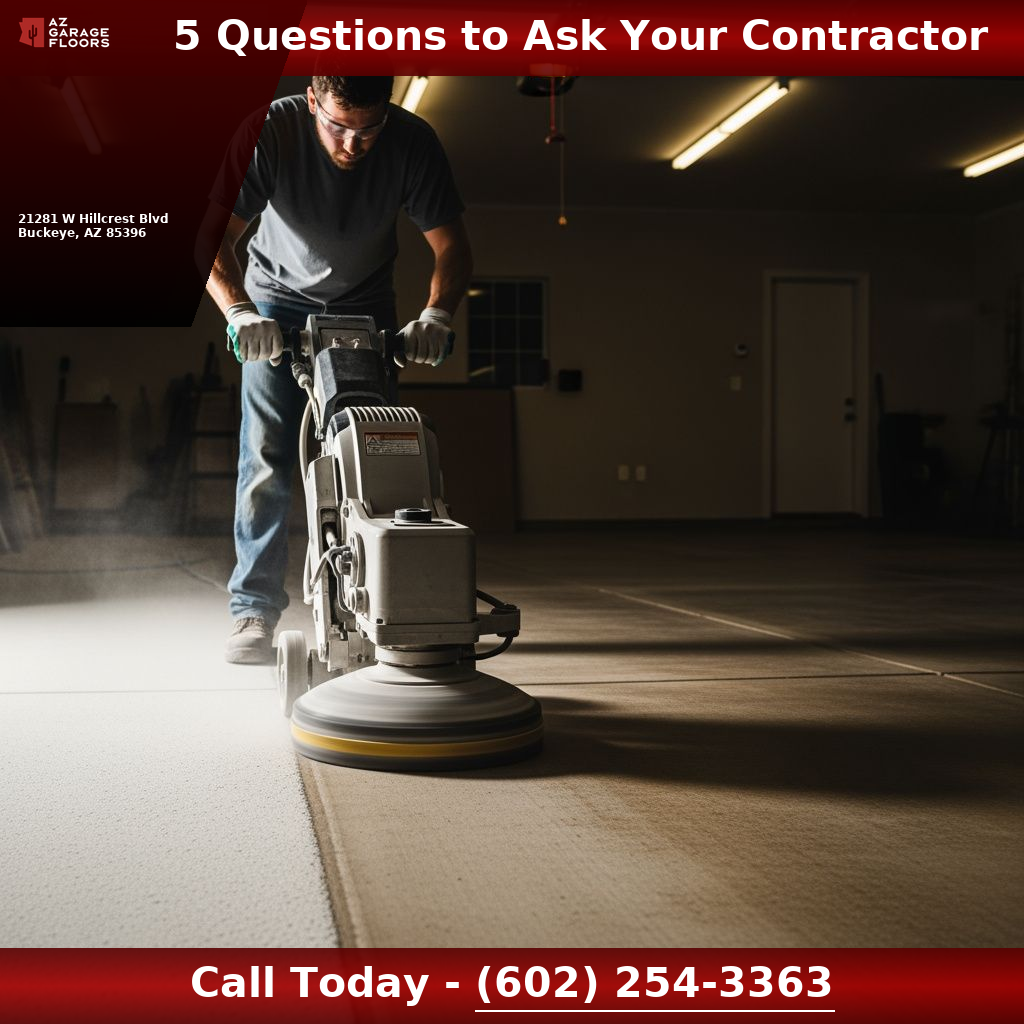
A professional installation utilizes mechanical preparation, such as diamond grinding, to open the pores of the concrete. This allows the high-solids resin to penetrate deep into the slab. Consequently, the coating is not just sitting on top; it is fused with the concrete. This bond is why professional systems can last 20 years or more with minimal maintenance. If you plan to stay in your home for more than five years, the professional route is almost always the more economical choice. It also adds tangible value to the property during a resale.
Why Most Contractors Don’t Use Commercial-Grade
It may seem surprising that not all professional installers use the highest quality materials. However, the reasons are usually related to overhead, equipment requirements, and profit margins. Applying industrial-grade resins is a specialized skill that requires more than just a roller and a brush.
Equipment Barriers and Specialized Training
High-solids resins have a very short pot life. Once the two parts are mixed, the contractor may only have 15 to 20 minutes to apply the material before it hardens in the bucket. This requires a large, coordinated crew and precise timing. Furthermore, proper application requires heavy machinery. Commercial-grade systems cannot be applied over smooth concrete; the surface must be mechanically profiled. Industrial diamond grinders are expensive and difficult to transport. Many smaller contractors avoid these costs by using lower-grade materials that “stick” better to poorly prepared surfaces in the short term.
Material Costs and Profit Margin Management
Industrial resins are significantly more expensive than the products found at local hardware stores. To keep quotes low and win more jobs, some contractors opt for “professional-grade” products that are actually mid-tier hybrids. These products are better than DIY kits but still do not offer the 100% solids chemistry found in true commercial systems. By using cheaper materials, these companies can offer lower prices while maintaining their profit margins. Unfortunately, the homeowner is the one who suffers when the floor begins to fail after the warranty period expires.
Making the Investment Decision
Deciding which quality level to choose depends on your goals for the space. If the garage is merely a storage area for items that never move, a basic coating might suffice. However, for a functional garage that houses vehicles and equipment, the material’s technical specifications matter immensely.
Identifying True Commercial Specifications
To ensure you are getting a high-quality system, ask for the technical data sheets (TDS) for the products being used. Look for terms like 100% solids, shore D hardness, and adhesion strength. A reputable contractor will be transparent about their supply chain and the chemistry of their products. If a contractor cannot provide these details, they may be using a lower-tier product. Understanding these specifications allows you to compare quotes accurately rather than just looking at the final price.
Evaluating Long-Term Property Value
A high-quality garage floor is a feature that stands out to potential buyers. It suggests that the homeowner has maintained the entire property with a high level of care. Because professional coatings are so durable, they remain attractive for decades. This means you get to enjoy the benefits of a clean, durable floor while you live there, and you potentially recoup the investment when you sell. Choosing quality over convenience is a hallmark of savvy homeownership.
Frequently Asked Questions About Commercial vs Consumer Grade Garage Floor Coatings
Sources
- Concrete surface profile standards, International Concrete Repair Institute, https://www.icri.org
- Testing methods for epoxy resin hardness, ASTM International, https://www.astm.org
- Volatile Organic Compound (VOC) regulations for coatings, Environmental Protection Agency, https://www.epa.gov
- Polymer cross-linking and resin chemistry, Wikipedia, https://en.wikipedia.org/wiki/Cross-link
About AZ Garage Floors
AZ Garage Floors is a family-owned concrete coating company serving Buckeye, Surprise, Peoria, Avondale, and Phoenix. With decades of combined experience and hundreds of residential and commercial installations, AZ Garage Floors offers a full spectrum of garage floor coatings — from decorative residential systems (solid color epoxy, Granitex chip systems, metallic epoxy) to industrial commercial solutions (epoxy mortar, heavy-duty polyaspartic, chemical-resistant and anti-slip systems). The company utilizes commercial-grade 2-part resin products, thorough substrate preparation, and performance-based specifications to ensure longevity and safety. AZ Garage Floors offers residential warranty options and commercial warranty terms tailored to the project’s scale and usage.