Why Your Garage Floor Coating Failed and How to Prevent?
Why Your Garage Floor Coating Failed (And How to Prevent It Next Time)
Key Takeaways:
- Most coating failures stem from inadequate surface preparation, specifically the use of acid etching rather than professional diamond grinding.
- Commercial-grade 2-part resins are essential for resisting hot tire pick-up and the extreme temperature fluctuations common in Arizona.
- A permanent solution requires complete removal of the failed material and the application of a high-solids system backed by a lifetime warranty.
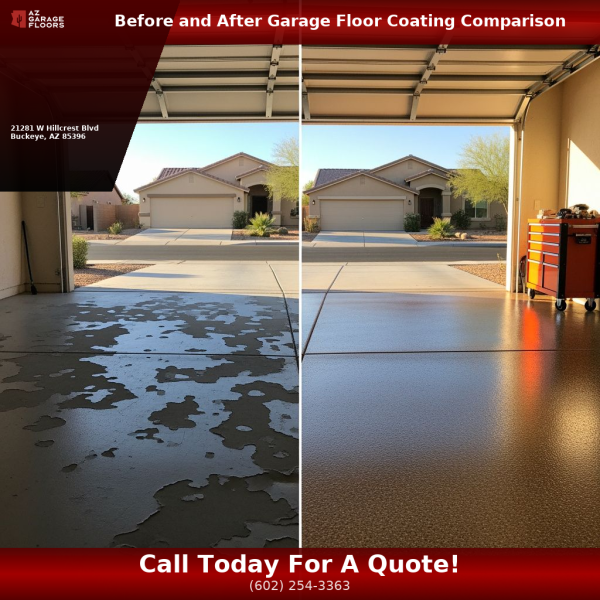
Pulling into your garage should feel like arriving at a clean, organized sanctuary. Instead, for many homeowners, it becomes a source of daily frustration when they notice the gray film on their concrete beginning to lift. You might see the material clinging to your tires or notice unsightly blisters forming near the center of the bay. Dealing with a garage floor coating peeling or bubbling is more than a cosmetic issue; it represents a breakdown in the relationship between the protective layer and the slab beneath it. While it is tempting to blame the weather or a specific brand of paint, the reality is usually more technical.
Understanding the mechanics of why these systems fail is the first step toward a permanent fix. Most homeowners feel a sense of regret, thinking they chose the wrong color or didn’t wait long enough for the floor to dry. However, the fault rarely lies with the person living in the home. Instead, failures are typically the result of industry-wide shortcuts or products designed for shelves rather than heavy-duty performance. By examining the chemistry and physics of concrete coatings, we can identify exactly where the process went off track and how to ensure your next installation remains bonded for decades.
The Real Reason Coatings Fail (It’s Not the Product)
When a homeowner notices their garage floor coating peeling or bubbling, the immediate instinct is to check the expiration date on the can or blame a sudden rainstorm. In reality, the most common cause of failure is a lack of a mechanical bond. For a coating to stay attached to concrete, it must become part of the slab. Many retail products rely on a chemical bond, which essentially means the paint is “sticky.” This stickiness is no match for the weight of a three-ton vehicle or the expansion and contraction of concrete during an Arizona summer.
The Physics of Hot Tire Pick-up
One of the most visible forms of failure occurs when you back your car out and see patches of the coating missing where your tires were resting. This phenomenon, known as hot tire pick-up, happens because tires accumulate heat while driving on asphalt. When you park, that heat is transferred to the floor. If the coating is a low-quality water-based product, the heat softens the resin. As the tire cools, it creates a vacuum-like grip on the softened surface. Consequently, when you drive away, the tire pulls the coating right off the concrete. This happens because the bond between the tire and the coating became stronger than the bond between the coating and the concrete.
Understanding Moisture Vapor Transmission
Concrete is not a solid, impermeable block; it is a porous material that breathes. Underneath your garage slab, moisture migrates upward from the soil. This process, called moisture vapor transmission, creates pressure underneath the coating. If the material used is not “breathable” or lacks the strength to withstand this upward force, moisture will eventually push the coating away from the surface. This often results in the bubbling or blistering that many homeowners see in the middle of their floor. Without a deep mechanical anchor into the concrete pores, even a small amount of vapor can cause a massive failure.
Surface Preparation: The Foundation of Success
If you look at the instructions on a standard DIY kit, they often suggest cleaning the floor with a mild detergent or a weak acid solution. This is perhaps the most significant point of failure in the industry. Acid etching is a chemical process that barely scratches the surface of the concrete. It may remove some dirt, but it does not open the “pores” of the slab sufficiently to allow a coating to penetrate. To achieve a bond that lasts until 2026 and beyond, you must move past liquid cleaners and utilize mechanical preparation.
The Power of 25-Inch Diamond Grinding
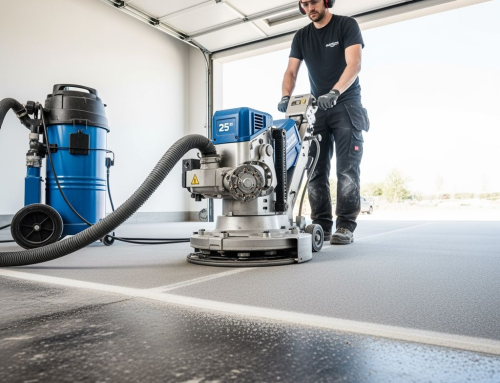
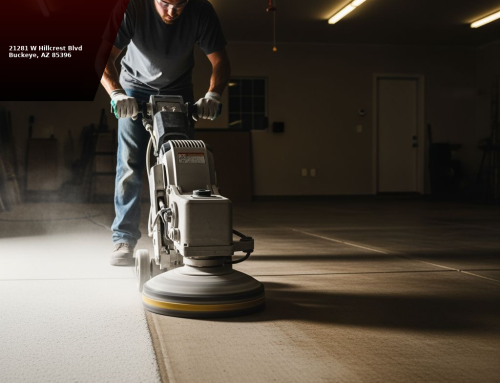
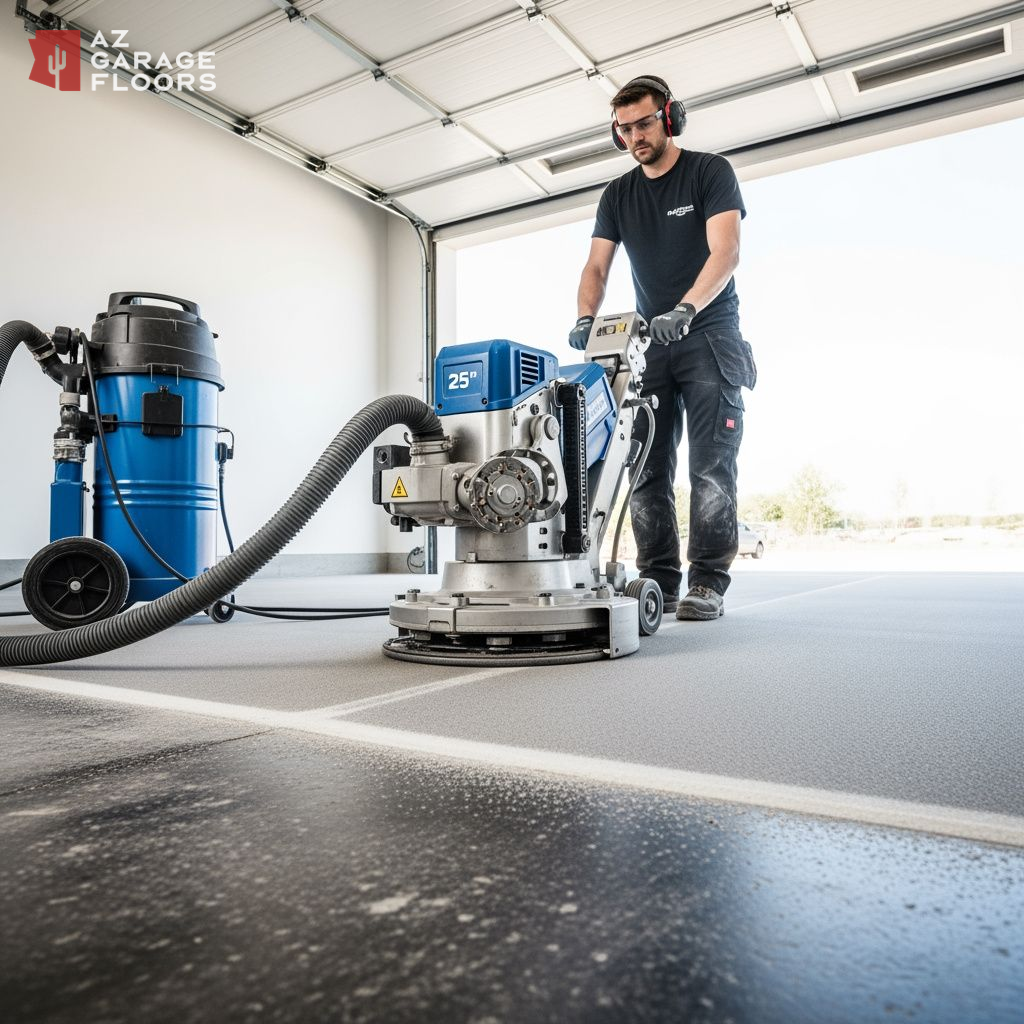
Professional installers like the team at AZ Garage Floors do not rely on chemicals to prep a floor. Instead, we use a 25-inch diamond grinding machine. These heavy-duty units use industrial diamond segments to shave off the top layer of the concrete, known as the laitance. This process removes contaminants like oil, old paint, and sealers that would otherwise prevent a bond. More importantly, it creates a specific profile on the concrete, often compared to the texture of a piece of sandpaper. Specifically, this rough surface increases the surface area for the resin to grab onto, ensuring the coating anchors deep into the slab rather than sitting on top of it.
Eliminating Concrete Contaminants
Even the most expensive resin in the world will fail if it is applied over oil or grease. In many older garages, years of automotive fluid leaks have soaked deep into the concrete. Surface washing simply cannot reach these embedded fluids. Diamond grinding effectively “sands away” the contaminated layers, exposing fresh, clean concrete. Additionally, our equipment is connected to a high-volume vacuum system. This is critical because any dust left behind acts as a barrier. If there is a fine layer of dust on the slab, the coating will bond to the dust rather than the concrete, leading to immediate delamination.
Material Quality: Commercial vs Consumer Grade
There is a vast difference between the products found at a local hardware store and the materials used by professional contractors. Most retail kits are water-based and contain a very low percentage of “solids.” When you apply a water-based epoxy, a large portion of the liquid evaporates as it dries, leaving behind a very thin, brittle film. This thin layer is easily punctured and lacks the flexibility to move with the concrete.
The Science of 2-Part Resin Bases
Professional-grade systems utilize 2-part resins, typically a high-solids epoxy or a polyaspartic. When these two parts are mixed, a chemical reaction occurs that creates an incredibly hard yet flexible plastic. Unlike water-based paints, these resins do not “dry”; they cure. This means 100% of what you put on the floor stays on the floor. The resulting layer is significantly thicker and more durable than anything available in a retail store. Furthermore, these materials are engineered to have high heat resistance, which is essential for preventing the hot tire pick-up mentioned earlier.
Full-Flake Systems vs Decorative Sprinkles
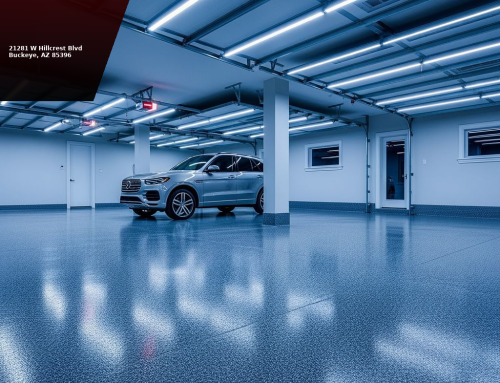
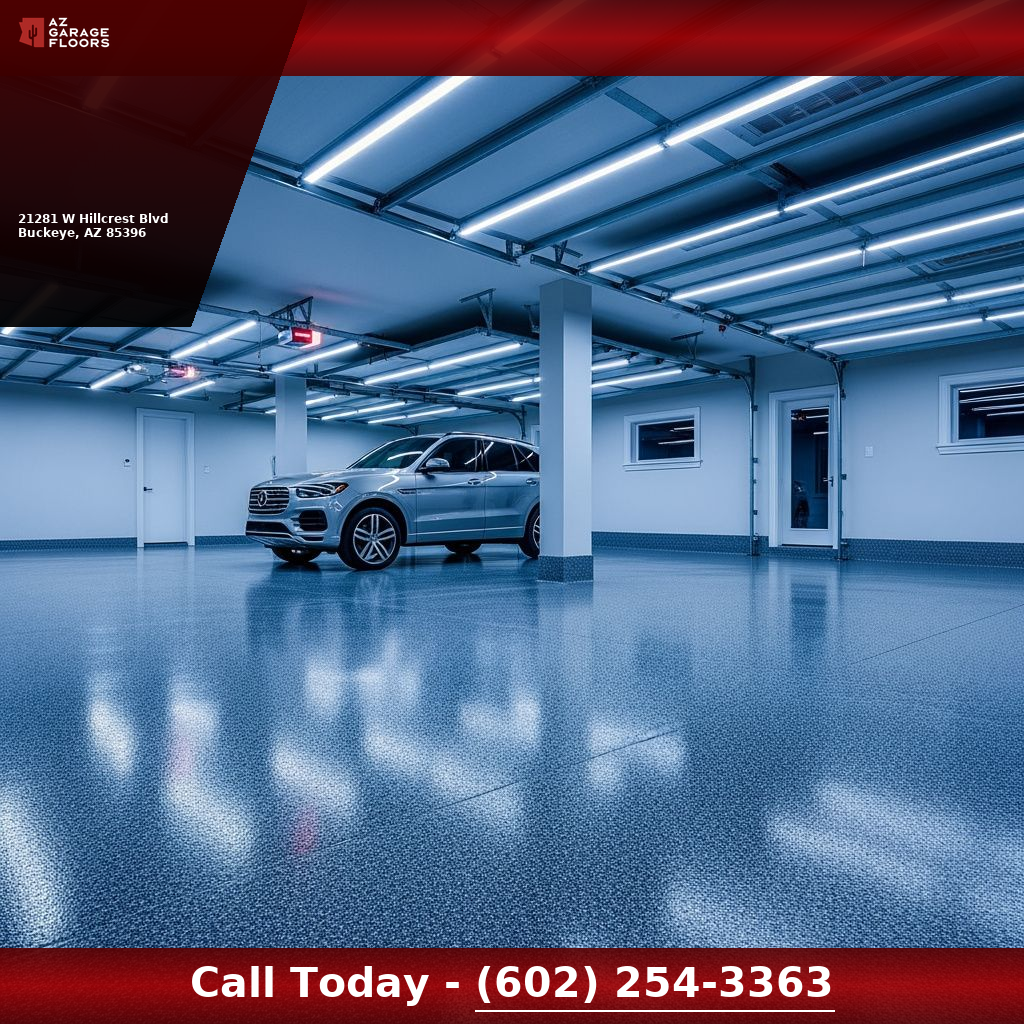
You may have seen kits that come with a small bag of decorative chips to sprinkle on the wet paint. In a professional application, we use a full-flake system. This means we broadcast the vinyl chips until the entire floor is covered and the resin cannot hold any more. This does more than just look good. The flakes add significant thickness and impact resistance to the floor. They also provide a textured surface that improves traction. Finally, a clear topcoat is applied over the flakes, sandwiching them between two layers of industrial resin and creating a monolithic structure that is nearly impossible to peel.
Environmental Factors in Arizona Heat
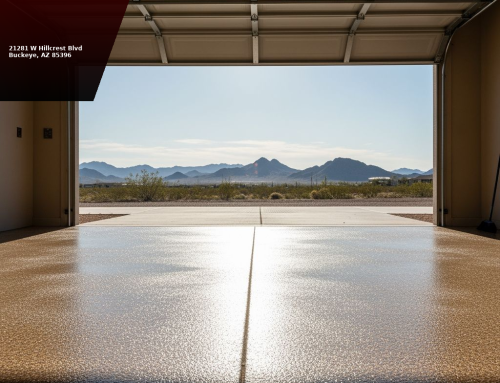
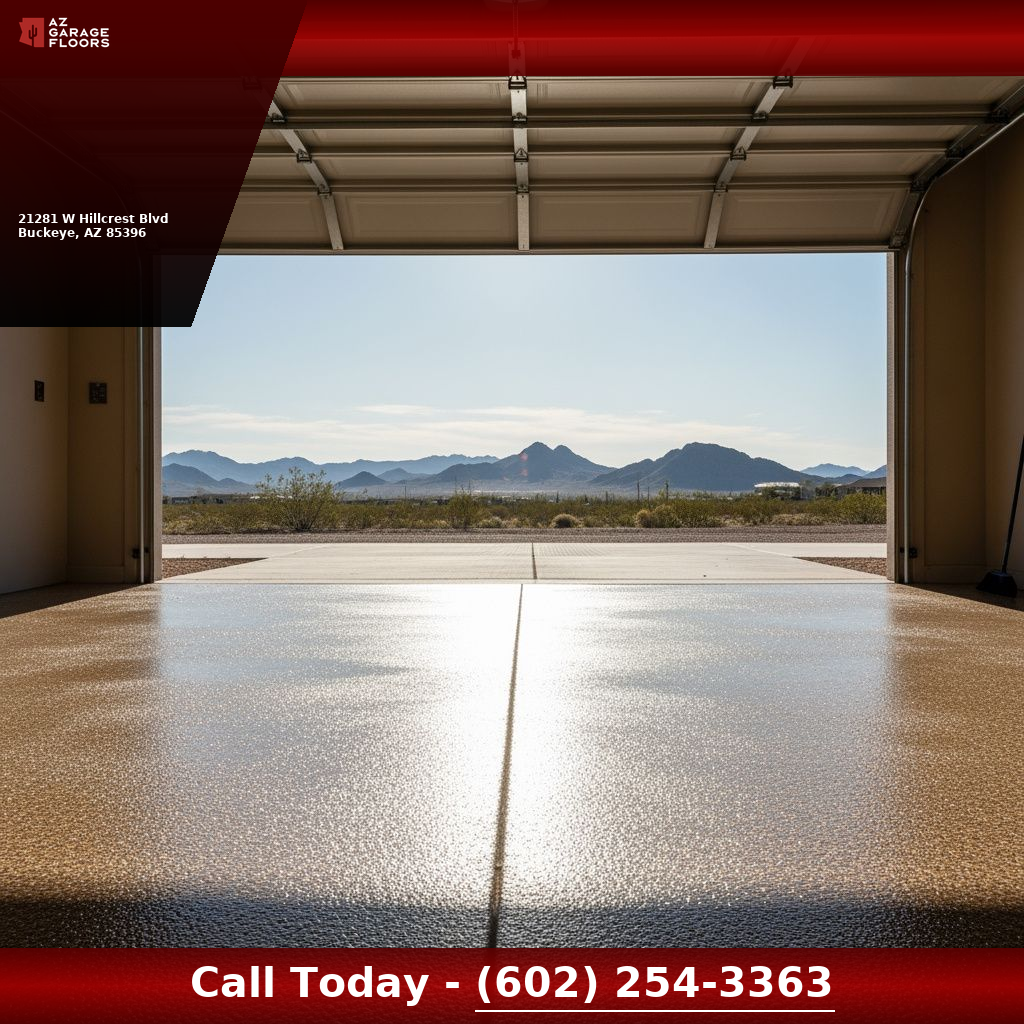
Living in the Southwest presents unique challenges for any building material. The extreme temperature swings from a cool morning to a 115-degree afternoon cause concrete slabs to expand and contract significantly. If a coating is too rigid, it will crack under this stress. Moreover, the heat of the concrete itself can interfere with the resin’s curing process if the installer is not experienced with local conditions.
Managing Outgassing and Bubbles
When concrete heats up in the afternoon sun, the air inside its pores expands and tries to escape. If a coating is applied while the temperature is rising, this air can get trapped in the wet resin, creating tiny bubbles. This is known as outgassing. Professional installers understand the “diurnal cycle” of the slab. We often aim to apply coatings when the slab temperature is stable or falling, which encourages the resin to be sucked into the pores rather than pushed out by escaping air. This attention to detail is often what separates a successful project from one that fails within the first year.
Handling High Concrete Temperatures
In Arizona, the surface temperature of a garage floor can far exceed the ambient air temperature. Many standard epoxies will “flash dry” if they hit a hot slab, meaning they harden before they have a chance to soak into the concrete. To combat this, we use specialized formulations with adjusted “open times.” These allow the material to remain liquid long enough to achieve a deep mechanical anchor even in the heat. Using the right chemistry for the climate is a hallmark of an experienced contractor who has spent decades refining their process in the local environment.
How to Choose a Contractor Who Gets It Right
Once a floor has failed, the stakes for the second attempt are much higher. You are no longer just coating bare concrete; you are tasked with removing a failed system and starting from scratch. Choosing the right partner for this “safe-exit” transformation is vital. You need a team that views the project as an engineering task rather than a painting job. Austin Byrum and the team at AZ Garage Floors bring over 30 years of specialized experience to every project, ensuring that the second time is the last time you ever have to worry about your floor.
Verifying Equipment and Methods
When interviewing potential contractors, ask specifically about their preparation methods. If they mention acid washing or using a small handheld grinder, they are likely not equipped for a long-term solution. A professional should arrive with large-scale planetary grinders and a comprehensive dust collection system. They should be able to explain the “Concrete Surface Profile” (CSP) they intend to achieve. For most garage coatings, a CSP of 2 or 3 is the industry standard for a successful bond. If they cannot talk about these technical details, they may be relying on the same shortcuts that caused your original floor to fail.
Evaluating the Lifetime Warranty Promise
A warranty is only as good as the company standing behind it. Many new companies offer “lifetime” warranties but haven’t been in business long enough to see a floor through a single decade. Look for a team with a multi-generational history and a physical presence in the community. A true lifetime warranty should cover peeling and delamination, giving you the confidence that the contractor is certain of their bond. Because we use commercial-grade materials and 25-inch diamond grinders, we can offer that level of certainty. We don’t just hope the floor stays down; we ensure it through rigorous, proven steps.
Frequently Asked Questions About Garage Floor Coating Failure
Sources
- Concrete surface profile standards, International Concrete Repair Institute, https://www.icri.org
- Volatile organic compound regulations for coatings, Environmental Protection Agency, https://www.epa.gov/indoor-air-quality-iaq/volatile-organic-compounds-impact-indoor-air-quality
- Physical properties of epoxy resins, Wikipedia, https://en.wikipedia.org/wiki/Epoxy
About AZ Garage Floors
AZ Garage Floors is a family-owned concrete coating company serving Buckeye, Surprise, Peoria, Avondale, and Phoenix. With decades of combined experience and hundreds of residential and commercial installations, AZ Garage Floors offers a full spectrum of garage floor coatings — from decorative residential systems (solid color epoxy, Granitex chip systems, metallic epoxy) to industrial commercial solutions (epoxy mortar, heavy-duty polyaspartic, chemical-resistant and anti-slip systems). The company utilizes commercial-grade 2-part resin products, thorough substrate preparation, and performance-based specifications to ensure longevity and safety. AZ Garage Floors offers residential warranty options and commercial warranty terms tailored to the project’s scale and usage.