Why Surface Preparation Determines Garage Floor Coating Success?
The Hidden Cost of Garage Floor Coating Failures: Why Surface Preparation Determines Everything
Key Takeaways:
- Surface preparation is the primary determinant of coating longevity, as 90% of failures result from poor mechanical bonding rather than product quality.
- Diamond grinding outperforms acid etching by creating a consistent concrete surface profile (CSP) that allows the coating to fuse with the slab.
- Homeowners should insist on professional-grade 25-inch diamond grinding equipment and integrated vacuum systems to ensure a dust-free, durable installation.
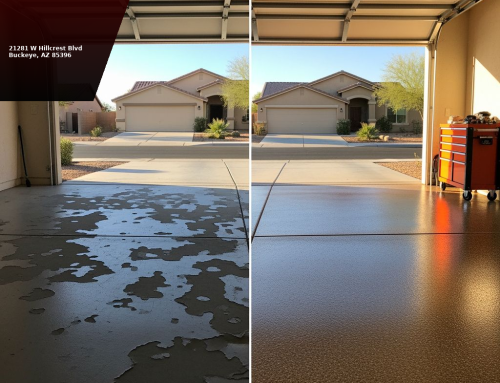
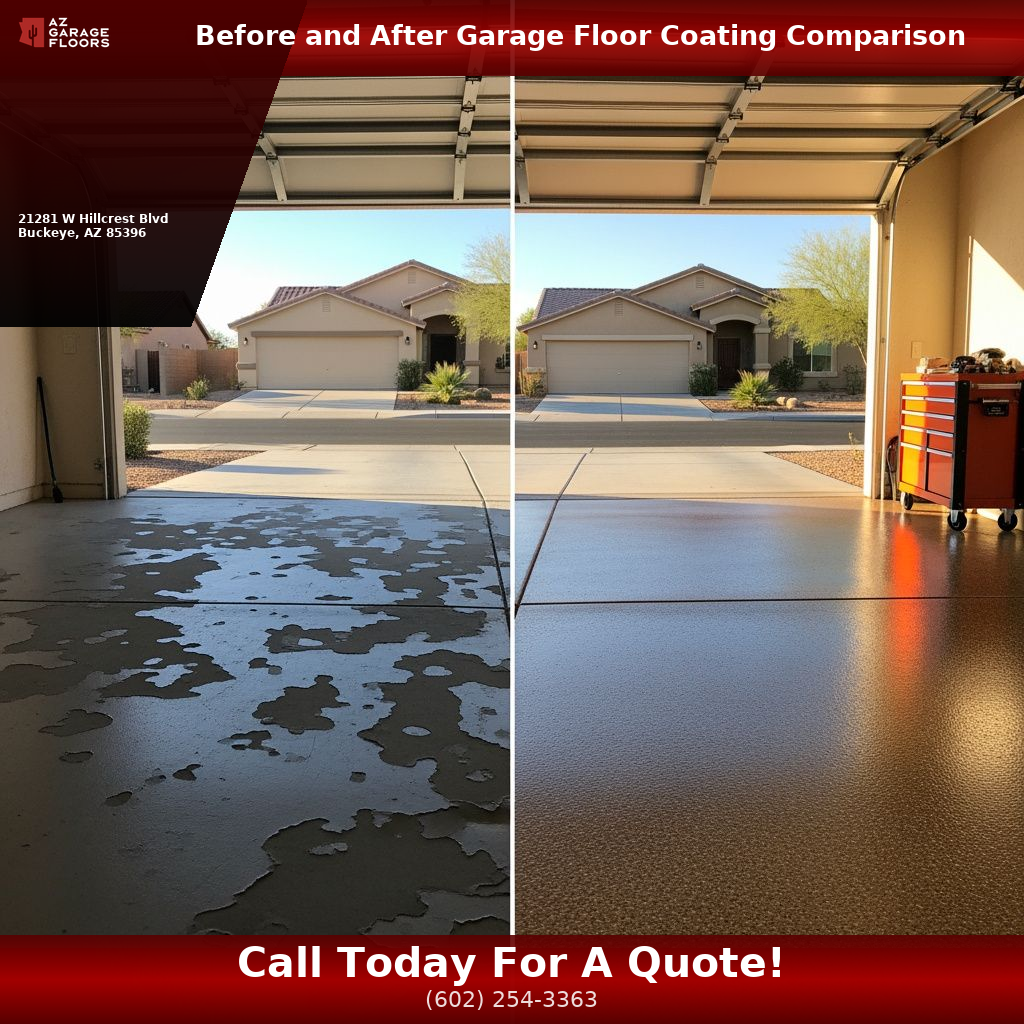
A shimmering garage floor often looks perfect on the day of installation. However, the reality of many DIY projects and budget professional jobs becomes apparent six months later when the coating begins to lift in large, unsightly flakes. This phenomenon, known as delamination, usually happens right where your tires rest. Many homeowners blame the epoxy or polyaspartic product itself, yet the chemical composition of the coating is rarely the culprit. Instead, the failure almost always points back to what happened—or did not happen—before the first drop of liquid touched the slab.
Investing in a high-end coating without proper concrete surface preparation garage floor coating protocols is similar to painting a dirty car. The paint might look good initially, but it will never truly become part of the vehicle. In the world of concrete, we prioritize the mechanical bond. Without it, the coating simply sits on top of the surface rather than anchoring into it. As we look at the industry in 2026, the shift toward heavy-duty mechanical preparation has become the non-negotiable standard for anyone seeking a lifetime result.
Why 90% of Coating Failures Start With Preparation
When a coating peels, it is usually because the bond between the polymer and the concrete was never established. Concrete is a porous material, but its surface is often “sealed” by a smooth finish called the cream layer. If this layer is not removed, the coating has nothing to grab onto. Think of it like trying to tape two pieces of glass together versus two pieces of Velcro. The Velcro has texture that interlocks, while the glass relies on surface tension that eventually gives way under stress.
The Mechanics of Delamination
Delamination occurs when the internal stresses of the coating or external factors like hot tire pickup exceed the strength of the bond. When you drive a vehicle onto a garage floor, the tires carry heat from the road. As they cool, the rubber can actually shrink slightly, creating a vacuum-like grip on the floor. If the coating is only superficially attached to the concrete cream layer, the tire will simply pull the coating off the slab. This is not a failure of the epoxy; it is a failure of the preparation.
Properly prepared concrete allows the coating to penetrate the pores and “root” itself into the slab. When this happens, the bond strength of the coating often exceeds the tensile strength of the concrete itself. In these cases, the concrete would actually have to break apart before the coating would lift. Achieving this level of security requires moving beyond simple cleaning and into the territory of mechanical profiling.
Contaminants and the Barrier to Bonding
Garages are hard-working spaces that accumulate years of oil spills, brake fluid, tire dressings, and road salt. These substances soak deep into the concrete pores. Even if the floor looks clean after a pressure wash, these invisible contaminants act as bond-breakers. If a technician applies a coating over an oil-spotted area, the liquid epoxy will simply bead up or sit on top of the oil, preventing any meaningful adhesion.
Furthermore, moisture vapor transmission is a significant factor in Arizona. Concrete “breathes,” and moisture from the soil moves upward through the slab. If the surface is not opened up through grinding, this moisture can become trapped under the coating, creating hydrostatic pressure. This pressure eventually forces the coating off the floor in the form of blisters or bubbles. Mechanical preparation opens these pores, allowing for a better chemical marriage that can withstand these natural pressures.
Diamond Grinding vs Acid Etching: The Critical Difference
For decades, many contractors and DIY kits relied on acid etching as the primary method for preparation. This involves applying a mixture of muriatic acid and water to the floor to “eat” away the top layer of concrete. While this method is inexpensive and requires no heavy machinery, it is fundamentally flawed for long-term applications.
The Inconsistency of Chemical Etching
Acid etching is notoriously difficult to control. For the acid to work, it must stay reactive, but concrete is alkaline and naturally neutralizes the acid upon contact. This often results in a floor that is etched in some spots but remains smooth in others. Additionally, if the concrete was previously sealed or has a very hard power-troweled finish, the acid may not react at all, leaving the surface completely unprepared for a coating.
Another significant drawback is the introduction of water. To neutralize and remove the acid, the floor must be flooded with water and scrubbed. This saturates the slab, and since epoxy does not bond well to wet concrete, the installer must wait days for the floor to dry completely. In a fast-paced installation environment, many people rush this step, leading to trapped moisture and eventual coating failure. Residue from the acid or the neutralizing agent can also remain in the pores, acting as a future bond-breaker.
Mechanical Profiling Through Diamond Grinding
Diamond grinding is a dry, mechanical process that uses industrial-grade diamonds to physically shave off the top layer of the concrete. This process removes the weak cream layer, opens the pores, and eliminates surface contaminants in a single pass. Unlike acid, diamonds do not care if the concrete is hard-troweled or previously sealed; they will cut through the surface to reveal the fresh, porous aggregate underneath.
This method provides a uniform texture across the entire floor. Because it is a dry process, there is no risk of adding moisture to the slab, allowing for immediate application of the base coat once the dust is cleared. The result is a surface that feels like 80-grit sandpaper, which is the ideal profile for high-performance coatings. This mechanical “tooth” is what ensures the coating stays down for decades rather than months.
The Science of Surface Profile and Adhesion
To understand why some floors last and others do not, we must look at the International Concrete Repair Institute (ICRI) standards. The ICRI defines various Concrete Surface Profiles (CSP) ranging from 1 (nearly smooth) to 9 (very rough). For most residential garage floor coatings, a CSP of 2 or 3 is the industry gold standard.
Understanding Concrete Surface Profile Standards
A CSP 2 or 3 is achieved when the surface has been sufficiently abraded to remove the “laitance” or weak top layer. You can see this transition clearly during the grinding process. The floor changes from a dusty, smooth gray to a mottled look where the small stones (aggregate) inside the concrete become visible. This increased surface area means there is more physical space for the epoxy to grab.
If the profile is too low (CSP 1), the coating is at high risk for hot tire pickup. If it is too high (CSP 5+), the coating may not be thick enough to cover the peaks and valleys of the concrete, leading to a rough, uneven finish. Professional installers use specific diamond grit sequences to hit that “sweet spot” of CSP 2 or 3, ensuring maximum adhesion without compromising the aesthetic of the final floor.
Creating the Mechanical Keyhole Effect
When we talk about a mechanical bond, we are describing the “keyhole effect.” As the liquid coating is applied to a properly ground floor, it flows into the microscopic valleys and pores created by the diamonds. As the coating cures and hardens, it becomes physically locked into the concrete structure.
This is fundamentally different from a chemical-only bond. In a mechanical bond, the coating and the concrete become a composite material. This is why AZ Garage Floors can offer a lifetime warranty; when the concrete surface preparation and garage floor coating are done correctly, the two materials are effectively inseparable. The science of adhesion proves that physical interlocking is far superior to surface-level stickiness.
Professional Equipment vs DIY Methods
The tools used for preparation are just as important as the technique. Many DIY enthusiasts attempt to use small hand grinders or rental equipment from big-box stores. While these might work for a small corner, they lack the weight and power necessary to prepare an entire two-car or three-car garage effectively.
The Power of 25-Inch Diamond Grinding Machines
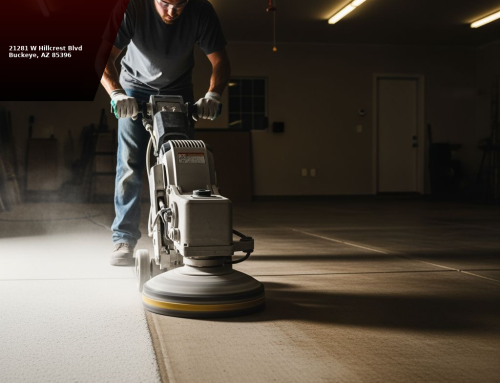
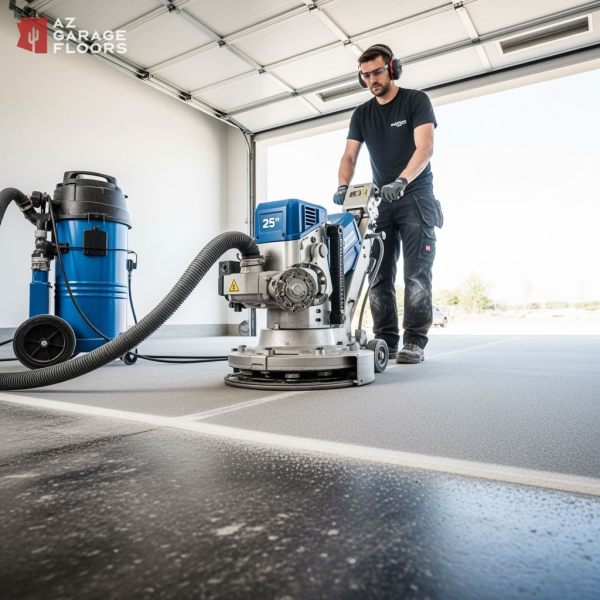
Professional crews utilize large, heavy-duty planetary grinders. A 25-inch diamond grinding machine provides the necessary head pressure to cut through the hardest concrete. These machines feature multiple heads that spin in opposite directions, ensuring the floor is perfectly level and uniformly profiled. The weight of these machines—often several hundred pounds—allows the diamonds to bite into the concrete rather than just skating over the top.
Using these machines requires experience. An untrained operator can easily create gouges or “corn rows” in the concrete if they move too slowly or use the wrong diamond bond. Our team brings 30+ years of experience to every project, ensuring the machine moves at the correct pace to achieve a flat, consistent surface. This level of precision is simply not possible with handheld tools or lightweight rental units.
Integrated Vacuum Systems and Dust Mitigation
One of the biggest concerns homeowners have with grinding is the dust. Concrete dust contains silica, which is a health hazard and a mess to clean up. Professional diamond grinding is never done “open.” The grinders are connected to high-flow, industrial vacuum systems with HEPA filtration.
These vacuums create a sealed environment under the grinding shroud. As the diamonds turn the concrete surface into dust, the vacuum whisks it away immediately into a sealed collection bin. This keeps the home clean and, more importantly, keeps the concrete pores open. If dust is allowed to settle back into the pores, it will prevent the coating from penetrating. High-quality dust collection is a critical part of the preparation science, not just a convenience for the homeowner.
How to Verify Proper Preparation Methods
If you are evaluating contractors for your garage project, you need to know what to look for before they start pouring the coating. A reputable professional will be transparent about their preparation process and the equipment they use.
Visual Cues for a Correctly Prepared Slab
After the grinding is complete but before the coating is applied, the floor should have a very specific appearance. It should be uniform in color and texture. There should be no “shiny” or smooth spots remaining. If you see areas that still look like the original concrete, those areas have not been profiled, and the coating will likely fail there.
You can also perform a simple “water drop test.” Drop a small amount of water onto the prepared concrete. On a properly ground floor, the water should soak in almost immediately, turning the concrete dark. This indicates that the pores are open and thirsty. If the water beads up or sits on the surface, the floor is not ready for a coating.
Questions to Ask Your Installation Team
Transparency is a hallmark of a professional service. When interviewing contractors, ask them specifically about their preparation equipment. Specifically, verify whether they use a planetary diamond grinder or rely on acid etching. Ask about their dust containment strategy and how they handle oil stains or existing cracks.
A professional will explain how they use ICRI surface profile standards to guide their work. They should also be able to describe how they handle the unique challenges of Arizona concrete, which often involves high “PSI” hardness and thermal expansion issues. Choosing a team that prioritizes the “invisible” work of preparation is the only way to ensure your investment stands the test of time.
Frequently Asked Questions About Cost of Garage Floor Coating Failures
Sources
- Concrete Surface Profile (CSP) Classifications, International Concrete Repair Institute (ICRI), https://www.icri.org
- Guide to Concrete Floor and Slab Construction, American Concrete Institute (ACI), https://www.concrete.org
- Silicosis and Silica Dust Safety, Occupational Safety and Health Administration (OSHA), https://www.osha.gov
About AZ Garage Floors
AZ Garage Floors is a family-owned concrete coating company serving Buckeye, Surprise, Peoria, Avondale, and Phoenix. With decades of combined experience and hundreds of residential and commercial installations, AZ Garage Floors offers a full spectrum of garage floor coatings — from decorative residential systems (solid color epoxy, Granitex chip systems, metallic epoxy) to industrial commercial solutions (epoxy mortar, heavy-duty polyaspartic, chemical-resistant and anti-slip systems). The company utilizes commercial-grade 2-part resin products, thorough substrate preparation, and performance-based specifications to ensure longevity and safety. AZ Garage Floors offers residential warranty options and commercial warranty terms tailored to the project’s scale and usage.