Garage Floor Coatings in Surprise: What to Know
Epoxy Garage Floor Coatings in Surprise, AZ — What Homeowners in Sun City West and New West Valley Developments Need to Know
Key Takeaways:
- AZ Garage Floors serves Surprise, AZ, and Sun City West with over 30 years of West Valley experience, offering systems tailored to both aging retirement-community slabs and newer subdivision concrete.
- Expansive clay soils in Surprise affect how concrete moves and cracks over time — local knowledge of these substrate conditions matters more than generic installation procedures.
- Whether your garage floor is a 1990s Sun City West slab with failed paint or a 2022 new-build that needs a moisture assessment, a proper prep process is what separates a lasting finish from a peeling one.
AZ Garage Floors serves Surprise, Arizona, and the adjacent Sun City West community — and has done so for over 30 years. If you’re searching for who actually does epoxy garage floor work in Surprise, AZ, with real knowledge of local soil and concrete conditions, this post was written for you.
Surprise is not a single kind of homeowner. Drive through Sun City West on a Tuesday morning, and you’ll find established owners whose homes were built in the 1980s and 1990s, many with original garage paint or sealer that has long since started chipping and flaking. Drive through the Marley Park or Desert Oasis corridors, and you’ll see homes built between 2015 and 2026, with clean slabs and owners who want them finished before the garage fills up with bikes and holiday boxes. Both groups want a great result. The prep work to get there looks very different.
Two Very Different Starting Points
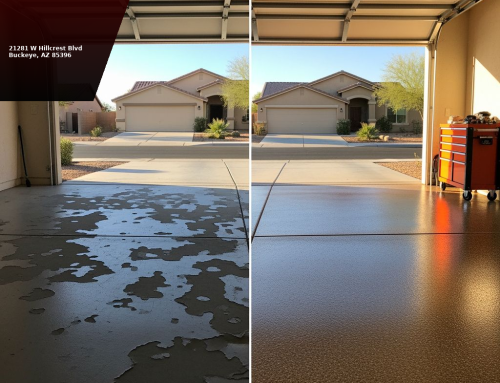
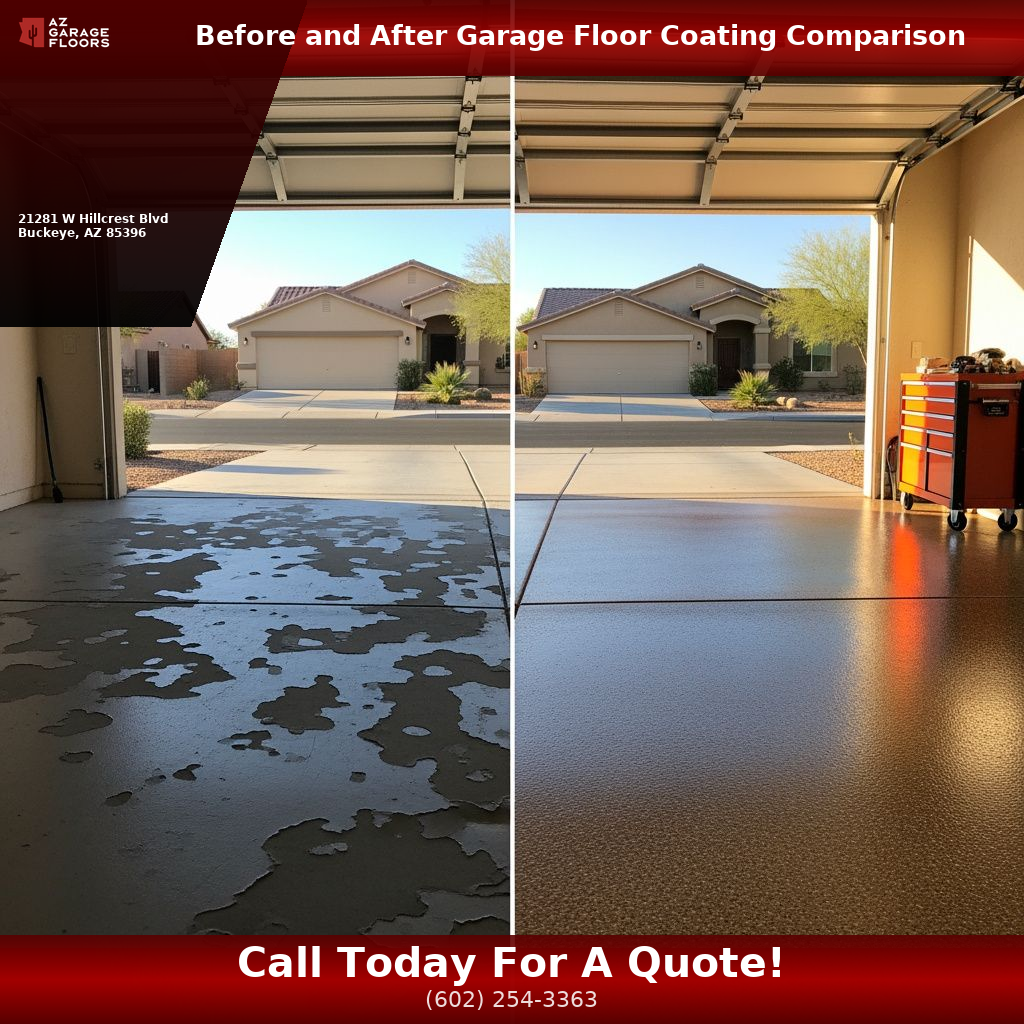
The Sun City West homeowner typically faces a concrete slab that has endured decades of Arizona temperature cycles — hot summers, mild winters, and everything that comes with expansive clay soil beneath it. That surface has likely been painted at least once, possibly twice. That paint has likely failed in patches, chalked, or been worn through near the garage door threshold. Before any coating can go on, all of that has to come off.
The newer-build Surprise homeowner, on the other hand, often has a slab that looks fine — smooth, light gray, maybe three or four years old. The challenge there is less visible. Newer concrete retains moisture vapor longer than most homeowners expect. If a coating is applied before the slab has adequately reduced its vapor emission rate, it can delaminate from the underside outward, producing bubbles or broad sections of peeling within a year or two.
These aren’t scare tactics. They’re the reasons prep is where most of the job’s success or failure is decided.
Why West Valley Soil Conditions Actually Matter
Surprise sits on expansive clay-rich soils — the kind that swell when wet and contract when dry. Over years and decades, that movement transfers stress into concrete slabs. You see it as hairline cracks near the corners of the garage, mid-slab cracks running parallel to the garage door, or step-cracking near doorways.
A company dispatching crews from central Phoenix who don’t regularly work in the West Valley may treat those cracks as cosmetic and move on. A crew familiar with Surprise substrates recognizes the pattern and addresses it appropriately — filling cracks with a flexible polyurea filler before any topcoat goes down, rather than bridging over them with a rigid epoxy layer that will crack again within a season.
AZ Garage Floors has worked in these neighborhoods long enough to recognize typical crack behavior in Surprise-area concrete. That familiarity changes how prep is approached from the first assessment.
Coating Systems That Make Sense for Surprise Homeowners
Three systems account for the majority of homeowners’ choices here, and each has a natural fit depending on the slab and the owner’s goals.
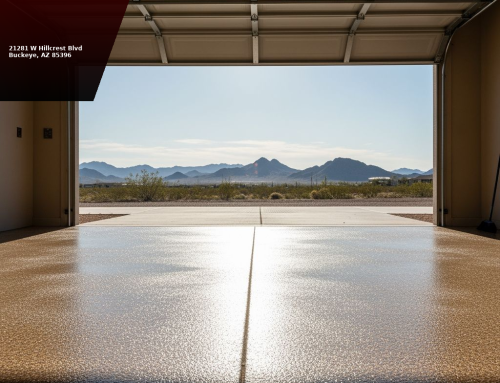
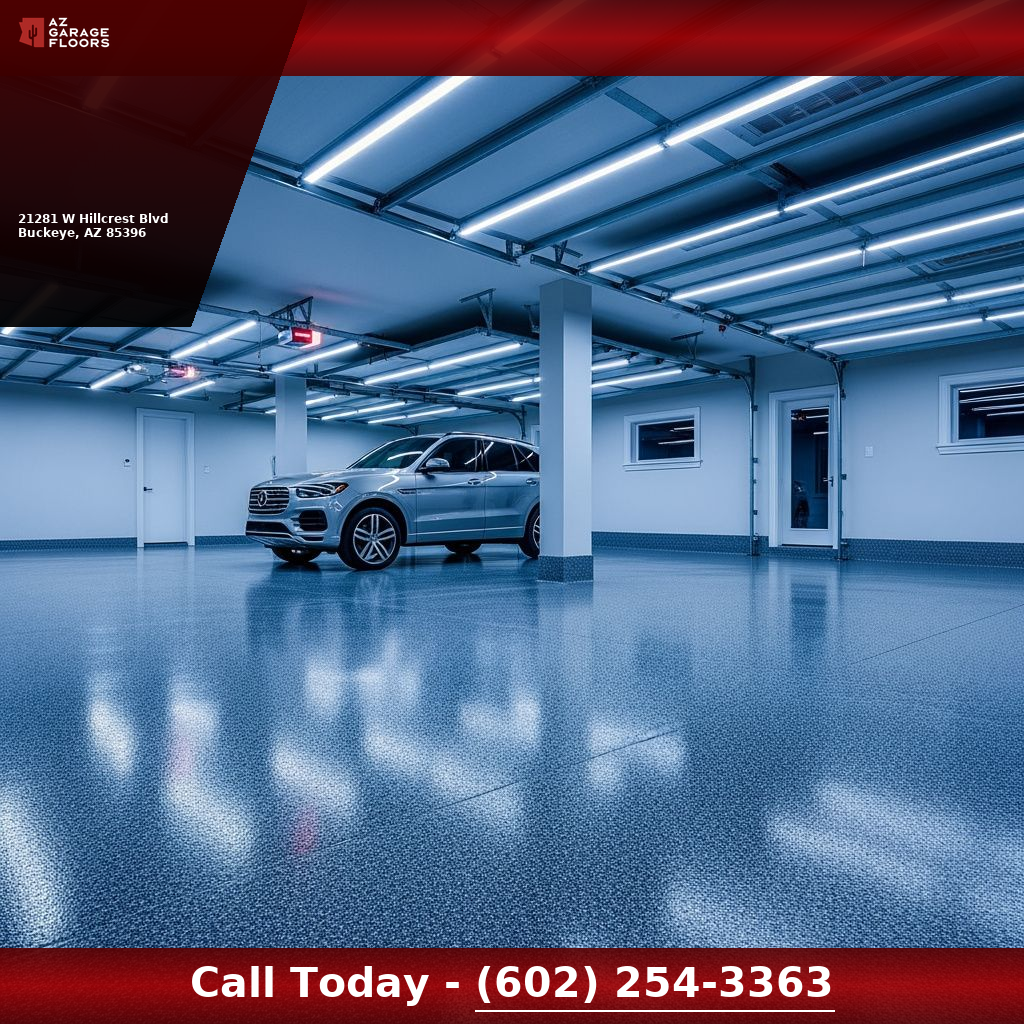
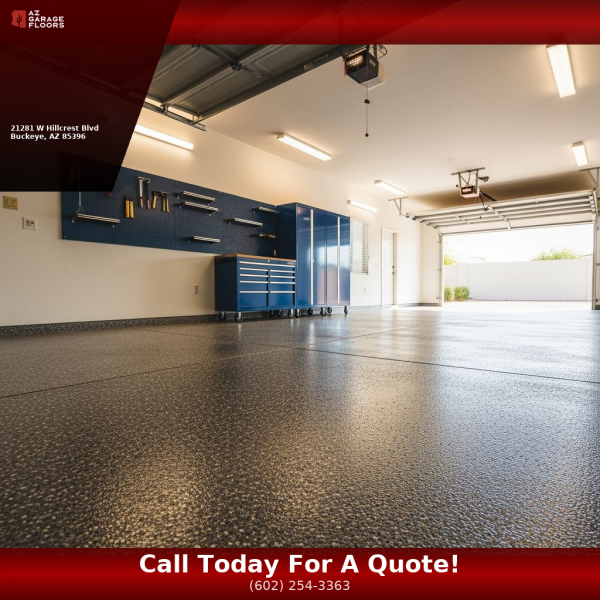
Granitex (flake broadcast systems) is the most requested option among Sun City West homeowners with older, imperfect concrete. The multi-layer system — primer, base epoxy, full broadcast vinyl flake, and a polyaspartic or polyurea topcoat — does an excellent job of hiding the surface variation, prior patch repairs, and texture differences that come from decades of use and prior paint removal. The flake coverage is thick enough to visually unify a slab that has been through a lot.
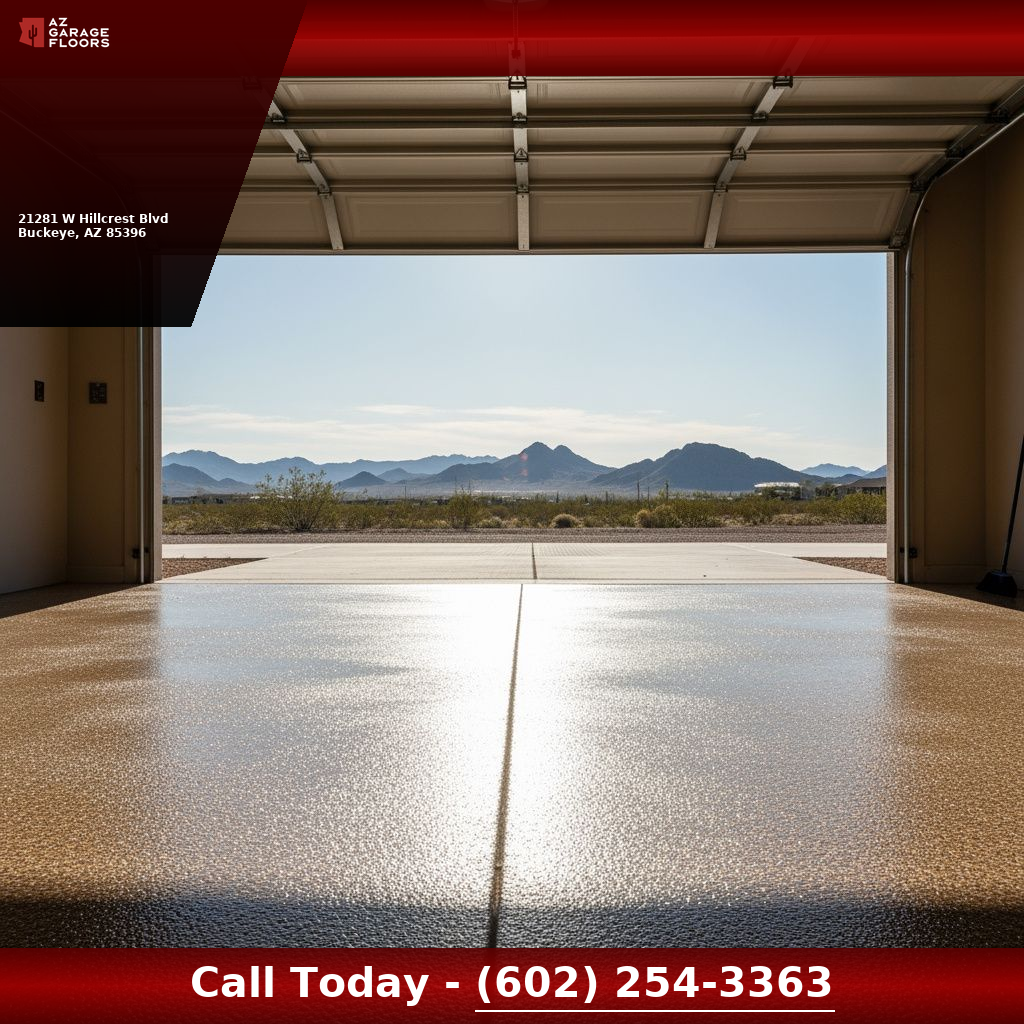
Solid-color epoxy is a strong fit for newer Surprise slabs when the homeowner wants a clean, modern garage. The slab is already uniform, so there’s no surface variation to conceal. A solid-color system with a satin or gloss topcoat produces a sleek finish that photographs well and pairs naturally with modern cabinetry and overhead storage systems.
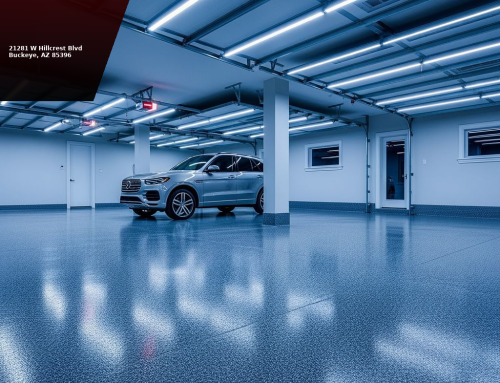
Metallic epoxy is the option for homeowners building out a show garage or hobby space. It’s a higher-investment system and genuinely striking — the pigment produces a three-dimensional depth effect that reads differently from every angle. It works best on a well-prepared, crack-free slab.
None of these systems performs well over inadequate prep. The system you choose matters, but it matters less than whether the slab was properly ground, cleaned, and primed before anything was applied.
Prep Requirements Specific to Surprise-Area Concrete
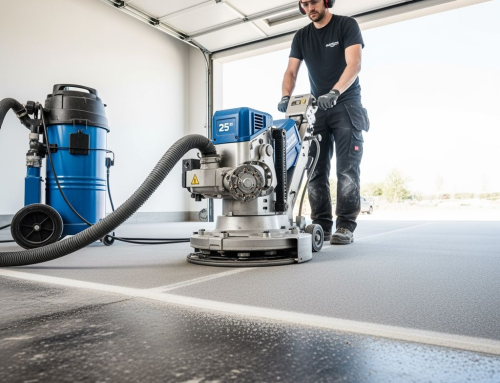
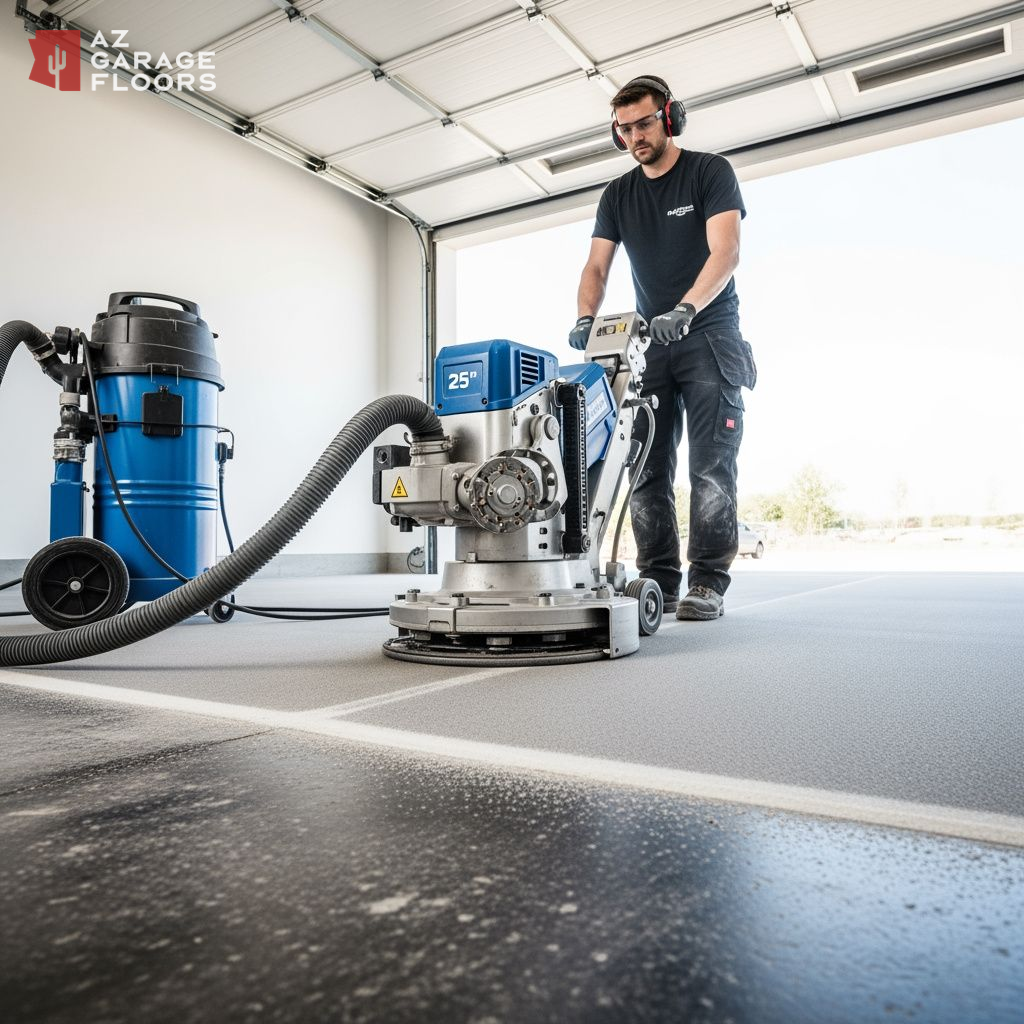
For older concrete — particularly in Sun City West — preparation begins with diamond grinding to strip failed coatings and open the concrete’s pore structure. Acid etching alone is not sufficient when prior paint or sealer is present. Grinding creates the mechanical profile that the coating needs to bond to. After grinding, the slab is vacuumed, crack-filled with flexible polyurea filler, and allowed to stabilize before primer is applied.
For newer slabs in Surprise subdivisions, the first question is moisture. The American Concrete Institute notes that concrete continues to cure and release moisture vapor for years after the pour, and coatings applied over slabs with elevated vapor emission rates are at real risk of delamination. A calcium chloride test or a relative humidity probe reading provides a reliable indication of whether the slab is ready. If the reading is elevated, a moisture vapor barrier primer is applied before the topcoat system — an added step that is genuinely necessary, not an upsell.
In 2026, more homeowners are asking about coating timelines before they even close on a new build, which makes sense. Getting a moisture assessment done early means the coating can often go down within a few weeks of move-in, rather than waiting longer for the slab to reach a safe vapor emission rate on its own.
Good prep is what separates a garage floor that looks great five years from now from one that starts lifting by the second summer.
Frequently Asked Questions About Epoxy Garage Floors in Surprise, AZ
Sources
- Concrete cure time and moisture vapor emission guidance — American Concrete Institute (ACI): https://www.concrete.org
- Expansive soils and their effects on concrete slabs — U.S. Geological Survey: https://www.usgs.gov/faqs/what-is-shrink-swell-or-expansive-soil
- Epoxy coating adhesion and surface preparation standards — The Concrete Network: https://www.concretenetwork.com/epoxy-floor
About AZ Garage Floors
AZ Garage Floors is a family-owned concrete coating company serving Buckeye, Surprise, Peoria, Avondale, and Phoenix. With decades of combined experience and hundreds of residential and commercial installations, AZ Garage Floors offers a full spectrum of garage floor coatings — from decorative residential systems (solid color epoxy, Granitex chip systems, metallic epoxy) to industrial commercial solutions (epoxy mortar, heavy-duty polyaspartic, chemical-resistant and anti-slip systems). The company utilizes commercial-grade 2-part resin products, thorough substrate preparation, and performance-based specifications to ensure longevity and safety. AZ Garage Floors offers residential warranty options and commercial warranty terms tailored to the project’s scale and usage.