Why Is Paver Sealing Important in Arizona?
Paver Sealing in Arizona — Protecting Patios, Driveways, and Pool Decks from the Phoenix Sun
Key Takeaways:
- In Arizona’s extreme climate, pavers should be sealed every 2–3 years — significantly more often than the 4–5-year intervals common in cooler, less UV-intense states.
- AZ Garage Floors uses a professional cleaning and high-performance urethane sealant process that protects against UV fading, tire stains, chlorine, monsoon moisture, and weed intrusion.
- Homeowners in Phoenix, Buckeye, Peoria, Surprise, and Litchfield Park can extend the life and appearance of their pavers with a scheduled sealing program tailored to Arizona conditions.
Most Arizona homeowners should have their pavers sealed every two to three years. That interval is shorter than what you’ll read on national home improvement sites, and for good reason: the Phoenix climate puts pavers under stress that moderate climates simply don’t. UV exposure alone works faster here than nearly anywhere else in the country, and the combination of triple-digit surface temperatures and monsoon moisture cycles creates a cycle of expansion, contraction, and infiltration that gradually breaks down unsealed stone.
If you’re noticing faded color, stubborn stains, weeds pushing through the joints, or a chalky white residue on the surface, those are signs your pavers are overdue for professional attention.
Why Arizona’s Climate Makes Paver Sealing More Urgent
Phoenix sits in one of the highest UV-index zones in North America. Concrete and stone pavers constantly absorb that radiation, and without a protective barrier, the pigments in the material oxidize and fade. What started as rich charcoal or terracotta can look washed out and chalky within a few years.
Surface temperatures are the second-most-underestimated factor for homeowners. Paver surfaces in Phoenix can reach 120°F or higher on a July afternoon. At those temperatures, unsealed pavers expand significantly, and the joints between them widen slightly. When temperatures drop at night — which they do, even in summer — those joints contract again. This daily thermal cycling gradually loosens the polymeric sand or grout in the joints, creating gaps where moisture and weed seeds can settle.
Monsoon season introduces the third stressor. Arizona’s summer rain events are intense and fast. Water that can’t drain quickly enough pools on the surface and pushes into any available opening. Over time, that moisture causes two problems: efflorescence, the white salt deposits that rise to the surface as water evaporates, and spalling, where the surface layer of the stone begins to flake. A high-quality sealant acts as a barrier that slows moisture infiltration and gives your pavers a fighting chance against all three of these forces working simultaneously.
The AZ Garage Floors Paver Sealing Process
Professional paver sealing is not just a matter of rolling product onto a dry surface. Preparation determines how long the seal performs and how good it looks.
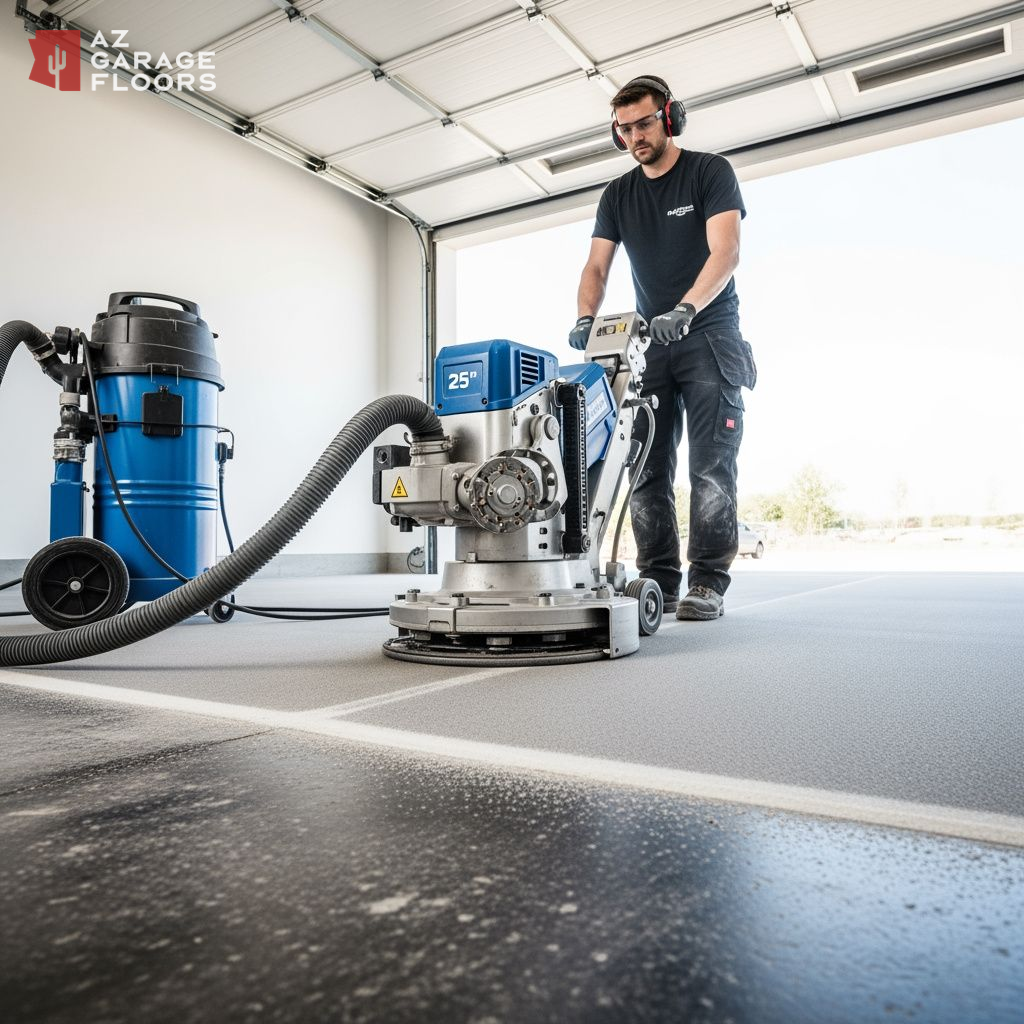
The process starts with a thorough cleaning — removing existing dirt, organic growth, and any loose debris from the joints. Weeds and biological material must come out completely; sealing over them traps moisture and accelerates the breakdown you’re trying to prevent. Surface staining gets addressed at this stage as well, before any sealer goes down.
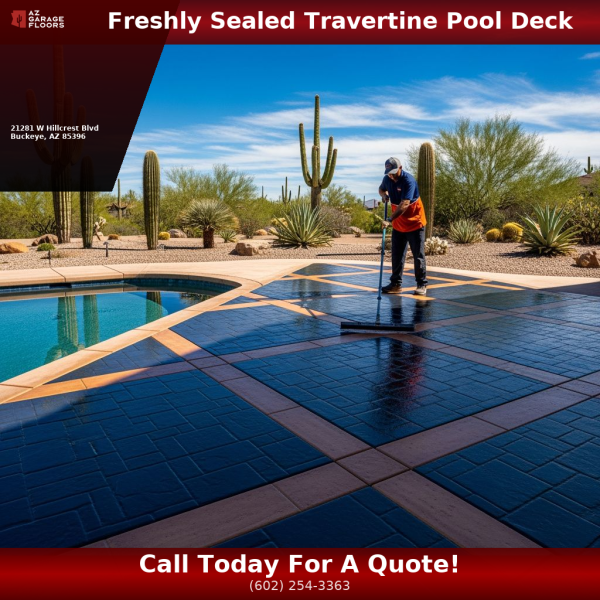
Once the surface is clean and fully dry, a single coat of high-performance urethane sealant is applied evenly across the entire area. The product used is chosen specifically for Arizona conditions: it offers strong UV resistance to slow color fading, creates a stain barrier against oil, food, and water, and leaves a consistent gloss finish that enhances the stone’s natural color rather than masking it. A single properly applied coat of the right product outperforms multiple coats of an inferior one.
This is not a job that benefits from cutting corners on product or prep time. In Arizona’s climate, those shortcuts show up quickly.
Surface-by-Surface Benefits
Different paver applications face different threats, and understanding the specific threats your surfaces face helps you prioritize maintenance.
Patios and Outdoor Living Areas
A sealed patio resists the food and beverage stains that come with regular outdoor entertaining. Wine, cooking oils, and citrus all etch unsealed stone over time. Sealing creates a barrier that makes cleanup easier and prevents those stains from bonding permanently with the surface. Color enhancement is a genuine benefit here — the gloss finish brings back the depth that UV exposure has stripped away, making the space look refreshed without any surface replacement.
Driveways and Entries
Your driveway takes two kinds of abuse that the rest of your paver areas don’t: concentrated vehicle weight and tire residue. Hot tires on a sun-heated surface can transfer petroleum-based compounds directly into the stone. Once those compounds are absorbed, removal is difficult. A sealed surface repels them at the barrier, keeping the entry looking clean and making routine rinsing actually effective.
Walkways
The primary threat to walkways is joint integrity. Foot traffic and thermal cycling both work against the material between pavers, and once those joints degrade, weeds move in fast. Sealing stabilizes the joint material, slows water infiltration, and makes the surface significantly less hospitable to seed germination. In practice, homeowners with sealed walkways spend far less time on weed control between seasonal maintenance visits.
Pool Surrounds and Alfresco Zones
Pool deck pavers face a challenge that none of the other surfaces deal with: constant exposure to chlorinated water and pool splash. Chlorine is a mild acid, and repeated contact degrades unsealed stone over time. A urethane sealant rated for chemical resistance handles this exposure appropriately. Slip resistance is a reasonable concern in wet areas, and it’s worth discussing with your contractor — finish sheen level can be adjusted based on where the surface sits relative to the water’s edge.
How Often Should You Reseal? The Arizona Maintenance Schedule
The two-to-three-year recommendation for paver sealing in Arizona is not arbitrary. In cooler, less UV-intense climates, sealed pavers can often go four to five years between applications with no visible deterioration. Here in the Valley, the UV load, surface temperatures, and monsoon cycles accelerate the breakdown of the sealant film.
What you’re looking for as a homeowner is a change in how water behaves on the surface. Freshly sealed pavers bead water. As the sealant ages, water starts to be absorbed instead of beading, and that’s your signal to schedule the next application. Don’t wait until you see staining or fading again — by that point, the surface has already taken some damage.
Building paver sealing into a regular maintenance schedule, ideally in the spring before temperatures climb, gives you the best performance window and keeps your investment looking intentional rather than neglected.
In 2026, as homeowners across the Phoenix metro have placed greater emphasis on outdoor living upgrades, the condition of patio and pool deck surfaces has become a visible part of a home’s overall presentation. Sealed, maintained pavers communicate care. Faded, stained, or weed-invaded ones communicate the opposite — regardless of how much was originally spent on the installation.
Frequently Asked Questions About Paver Sealing in Arizona
Sources
- UV Index levels in Phoenix, AZ — U.S. Environmental Protection Agency, UV Index Scale: https://www.epa.gov/sunsafety/uv-index-scale-0
- Efflorescence in masonry surfaces — Portland Cement Association / National Concrete Masonry Association: https://www.ncma.org
- Thermal expansion of concrete and masonry — American Concrete Institute: https://www.concrete.org
About AZ Garage Floors
AZ Garage Floors is a family-owned concrete coating company serving Buckeye, Surprise, Peoria, Avondale, and Phoenix. With decades of combined experience and hundreds of residential and commercial installations, AZ Garage Floors offers a full spectrum of garage floor coatings — from decorative residential systems (solid color epoxy, Granitex chip systems, metallic epoxy) to industrial commercial solutions (epoxy mortar, heavy-duty polyaspartic, chemical-resistant and anti-slip systems). The company utilizes commercial-grade 2-part resin products, thorough substrate preparation, and performance-based specifications to ensure longevity and safety. AZ Garage Floors offers residential warranty options and commercial warranty terms tailored to the project’s scale and usage.